Placebo Effect: How Belief Changes Your Body and Why It Matters in Medicine
When you take a sugar pill and feel better, it’s not magic—it’s the placebo effect, a measurable physiological response triggered by expectation and belief, even when no active drug is present. Also known as placebo response, this phenomenon shows your brain can trigger real changes in pain, mood, fatigue, and even hormone levels just by thinking a treatment will work. It’s not about being gullible or weak-minded. It’s about how deeply your mind and body are connected. Studies have shown that patients given placebos for conditions like chronic pain, depression, or irritable bowel syndrome often report improvements as strong as those from actual medications. In some cases, the placebo group felt better than the group taking the real drug—because the real drug came with side effects that made people doubt it was working.
The placebo control, the gold standard in clinical trials that compares a real drug against an inactive substance to isolate true drug effects exists for one reason: to filter out the noise. Without it, we wouldn’t know if a new drug actually works—or if people are just responding to hope, attention, or the ritual of taking a pill. That’s why every new medication must pass a placebo-controlled trial before approval. But here’s the twist: the placebo effect itself is getting stronger. Over the past 30 years, placebo responses in U.S. clinical trials for pain and depression have doubled. Why? More elaborate pill designs, bigger patient expectations, and even TV ads that sell the idea of a pill as a miracle. This makes it harder for real drugs to stand out.
The clinical trials, rigorous studies designed to test whether a medical treatment is safe and effective, often using placebo groups as a baseline for comparison you hear about aren’t just about proving a drug works—they’re about proving it works better than belief alone. That’s why some drugs fail approval, even if patients feel better. If the placebo group improves just as much, the drug doesn’t clear the bar. But that doesn’t mean the placebo effect is useless. In fact, doctors use it every day—by building trust, explaining treatments clearly, and creating positive expectations. A well-informed patient who believes in their treatment often responds better than one who doesn’t. That’s why the placebo effect isn’t something to dismiss—it’s something to harness.
And it’s not just about pills. The way a medication is packaged, how a pharmacist speaks to you, even the color of a capsule—all of it influences your body’s response. Blue pills are seen as calming. Red ones feel stronger. Larger pills are perceived as more potent. These aren’t myths—they’re proven patterns in behavioral pharmacology. The placebo effect reminds us that medicine isn’t just chemistry. It’s psychology, context, and human connection. The posts below dig into real-world examples: how placebo responses skew drug data, why some generics work better than others simply because of branding, and how patient expectations shape outcomes in chronic disease management. You’ll see how this invisible force shows up in pain meds, antidepressants, and even weight-loss drugs. It’s not fiction. It’s science. And it’s affecting your health right now.
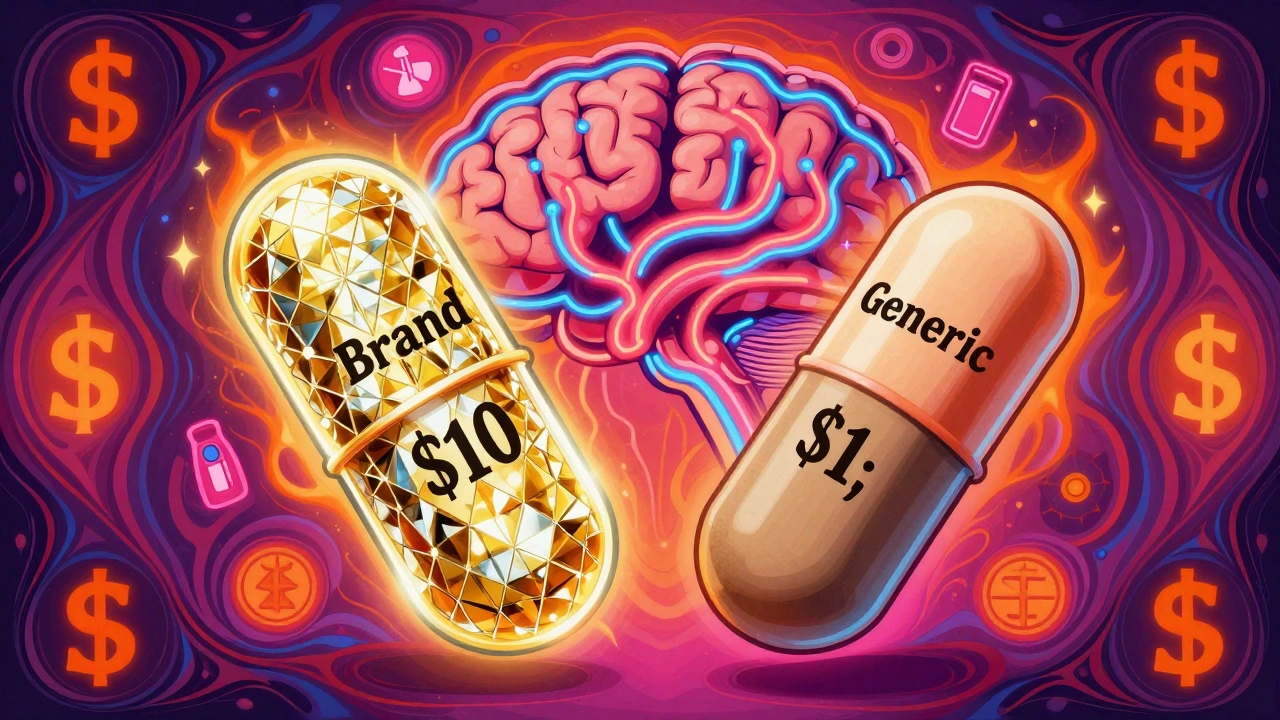
Why Cheaper Drugs Feel Less Effective: The Psychology Behind Price and Perceived Power
Why do cheaper drugs feel less effective-even when they're identical to brand names? The answer lies in psychology, not chemistry. Learn how price shapes perception and what you can do about it.