CYP3A4: How This Enzyme Affects Your Medications and What You Need to Know
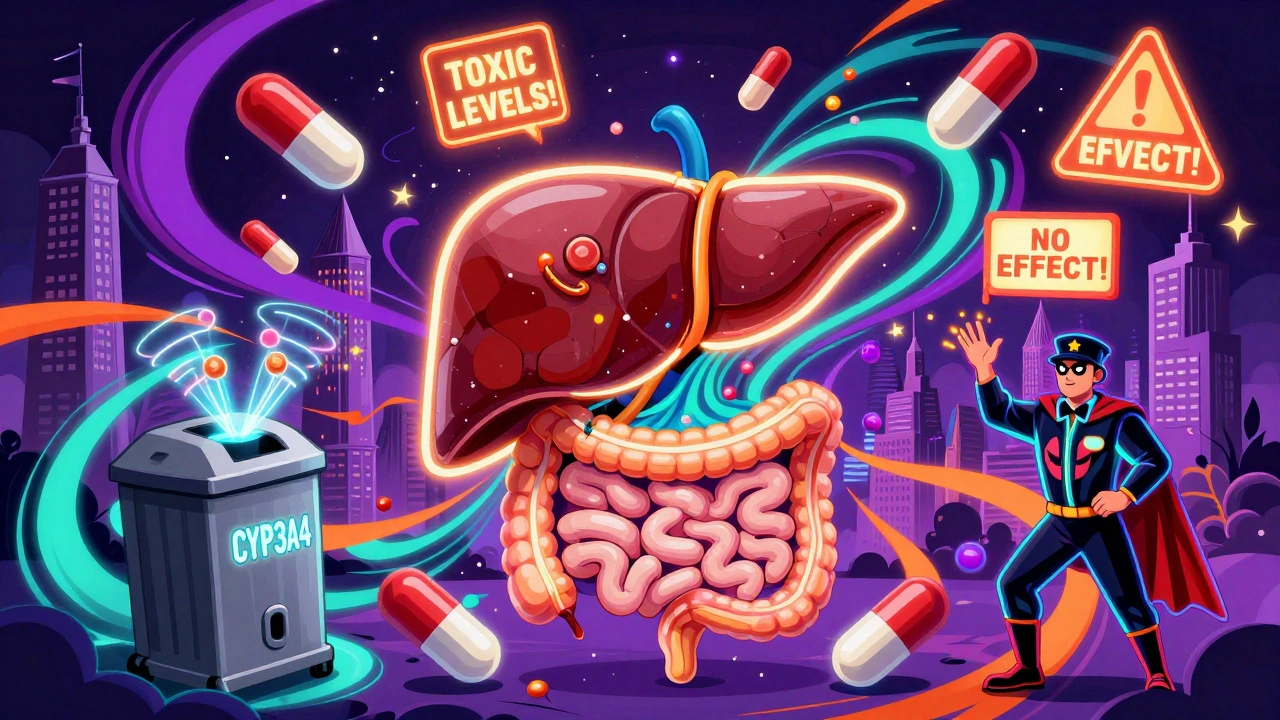
When you take a pill, your body doesn’t just absorb it—it CYP3A4, a liver enzyme responsible for breaking down more than 50% of all prescription drugs. Also known as cytochrome P450 3A4, it’s the main filter that decides how much of your medicine actually reaches your bloodstream. If CYP3A4 is working too fast, your drug might not work at all. If it’s slowed down, you could get too much of it—and that’s when side effects turn dangerous.
This enzyme doesn’t work in a vacuum. Things like grapefruit juice, smoking, certain antibiotics, and even some herbal supplements can change how CYP3A4 behaves. For example, rifampin, a tuberculosis drug that strongly activates CYP3A4 can make birth control fail by speeding up hormone breakdown. On the flip side, grapefruit juice, a common blocker of CYP3A4 can cause toxic levels of blood pressure meds like amlodipine or cholesterol drugs like simvastatin. Even smoking, which induces CYP1A2 but also affects CYP3A4 over time can alter how your body handles medications—so when you quit, your drug levels can suddenly spike.
That’s why some drugs need constant monitoring. Warfarin, phenytoin, and digoxin aren’t just any pills—they’re narrow therapeutic index drugs, meaning the difference between helping and harming is tiny. When CYP3A4 gets thrown off by another drug or food, your INR, blood levels, or side effects can swing dangerously. That’s not theoretical—it’s why people end up in the ER with bleeding, seizures, or heart rhythm problems. And it’s not just about prescriptions. Over-the-counter painkillers, sleep aids, and even some vitamins can play a role.
What you’ll find in the posts below isn’t just a list of drug interactions. It’s a real-world look at how CYP3A4 connects to everyday medication safety—from why cheaper generics sometimes feel less effective, to how automated refills can miss hidden risks, to why your pharmacist needs to know every supplement you take. These aren’t abstract science lessons. They’re the kind of details that keep you out of the hospital and make your meds actually work the way they should.
Antiviral Medications and CYP3A4/P-gp Interactions: What You Need to Know
Antiviral medications like those for HIV and hepatitis C interact with CYP3A4 and P-glycoprotein, affecting drug levels and safety. Learn which combinations are dangerous, how to avoid them, and what tools can keep you safe.