INR Stability: How Medications, Diet, and Lifestyle Affect Blood Thinning
When you're on warfarin, a blood thinner used to prevent clots in people with atrial fibrillation, artificial heart valves, or deep vein thrombosis. Also known as Coumadin, it works by slowing down how your body forms clots. But its effect isn't fixed—it changes daily based on what you eat, what else you take, and even your sleep. That’s why INR stability isn’t just a number on a lab report. It’s the difference between staying safe and ending up in the hospital.
INR, or International Normalized Ratio, measures how long your blood takes to clot. A stable INR means your blood is thin enough to prevent dangerous clots but not so thin that you bleed easily. Most people on warfarin aim for an INR between 2.0 and 3.0. Go below 2.0, and clots can form. Rise above 3.5, and even a small bump can cause internal bleeding. That’s why vitamin K, a nutrient found in leafy greens that directly counteracts warfarin’s effect is so important. Eating a consistent amount of spinach, kale, or broccoli every day helps keep your INR steady. Sudden changes—like switching from salads to burgers—can cause wild swings.
Other drugs also mess with INR stability. NSAIDs, like ibuprofen or naproxen, increase bleeding risk when taken with warfarin, as shown in multiple studies. Even some antibiotics, antifungals, and herbal supplements like garlic or ginkgo can spike your INR. Smoking? It speeds up how fast your body breaks down warfarin, making your INR drop. Quit smoking, and suddenly your INR might climb dangerously high. That’s why any change in your routine—meds, diet, alcohol, illness—needs to be tracked.
INR stability isn’t just about pills and greens. It’s about routine. Testing every week or two, keeping a log, and talking to your pharmacist before trying a new supplement. Many people don’t realize their pharmacist can spot dangerous interactions before they happen. One wrong combo, like warfarin and an NSAID, can double your bleeding risk. Another, like rifampin, can make warfarin useless overnight.
What you’ll find in these posts isn’t theory. It’s real-world guidance from people who’ve lived with INR swings, pharmacists who’ve seen the mistakes, and doctors who’ve learned what actually works. You’ll learn which foods are safe to eat without fear, which meds to avoid like the plague, and how to talk to your care team so you’re not left guessing. No fluff. No jargon. Just what keeps you out of the ER and moving through life without fear.
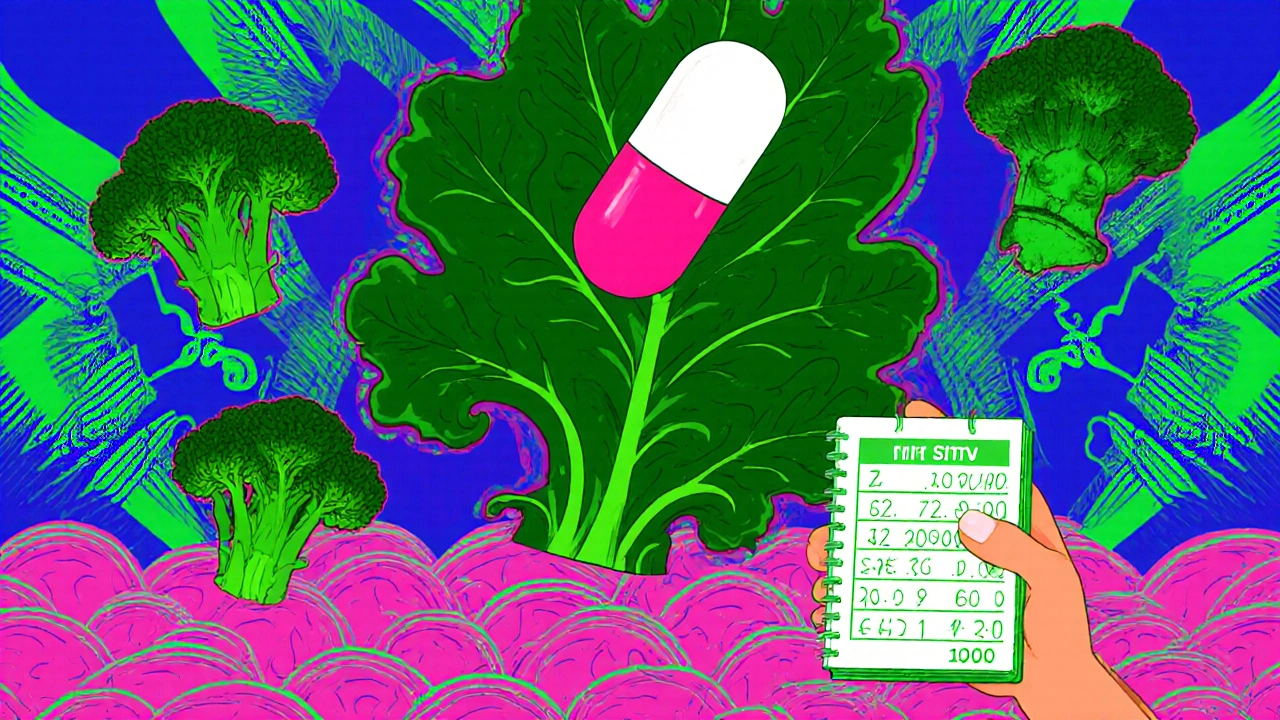
Using Food Diaries on Warfarin: Track Vitamin K to Stay Safe
Track vitamin K intake with a food diary to keep your INR stable while on warfarin. Learn how consistency beats avoidance, which foods matter most, and which apps actually work.