
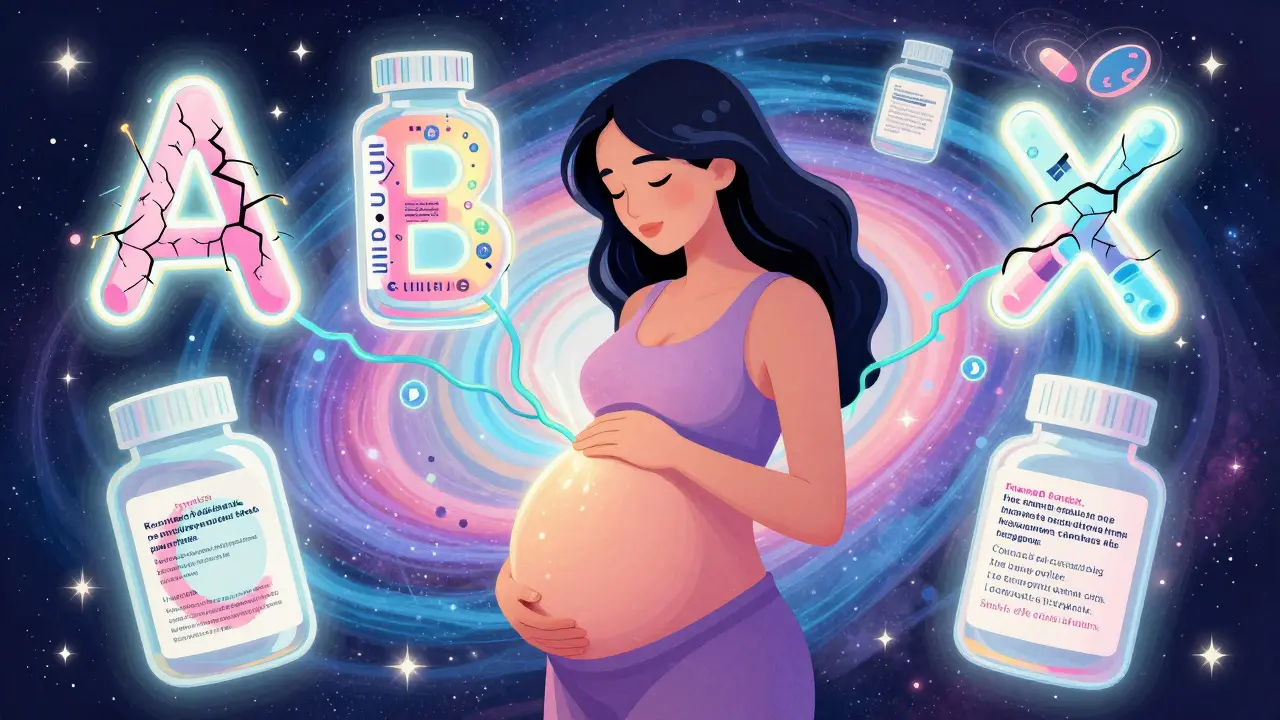
When you’re pregnant, every pill, supplement, or over-the-counter remedy feels like a risk. You’re not just thinking about yourself anymore-you’re thinking about a growing baby. That’s why medication safety during pregnancy isn’t just a medical issue. It’s a daily worry for millions of women. And yet, the system meant to protect you is full of gaps, confusion, and outdated rules.
Here’s the hard truth: 70 to 90% of pregnant women take at least one medication during pregnancy. Half of them take four or more. And 40 to 80% of pregnancies are unplanned. That means a lot of women are taking drugs before they even know they’re pregnant. Some of those drugs are safe. Some are dangerous. And too many? We just don’t know.
Why the Old Letter System Failed
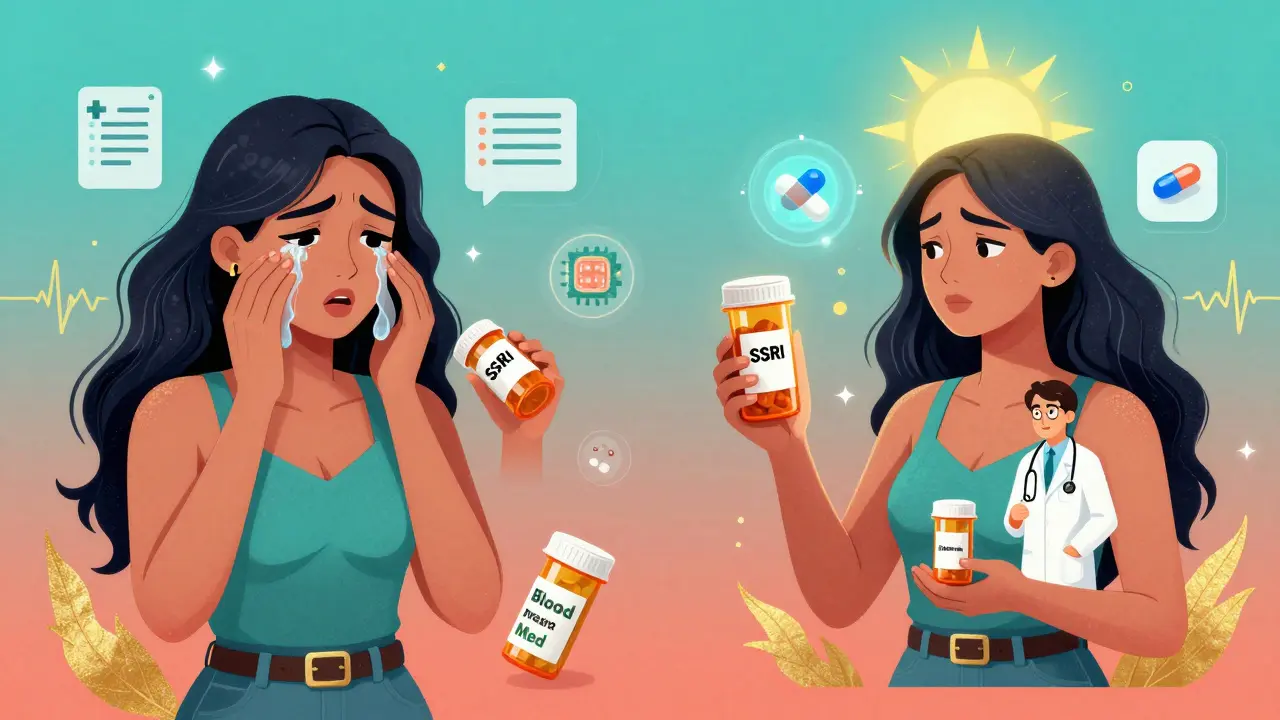
For decades, U.S. drug labels used letters: A, B, C, D, X. It sounded simple. A was safe. X was dangerous. But it wasn’t that simple. The letters didn’t tell you how likely something was to cause harm. They just told you how much data existed. A drug labeled “C” didn’t mean it was risky-it meant there wasn’t enough proof it was safe. Many women stopped taking their blood pressure meds or antidepressants because they saw a “C” and panicked. A 2016-2019 study found that this confusion led to 18% more women stopping essential medications unnecessarily.
In 2015, the FDA got rid of the letter system. It was broken. In its place came the Pregnancy and Lactation Labeling Rule (PLLR). Now, drug labels have real stories. Sections on pregnancy, breastfeeding, and reproductive risks. No more vague letters. Just facts-when they exist.
What’s Actually Known About Medications in Pregnancy
Here’s the biggest problem: most drugs weren’t tested on pregnant women. Clinical trials exclude them. So for most medications, we’re guessing. A 2020 study found that only 5 to 10% of FDA-approved drugs between 2003 and 2012 had enough human data to make a clear call on safety. That means 90% of the time, doctors are working with animal studies, old case reports, or nothing at all.
Some drugs are known to be dangerous. Isotretinoin (Accutane), used for severe acne, causes severe birth defects in 20 to 35% of pregnancies exposed to it. Valproate, used for epilepsy and bipolar disorder, raises the risk of neural tube defects from 0.1% to 1-2%. These aren’t theoretical risks. They’re real, documented, and preventable.
But what about antidepressants? Blood pressure meds? Thyroid pills? The data is messy. Some studies say SSRIs are safe. Others suggest a small increase in heart defects. The American College of Obstetricians and Gynecologists (ACOG) says the risk of untreated depression during pregnancy is often greater than the risk of the medication. Yet, 29% of women with chronic conditions stop their meds as soon as they find out they’re pregnant-because they’re scared.
How Safety Alerts Work (And Why They’re Too Late)
Regulators don’t wait for disasters. They run pregnancy exposure registries. These are systems where doctors and pharmacies report when a pregnant woman takes a specific drug. The FDA runs 38 active registries. They need you to enroll within 28 days of confirming your pregnancy. Then they follow you through delivery and a few months after.
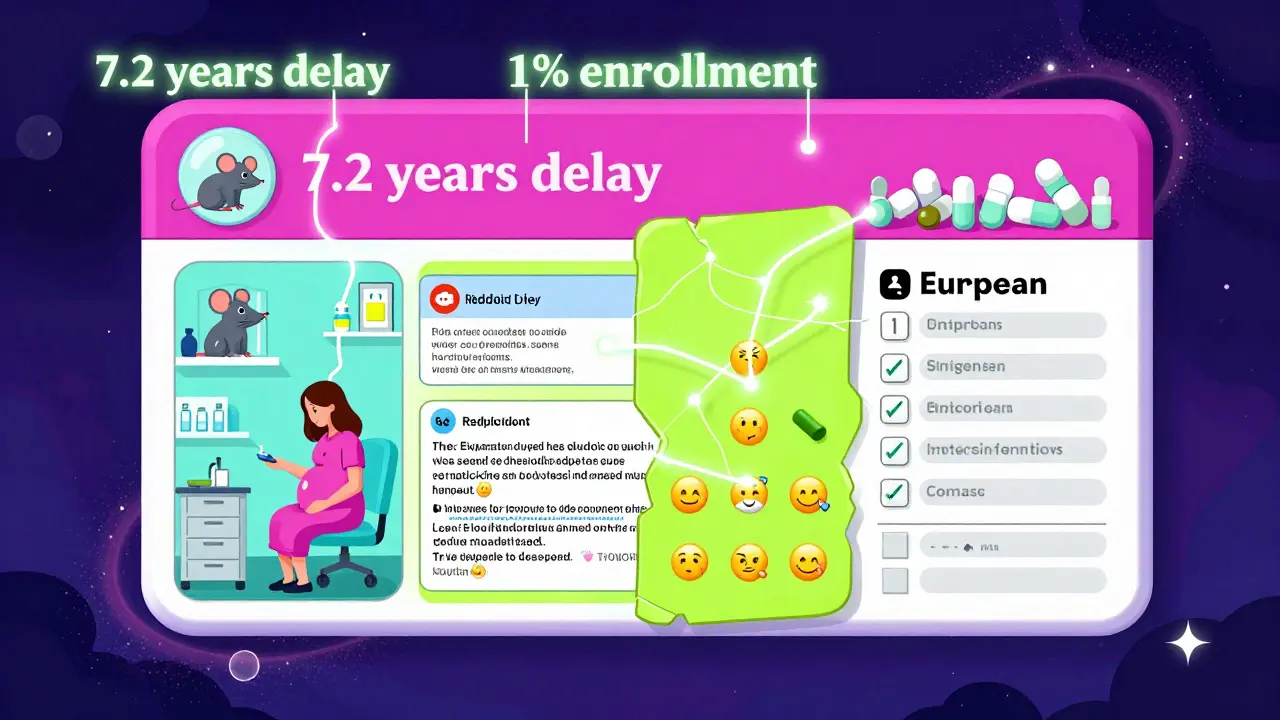
But here’s the catch: less than 1% of all pregnant women taking medications are enrolled in these registries. A 2020 study showed that safety alerts often take 7.2 years to emerge because the data is so slow to collect. That means a drug could be harming babies for years before anyone knows.
Even worse, only 22% of drug companies actually maintain these registries as required. And only 28% of U.S. hospitals have electronic systems that can automatically flag a pregnant patient’s medication list and warn the doctor. Most of the time, it’s up to you to speak up.
U.S. vs. Europe: Two Different Systems
The U.S. and Europe handle this differently. The FDA’s PLLR gives you detailed text. But a 2019 review found only 32% of those labels include actual numbers-like “this drug increases risk by 1.5 times.” Without numbers, it’s hard to weigh risks.
The European Medicines Agency (EMA) takes a stricter approach. For high-risk drugs like lenalidomide (used for multiple myeloma), they require mandatory pregnancy tests, contraception for six months after stopping the drug, and even patient education programs. It’s heavy-handed-but it works. In the U.S., you might get a warning sticker. In Europe, you get a whole system.
But Europe isn’t perfect. A 2022 audit found that 41% of drug companies there didn’t even meet the minimum requirements for tracking pregnancy exposure. So both systems are flawed. One is too vague. The other is too inconsistent.
What You Can Do Right Now
You don’t have to wait for the system to fix itself. Here’s what actually helps:
- Get a medication review at your first prenatal visit. Bring every pill, supplement, and herbal tea you take-even the ones you think are harmless. ACOG says this process takes about 22 minutes but reduces unsafe medication use by 45%.
- Check the label. Look for the “Pregnancy” and “Lactation” sections. They’re required by law now. If they’re missing or vague, ask your doctor or pharmacist to explain.
- Don’t stop meds without talking to your doctor. Stopping blood pressure meds, thyroid pills, or antidepressants can be more dangerous than keeping them. A 2022 study from Massachusetts General Hospital found that 78% of calls to their pregnancy safety hotline ended with the recommendation to continue treatment-not stop.
- Take folic acid. 800 mcg daily, starting before conception and continuing through at least 12 weeks. It cuts neural tube defect risk by up to 70%. It’s one of the few things with solid, life-saving evidence.
- Use trusted resources. The FDA’s “Medicine and Pregnancy” webpage gets 4.3 out of 5 stars from users. Mass General’s Pregnancy Medication Safety Hotline handled over 12,000 calls in 2022. These aren’t perfect, but they’re better than random Google searches or Reddit threads.
The Human Side: Fear, Confusion, and the Internet
On Reddit’s r/Bump, 3,427 posts in 2022 were about medication fears. One top post said: “My doctor told me to stop my antidepressant immediately. Now I’m having severe withdrawal. Why isn’t there clearer guidance?” That’s not an outlier. It’s the norm.
On Drugs.com, 42% of negative reviews about pregnancy safety info said: “Contradictory information.” One woman reads that SSRIs are safe. Another says they cause autism. A third says to avoid them at all costs. No wonder 68% of pregnant women feel overwhelmed.
And yet, when people find reliable sources, they feel empowered. One Healthline user wrote: “The clear section on cannabis risks helped me decide not to use CBD during pregnancy.” That’s the power of good information.
What’s Changing-and What’s Not
The global market for pregnancy medication safety tools is growing fast-projected to hit $2.8 billion by 2029. Big pharma is building apps. The NIH just launched PREGNET, a $25 million project to track 100,000 pregnancies across 45 medical centers. IBM says AI could predict medication risks with 70% accuracy by 2027.
But money is still missing. The March of Dimes estimates a $312 million annual funding gap through 2030. Without it, registries will shrink. Alerts will be slower. And women will keep guessing.
Here’s the bottom line: no medication is 100% safe in pregnancy. But no untreated illness is either. The goal isn’t to avoid all drugs. It’s to use the right ones, at the right time, with the right support.
Ask questions. Bring your list. Don’t assume your doctor knows everything. They don’t. The system doesn’t either. But you can be the one who pushes for clarity. Because your health-and your baby’s-depends on it.
Ashlee Montgomery
January 11, 2026 AT 15:57It’s wild how we treat pregnancy like a medical emergency when it’s actually a natural process. We’ve turned every decision into a risk assessment instead of trusting bodies to adapt. The real issue isn’t the drugs-it’s the fear we’ve been sold.
Paul Bear
January 12, 2026 AT 08:40Let’s be clear: the FDA’s PLLR is an improvement over the letter system, but it’s still woefully inadequate. The absence of quantitative risk data-like relative risk ratios or attributable fractions-renders most labeling functionally useless for clinical decision-making. Without effect sizes, you’re just reading narrative fiction masquerading as evidence.
lisa Bajram
January 13, 2026 AT 16:24OMG I just read this and cried 😭 I was on Zoloft during both pregnancies and my OB literally said ‘just stop it’-no data, no backup plan, no nothing. I spiraled. I wish I’d known about that Mass General hotline. I’m telling every pregnant friend I know to save that number. Also-folic acid? YES. I took 800mcg before I even knew I was pregnant and I swear it saved my sanity. Don’t wait for the doctor to tell you-be your own advocate. You’ve got this.
Jaqueline santos bau
January 13, 2026 AT 17:45So let me get this straight-you’re telling me women are just supposed to ‘ask questions’? Like that’s enough? That’s not empowerment, that’s negligence. My cousin took lamotrigine because her doctor said ‘it’s probably fine’-and now her child has seizures. This isn’t about being scared. It’s about systems that fail people while pretending they’re in control. Someone needs to be held accountable.
chandra tan
January 14, 2026 AT 14:02In India, we don’t have fancy registries or FDA labels. We have grandmas, uncles, and Google. My sister took metformin during pregnancy because her doctor said ‘it’s okay’. No one asked for a letter. No one cared. She had a healthy baby. Maybe the system isn’t broken-maybe it’s just overcomplicated.
Dwayne Dickson
January 15, 2026 AT 13:11How is it possible that in 2024, we still rely on anecdotal evidence and passive surveillance to determine the safety of pharmaceuticals administered to pregnant individuals? The institutional inertia here is not merely frustrating-it is ethically indefensible. The absence of prospective, longitudinal, and adequately powered studies constitutes a form of structural violence against reproductive populations.
Ted Conerly
January 16, 2026 AT 14:45I love how this post ends with ‘you can be the one who pushes for clarity’-because that’s the truth. No one’s coming to save you. Not the FDA, not your OB, not your pharmacist. But you can walk in with your meds list, ask for the Pregnancy section, and say ‘I need numbers, not vibes.’ That’s power. And if you’re scared? You’re not alone. I’ve been there. You’ve got this.
Faith Edwards
January 18, 2026 AT 07:43The casual dismissal of the letter system as ‘outdated’ is emblematic of the modern era’s dangerous obsession with ‘transparency’ over responsibility. The A, B, C, D, X framework, while imperfect, provided a heuristic that was understood by clinicians and patients alike. Replacing it with verbose, unquantified prose is not progress-it is obfuscation dressed in bureaucratic elegance.
Lisa Cozad
January 19, 2026 AT 09:49My OB didn’t even ask what supplements I was taking until week 16. I had been on magnesium and ginger tea since week 4. She said ‘oh, those are fine’-but didn’t know why. I ended up researching everything myself. I’m glad I did. But why should I have to? This shouldn’t be a DIY project.
Saumya Roy Chaudhuri
January 20, 2026 AT 05:18Let me tell you what really happens in India-we don’t even know what’s in the pills half the time. Some doctors give you ‘Ayurvedic’ stuff that’s just sugar and turmeric. Others prescribe antibiotics like candy. No registry. No warnings. Just ‘take this, it’s good for baby.’ I’m not saying it’s better. I’m saying it’s different. And maybe the problem isn’t the system-it’s that we expect systems to fix what culture refuses to address.
Ian Cheung
January 20, 2026 AT 10:27Just take the folic acid. Seriously. It’s the one thing that actually works. I didn’t know about it until I was 10 weeks in. My husband made me start then and there. No debate. No panic. Just 800 mcg. And now my daughter is three and thriving. Don’t overthink it. Do the one thing that’s proven. Everything else? Talk to your doctor. But start with the folic acid.
anthony martinez
January 21, 2026 AT 17:48So the FDA replaced a broken system with a slightly less broken system. And we’re supposed to be impressed? Meanwhile, 90% of drugs still have zero human data. And the companies that are supposed to track this? They’re barely trying. This isn’t a public health issue. It’s a profit optimization problem with a baby in the middle.