
TZD Side Effect Risk Calculator
Estimate Your Risk
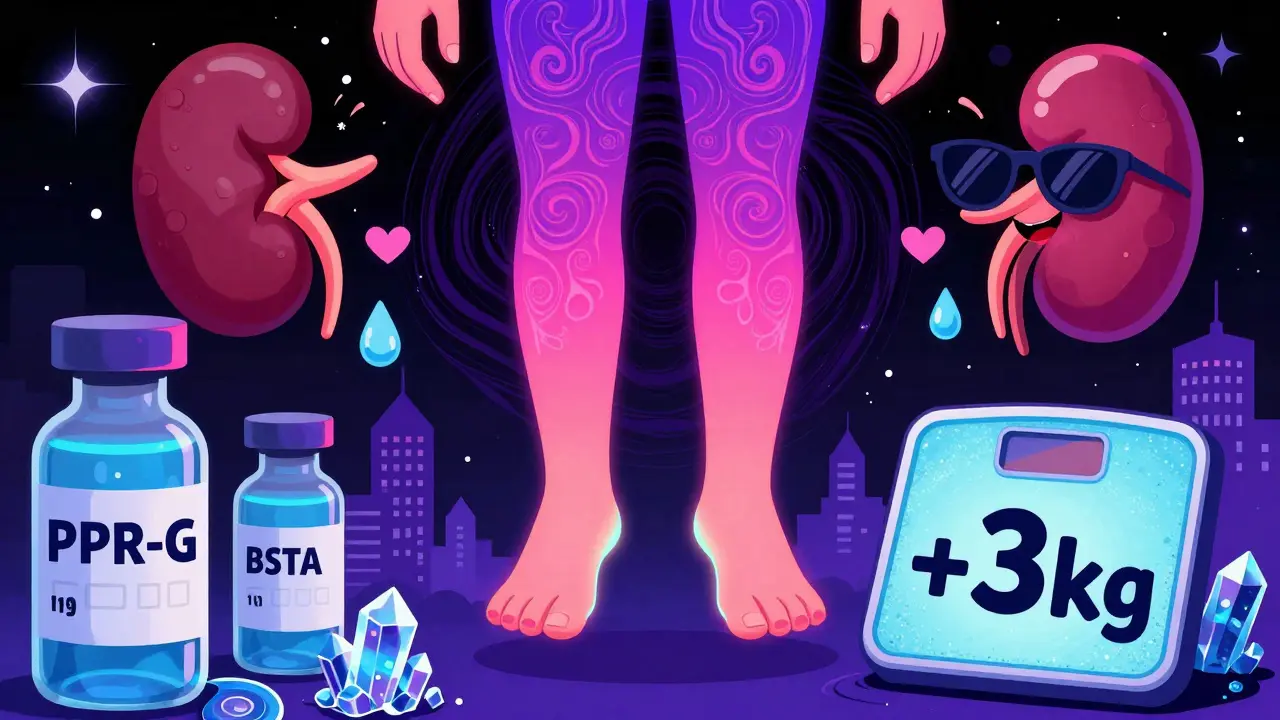
When you’re managing type 2 diabetes, getting your blood sugar under control is the goal. But if you’re taking a TZD-like pioglitazone (Actos) or rosiglitazone (Avandia)-you might notice something unexpected: you’re gaining weight, and your ankles are swelling. It’s not just in your head. About 60% of people on TZDs gain weight, and up to 16% develop noticeable fluid retention, especially if they’re also on insulin.
This isn’t about laziness or poor diet. It’s a direct effect of how these drugs work. TZDs activate PPAR-γ receptors, which makes your body more sensitive to insulin. That’s good for blood sugar. But it also tells your kidneys to hold onto sodium and water, and triggers fat cells to store more fat. About 65-70% of the weight gain comes from fluid, not fat. That’s why you might wake up with puffy ankles or find your shoes tighter, even if you haven’t eaten more.
Why TZDs Cause Weight Gain and Swelling
TZDs don’t just make you hungry-they change how your body handles fluids. The main culprit is the kidney. These drugs activate sodium transporters in the proximal tubule and collecting ducts, making your kidneys reabsorb more sodium. Water follows sodium, and suddenly, your blood volume goes up. That extra fluid leaks into tissues, especially in the legs and feet, causing edema.
It’s worse when you combine TZDs with insulin. Insulin itself promotes sodium retention, so together, they amplify the effect. In clinical trials, patients on pioglitazone plus insulin had edema rates of 15-16.2%, compared to just 1.2% on placebo. Rosiglitazone showed similar numbers. Even at low doses, like 15 mg of pioglitazone, about 2.1% of people develop swelling. At 45 mg, that jumps to 4.8%.
And it’s not just the legs. Some people feel bloated, have shortness of breath, or notice sudden weight gain-2 to 3 kg in a week is a red flag. The FDA added a black box warning in 2007: TZDs are banned in people with moderate to severe heart failure (NYHA Class III or IV). That’s because the extra fluid can overload the heart.
Who Should Avoid TZDs Altogether
TZDs aren’t for everyone. If you already have heart failure, kidney disease, or a history of fluid retention, these drugs can make things worse. Even if you don’t have heart failure yet, if you’re over 65, have high blood pressure, or have had a heart attack, your doctor should think twice before prescribing them.
People with liver problems should also avoid TZDs. Pioglitazone has a warning about possible bladder cancer risk, especially with long-term use over 2 years. Rosiglitazone was pulled from general use in 2010 due to heart attack concerns, though it’s still available under strict controls.
That’s why current guidelines from the American Diabetes Association (2023) and the American Association of Clinical Endocrinologists (2023) now recommend TZDs only as a third-line option-after metformin, SGLT2 inhibitors, and GLP-1 agonists. They’re reserved for people with severe insulin resistance who haven’t responded to other treatments and don’t have heart or kidney risks.
How to Reduce Weight Gain and Swelling
If you’re on a TZD and want to keep taking it-because it’s working well for your blood sugar-there are real, proven ways to reduce side effects.
- Start low and go slow. Begin with the lowest effective dose: 15 mg of pioglitazone daily. Most people don’t need more than 30 mg. Higher doses increase fluid retention without better blood sugar control.
- Take it in the morning. Though evidence is limited, some small studies suggest taking TZDs in the morning reduces nighttime fluid buildup. It’s simple, low-risk, and worth trying.
- Watch your sodium. Cut salt intake to under 2,000 mg per day. That means no processed foods, canned soups, deli meats, or fast food. Read labels. Cooking at home with herbs instead of salt helps. One study showed this alone reduced edema severity by 27%.
- Elevate your legs. When you’re sitting or resting, prop your feet up. This helps gravity pull fluid back out of your ankles. Do it for 20-30 minutes, 2-3 times a day.
- Monitor your weight daily. Weigh yourself every morning, before eating, after using the bathroom. If you gain more than 2-3 kg in a week, call your doctor. Early detection prevents hospitalization. One study found daily weight tracking cut heart failure hospitalizations by 34% in TZD users.

Combine With SGLT2 Inhibitors
This might sound counterintuitive: add another diabetes drug to fight side effects from a different one. But it works.
SGLT2 inhibitors-like empagliflozin (Jardiance), dapagliflozin (Farxiga), and canagliflozin (Invokana)-make your kidneys flush out sugar and sodium through urine. That’s the exact opposite of what TZDs do. Studies show that when you combine an SGLT2 inhibitor with a TZD, edema drops by 45% compared to TZD alone.
And the bonus? You often lose weight instead of gaining it. SGLT2 inhibitors cause a modest weight loss of 2-4 kg, which can cancel out the TZD gain. They also lower blood pressure and protect the heart and kidneys. For many patients, this combo is the best way to keep the insulin-sensitizing benefits of TZDs without the swelling.
Diuretics? Use Them Carefully
Some doctors prescribe diuretics (water pills) to reduce swelling. Thiazides like hydrochlorothiazide are preferred over loop diuretics like furosemide because they’re gentler and less likely to cause electrolyte imbalances. One observational study found thiazides reduced TZD-related edema by 38%.
But diuretics aren’t a magic fix. They can cause low potassium, dizziness, or dehydration. They don’t fix the root cause-TZDs are still making your kidneys hold onto sodium. They’re a temporary patch, not a solution. Use them only if lifestyle changes and SGLT2 inhibitors aren’t enough, and always under close supervision.

What to Do If Side Effects Are Too Much
If you’ve tried everything-lower dose, less salt, daily weight checks, SGLT2 combo-and you’re still gaining weight or your ankles are swollen daily, it’s time to talk about switching.
Most people who stop TZDs do so because of side effects. In online diabetes communities, 82% of users who quit cited weight gain or edema as the reason. That’s not weakness-it’s listening to your body.
Good alternatives exist. GLP-1 receptor agonists like semaglutide (Wegovy, Ozempic) or liraglutide (Victoza) help with blood sugar and cause weight loss. SGLT2 inhibitors work well on their own. Metformin is still the first choice for most people because it doesn’t cause weight gain and may even help you lose a few pounds.
If you’re still struggling with insulin resistance, newer options like tirzepatide (Mounjaro) combine GLP-1 and GIP effects and can lead to major weight loss. These drugs are now preferred over TZDs for most patients.
The Future: Better Drugs Without the Swelling
Researchers are working on next-gen drugs that keep the insulin-sensitizing power of TZDs but skip the fluid retention. One example is saroglitazar, approved in India, which targets PPAR receptors more selectively. In trials, it caused 60% less edema than traditional TZDs.
Another promising area is genetic testing. Some people carry a gene variant (rs1801282) that makes them 2.3 times more likely to develop swelling on TZDs. In the future, doctors might test for this before prescribing-so you don’t waste months dealing with side effects.
For now, TZDs are a shrinking part of diabetes care. In 2006, they were in nearly 18% of prescriptions. By 2022, that dropped to 4.7%. They’re not gone-but they’re no longer the go-to. They’re a tool for specific cases, used carefully, with clear plans to manage side effects.
Final Thoughts
TZDs can help if you have severe insulin resistance and no heart or kidney problems. But they come with real trade-offs: weight gain, swelling, and risk of heart strain. You don’t have to accept these side effects as inevitable. Start low. Watch your salt. Weigh yourself daily. Talk to your doctor about adding an SGLT2 inhibitor. If it’s still too much, there are better, safer options now.
Your diabetes treatment should fit your life-not make it harder. If a drug is making you feel worse, it’s not working, no matter how good your A1C looks.
Why do TZDs cause weight gain if they’re for diabetes?
TZDs improve insulin sensitivity, which helps lower blood sugar. But they also activate fat cells to store more fat and signal the kidneys to hold onto sodium and water. About 65-70% of the weight gain is from fluid, not fat. It’s a side effect of the drug’s mechanism, not a failure on your part.
Is edema from TZDs dangerous?
Mild swelling in the ankles is common and usually not dangerous. But if it spreads to your abdomen, causes shortness of breath, or you gain more than 2-3 kg in a week, it could be early heart failure. This is why the FDA warns against using TZDs in people with moderate to severe heart failure. Always report sudden weight gain or swelling to your doctor right away.
Can I take a diuretic with my TZD to reduce swelling?
Yes, but only under medical supervision. Thiazide diuretics like hydrochlorothiazide can help reduce fluid retention by about 38%. Loop diuretics like furosemide are stronger but risk dehydration and electrolyte imbalance. Diuretics treat the symptom, not the cause. Combining TZDs with SGLT2 inhibitors is a safer, more effective long-term strategy.
Should I stop my TZD if I gain weight?
Not immediately. First, try lowering the dose, cutting salt, monitoring your weight daily, and adding an SGLT2 inhibitor. If those steps don’t help after 2-3 months, and the swelling or weight gain is affecting your quality of life, talk to your doctor about switching to a different medication. Many people find better results with GLP-1 agonists or SGLT2 inhibitors alone.
Are there any new drugs that work like TZDs but without the swelling?
Yes. Saroglitazar, approved in India, is a selective PPAR modulator that improves insulin sensitivity with 60% less fluid retention than traditional TZDs. Researchers are also developing tissue-specific PPAR-γ modulators that target fat and muscle without affecting the kidneys. These aren’t widely available yet, but they represent the future of safer insulin-sensitizing drugs.
Fabian Riewe
December 30, 2025 AT 03:20Been on pioglitazone for 3 years. Started at 15mg, kept my salt under 1500mg/day, and weigh myself every morning. No swelling, no drama. It’s not the drug-it’s how you use it. Small changes, big results.
David Chase
December 31, 2025 AT 18:48LOL. So we’re blaming the drug now? 😂 I’ve seen people eat 5 pizzas a day and blame TZDs for weight gain. You wanna lose weight? Stop eating junk. Simple. No magic pills. No ‘fluid retention’ excuses. #EatLessMoveMore
Also, SGLT2 inhibitors? Those cost $800/month. Good luck on Medicare. 🤡
Emma Duquemin
January 2, 2026 AT 06:34Y’ALL. I was skeptical about the SGLT2 combo until I tried it. I was gaining 2 lbs a week on 30mg pioglitazone-ankles looked like balloon animals. Added dapagliflozin. Within 10 days? My socks weren’t leaving red marks anymore. Lost 5 lbs. My BP dropped. My doctor was like ‘Wait, what did you DO?’ I told her: I followed the damn article. 🙌
It’s not about willpower. It’s about pharmacology. TZDs flood you with fluid. SGLT2s drain it. They’re yin and yang. Why didn’t anyone tell me this sooner??
Kevin Lopez
January 2, 2026 AT 21:56Edema incidence: 16%. NNT for SGLT2 combo: 3.3. HR for HF: 0.62 with SGLT2 co-administration. Diuretics: Class IIb recommendation. Dose-dependent PPAR-γ agonism drives ENaC upregulation in collecting ducts. Bottom line: don’t ignore volume status. Monitor BNP, Na+, and daily weights. If you’re not doing this, you’re not managing-just hoping.
Paige Shipe
January 3, 2026 AT 09:31I appreciate the clinical detail, but let’s be honest-this article reads like a pharmaceutical sales pitch disguised as medical advice. TZDs are outdated. The real issue is that doctors prescribe them out of habit, not evidence. I’ve had patients on these for a decade with no idea why their legs look like tree trunks. It’s not their fault. It’s the system’s.
And yes, I know the guidelines say third-line. But third-line doesn’t mean ‘safe.’ It means ‘we’ve run out of better options.’ That’s not a recommendation. That’s surrender.
Amy Cannon
January 3, 2026 AT 14:11As a nurse practitioner in rural Kansas, I see this daily. Patients come in with pitting edema, confused why their ‘diabetes pill’ is making them look pregnant. They don’t understand sodium. They don’t have access to fresh produce. And SGLT2 inhibitors? Insurance denies them 80% of the time. So we tell them to elevate their legs and drink less water. It’s heartbreaking. The science is brilliant-but the system is broken.
And yes, I’ve had patients who lost 12 pounds after switching to semaglutide. One woman cried because she could finally tie her shoes again. That’s not just medicine. That’s dignity.
Samar Khan
January 5, 2026 AT 04:10OMG I’m so glad I’m not the only one 😭 I gained 18lbs in 3 months on pioglitazone. My boyfriend left me because I ‘looked bloated.’ I cried every night. I tried diuretics-made me dizzy. Then I added Jardiance. Lost 10lbs. My ankles are normal. My skin doesn’t feel like it’s about to burst. I still take the TZD, but now I feel human again. 🙏
Joe Kwon
January 5, 2026 AT 05:56Just want to say-this is one of the most balanced, evidence-based posts I’ve seen on diabetes management. The SGLT2 + TZD combo is underutilized. And the daily weight tracking point? Critical. I’ve had patients who didn’t realize they were retaining fluid until they saw the scale jump. It’s not scary-it’s data. Use it.
Also, saroglitazar? I’ve been following Phase 3 trials. If it gets FDA approval, this could be a game-changer. No more fluid retention, same insulin sensitivity. The future is here, folks.
Jasmine Yule
January 5, 2026 AT 22:07People act like weight gain on TZDs is a personal failure. It’s not. It’s physiology. Your body isn’t broken-you’re just on a drug that hijacks your kidneys. Stop blaming yourself. Start using the tools. Salt control. Morning dosing. Daily scales. SGLT2 combo. These aren’t ‘hacks.’ They’re science. You deserve to feel good while managing your health.
Russell Thomas
January 7, 2026 AT 03:16Wow. So now we’re giving out gold stars for not gaining weight on a drug that was designed to make you gain weight? Congrats. You followed the manual. I’m sure the pharmaceutical reps are thrilled. Meanwhile, my cousin died of heart failure on rosiglitazone. Don’t act like this is a harmless ‘side effect.’ It’s a ticking time bomb wrapped in a diabetes pill.
Himanshu Singh
January 7, 2026 AT 20:01From India: saroglitazar is already here and cheap! My doc switched me from pioglitazone to saroglitazar 4mg. No swelling, no weight gain, HbA1c down from 8.2 to 6.9 in 3 months. Why is this not available in the US? Pharma monopoly? Sad.
Lisa Dore
January 7, 2026 AT 20:04To everyone who’s struggling: you’re not alone. I’ve been where you are-swollen ankles, tight clothes, feeling defeated. But guess what? You can fight back. Talk to your doctor. Try the combo. Cut the salt. Weigh daily. You’re not failing. You’re learning. And that’s the bravest thing you can do.
Also-your worth isn’t tied to your weight. You’re more than your A1C. More than your edema. More than any drug’s side effect. You’re human. And you deserve care that fits your life-not one that breaks it.
Tamar Dunlop
January 8, 2026 AT 06:01As a Canadian with a family history of congestive heart failure, I approached TZDs with profound trepidation. The pharmacological mechanism-PPAR-γ-mediated sodium retention-is not merely a side effect; it is a systemic perturbation of homeostatic equilibrium. The data presented herein, particularly the 45% reduction in edema with SGLT2 co-administration, constitutes a paradigmatic shift in therapeutic strategy. I implore clinicians to prioritize combination regimens over monotherapy, and to educate patients not merely on compliance, but on the profound physiological interplay at play. This is not medicine-it is stewardship of the human body.
Greg Quinn
January 9, 2026 AT 09:25It’s funny how we treat drugs like they’re moral agents. TZDs don’t ‘cause’ weight gain. They interact with biology. And biology doesn’t care about our guilt or shame. The real question isn’t ‘Why am I gaining weight?’ It’s ‘What system are we designing that makes this side effect acceptable?’ We need better drugs, yes-but we also need better conversations. One pill shouldn’t have to carry the burden of an entire healthcare model.
Nicole K.
January 9, 2026 AT 13:45If you’re gaining weight on a diabetes pill, you’re doing it wrong. Just eat less. Stop eating carbs. Exercise. That’s it. No magic combos. No fancy drugs. Just discipline. People today want a pill for everything, then cry when the pill has side effects. Grow up.