
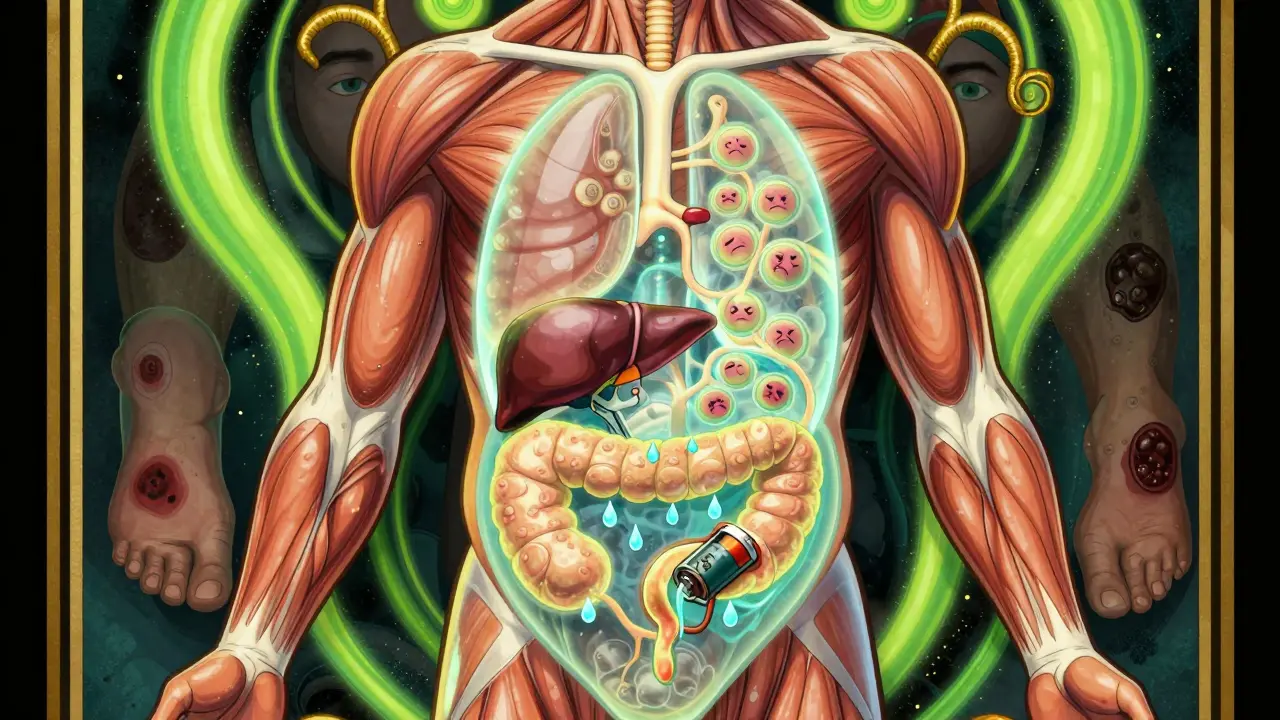
Type 2 diabetes isn't just about high blood sugar-it’s a slow, silent process that starts years before you ever feel sick. Unlike type 1, where the body stops making insulin altogether, type 2 diabetes begins when your cells stop listening to insulin. Your pancreas keeps pumping out the hormone, but your muscles, fat, and liver don’t respond. Over time, the pancreas gets worn out. By the time most people are diagnosed, they’ve already lost about half their insulin-making ability. And here’s the thing: many don’t know they have it until something serious happens-a heart attack, a foot ulcer, or a routine blood test that says "abnormal."
What Are the Real Symptoms?
Forget the myth that type 2 diabetes comes with sudden, dramatic signs. It creeps up. Most people notice nothing at first. But if you’re paying attention, these are the clues:
- You’re always thirsty-even after drinking water. This happens because high blood sugar pulls fluid from your tissues, making you dehydrated.
- You’re peeing every hour, especially at night. Your kidneys are working overtime to flush out extra glucose through urine.
- You’re hungry all the time, but still losing weight. Your cells aren’t getting the energy they need from sugar, so your body starts breaking down muscle and fat.
- You’re exhausted. Even after a full night’s sleep. Without proper insulin function, your cells starve for fuel.
- Your vision blurs. High glucose changes the shape of your eye’s lens, making it hard to focus.
- Wounds take forever to heal. High sugar damages blood vessels and weakens your immune response.
- You keep getting infections-urinary tract, skin, yeast. Sugar feeds bacteria and yeast.
- Your feet tingle or go numb. That’s nerve damage starting.
- You notice dark, velvety patches on your neck or armpits. That’s acanthosis nigricans, a visible sign of insulin resistance.
Here’s the scary part: about 27% of Americans with type 2 diabetes don’t know they have it. Symptoms are too mild. Or they’re blamed on aging, stress, or being "just tired."
Why Does It Happen?
Type 2 diabetes isn’t caused by eating too much sugar. It’s caused by a mix of genes, lifestyle, and time.
At its core, it’s insulin resistance. Your body’s cells stop responding to insulin like they used to. To compensate, your pancreas cranks out 2 to 3 times more insulin. That works-for a while. But over years, the pancreas gets exhausted. Beta cells die off. And then, blood sugar rises.
Obesity is the biggest trigger. If your BMI is over 30, you’re 80 times more likely to develop type 2 diabetes than someone with a BMI under 22. But it’s not just weight. Physical inactivity plays a role in 27% of cases globally. Sitting all day lowers your muscles’ ability to use glucose.
Genetics matter too. If a parent or sibling has type 2 diabetes, your risk jumps by 40%. Over 400 gene variants have been linked to it. Some people are just more vulnerable.
And then there’s race and age. Native Americans, African Americans, Hispanic/Latino Americans, and Asian Americans have higher rates than non-Hispanic whites. Age is a factor too-risk climbs after 45. But now, 287,000 Americans under 20 have it. Children are developing a disease once called "adult-onset."
What Happens If You Ignore It?
Unmanaged type 2 diabetes doesn’t just affect blood sugar. It damages your whole body.
- Heart disease: 65-80% of deaths in people with type 2 diabetes are from heart attack or stroke. Your risk is 2 to 4 times higher.
- Nerve damage: 60-70% of people develop neuropathy after 10 years. Numbness, burning, or pain in hands and feet. 1 in 5 of those will get foot ulcers. And 1 in 5 of those ulcers lead to amputation.
- Kidney failure: Type 2 diabetes causes 44% of all new cases of kidney failure requiring dialysis.
- Blindness: Diabetic retinopathy affects nearly 30% of adults with diabetes. It’s the leading cause of new blindness in working-age adults in the U.S.
- Dementia: People with diabetes have a 2-3 times higher risk of Alzheimer’s. Some researchers even call it "type 3 diabetes."
- Depression: One in five people with type 2 diabetes also has depression-and that doubles their risk of dying early.
These aren’t distant risks. They’re predictable outcomes if blood sugar stays high for years.
How Do You Manage It?
Managing type 2 diabetes isn’t about perfection. It’s about consistency.
Lifestyle: The First Line of Defense
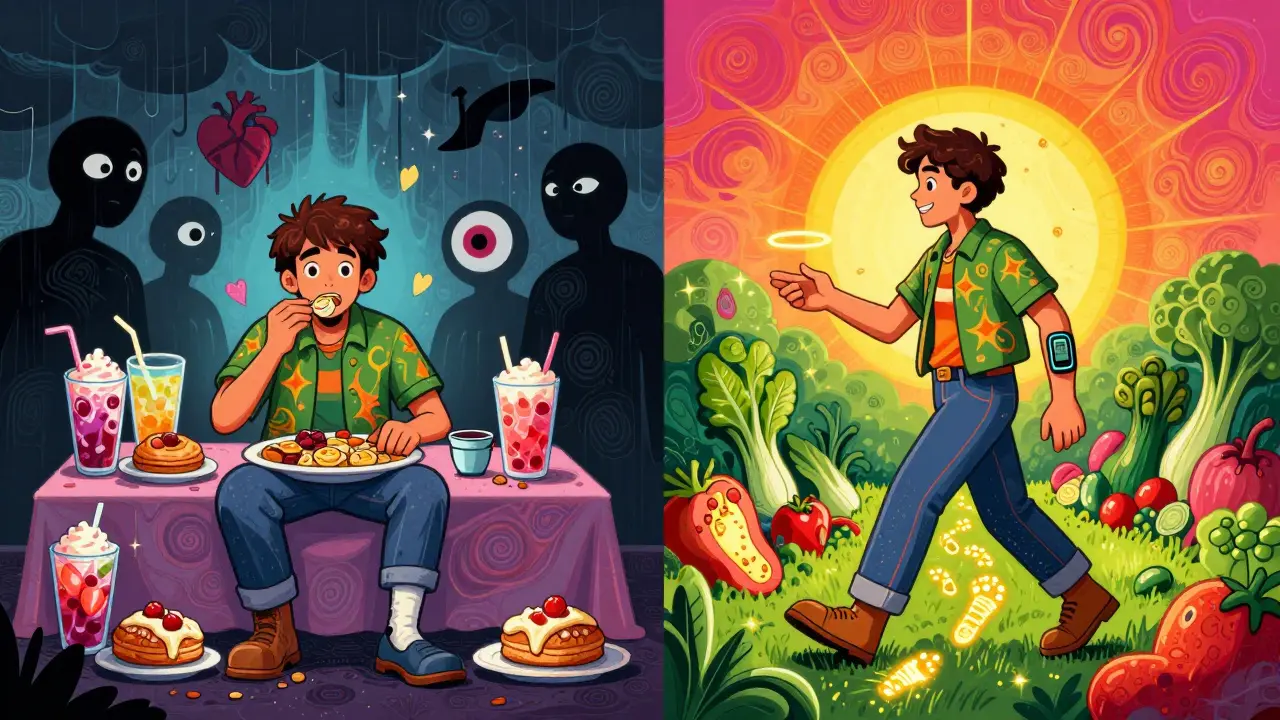
The CDC’s National Diabetes Prevention Program showed that losing just 7% of your body weight through diet and 150 minutes of walking per week cuts your risk of developing diabetes by 58%. That’s more effective than any drug.
Focus on:
- Reducing ultra-processed carbs (white bread, sugary drinks, pastries)
- Eating more fiber (beans, lentils, vegetables, whole grains)
- Getting movement every day-even 10-minute walks after meals help lower blood sugar spikes
- Sleeping 7-8 hours. Poor sleep increases insulin resistance.
One study found that people who walked for 10 minutes after each meal lowered their blood sugar more than those who walked once a day.
Medications: When Lifestyle Isn’t Enough
Metformin is still the go-to first drug. It lowers blood sugar by 1-2% and doesn’t cause weight gain or low blood sugar. It’s cheap, safe, and proven over decades.
But newer drugs are changing the game:
- GLP-1 agonists (like semaglutide and liraglutide): These reduce HbA1c by up to 1.6% and help you lose 3-5 kg. They also lower heart attack and stroke risk.
- SGLT2 inhibitors (like empagliflozin): These make your kidneys flush out sugar through urine. They lower HbA1c by 0.5-1% and protect your kidneys and heart.
- Tirzepatide (Mounjaro): Approved in 2022, this dual-action drug reduces HbA1c by up to 2.3% and helps people lose 11-15 kg. It’s not first-line yet-but it’s a game-changer.
Not everyone needs insulin. But if your pancreas is worn out, insulin may become necessary. That doesn’t mean failure. It means your body needs help.
Monitoring: Know Your Numbers
Your HbA1c (average blood sugar over 3 months) should be under 7% for most adults. But goals vary:
- Young, healthy people: Aim for under 6.5%
- Older adults with other health problems: 7-8% is safer to avoid dangerous lows
Continuous glucose monitors (CGMs) are no longer just for type 1. Medicare now covers them for type 2 patients. Seeing your sugar rise after meals helps you make smarter food choices.
Can It Be Reversed?
Yes-but only if you act early.
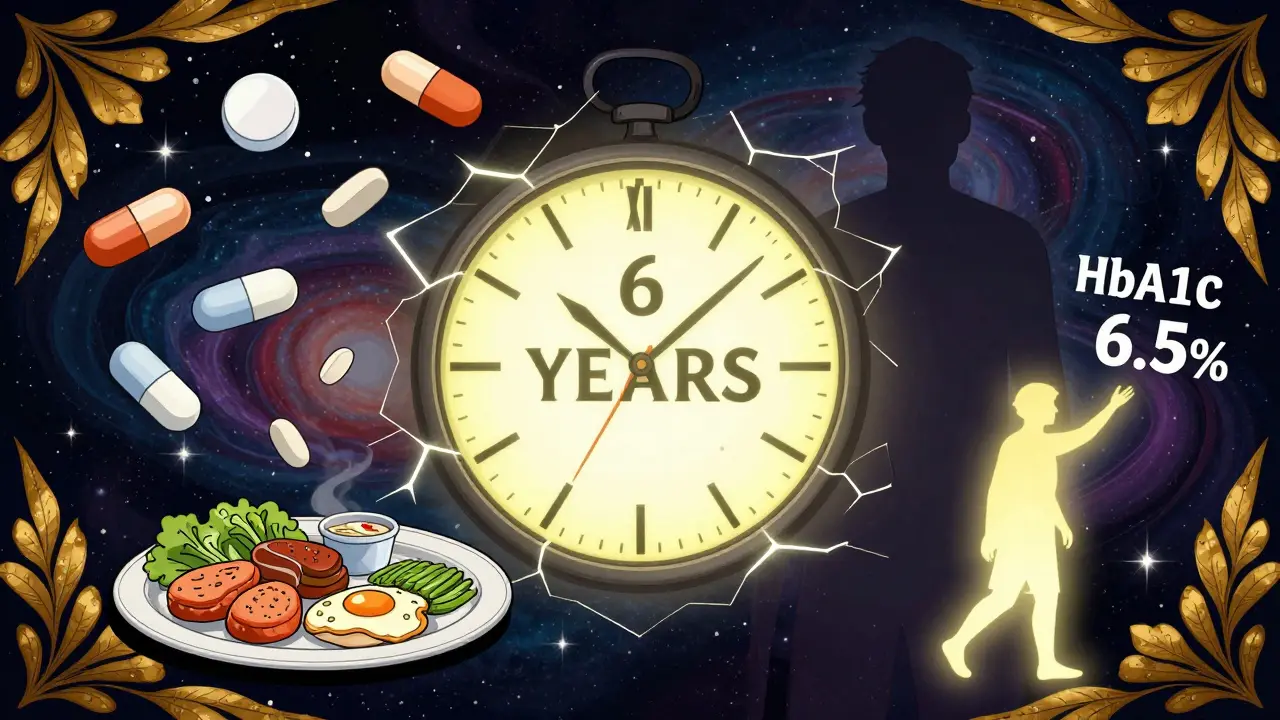
The DIALECT trial showed that 46% of people with type 2 diabetes for less than 6 years went into remission after a year of very low-calorie dieting (825-853 kcal/day for 3-5 months), followed by gradual food reintroduction. Their HbA1c dropped below 6.5%-without medication.
Remission isn’t a cure. It means your blood sugar is normal without drugs. But if you gain weight back, diabetes can return.
The key? Catch it before your pancreas gives up. The longer you wait, the harder it gets.
What’s Next?
Technology is helping. Hybrid closed-loop systems (like the MiniMed 780G) now work for type 2 diabetes too. They automatically adjust insulin based on real-time glucose readings, improving time-in-range from 51% to 71%.
And research is shifting. The NIH’s All of Us program is studying why diabetes hits some groups harder than others-looking at genetics, environment, and social factors like food access and stress.
But the biggest barrier isn’t science. It’s access. People without healthy food, safe places to walk, or affordable medicine struggle most. Diabetes isn’t just a medical problem. It’s a social one.
What Should You Do Today?
If you’re at risk-overweight, inactive, family history, or over 45-get tested. A simple fasting blood sugar or HbA1c test takes five minutes.
If you’ve been diagnosed:
- Start with food and movement. Don’t wait for medication.
- Ask about CGMs. They’re more helpful than finger sticks.
- Find a program like the CDC’s National Diabetes Prevention Program. It’s free or low-cost in most states.
- Don’t wait for complications. The damage starts long before you feel it.
Type 2 diabetes doesn’t have to define you. But it does demand action. Early, consistent, smart action.
Can type 2 diabetes be cured?
Type 2 diabetes can’t be permanently cured, but it can be put into remission. This means blood sugar levels return to normal without medication. Remission is most likely in the first few years after diagnosis, especially with significant weight loss through diet and lifestyle changes. But if weight is regained, diabetes can return. It’s not a cure-it’s a reversal that requires ongoing maintenance.
Is type 2 diabetes hereditary?
Yes, genetics play a strong role. If one parent has type 2 diabetes, your risk increases by about 40%. If both parents have it, your risk is even higher. Over 400 gene variants have been linked to the condition. But genes alone don’t cause it. Lifestyle factors like weight, activity level, and diet determine whether those genes turn on.
Can thin people get type 2 diabetes?
Yes. While obesity is the biggest risk factor, about 10-15% of people with type 2 diabetes are not overweight. This is sometimes called "TOFI"-thin outside, fat inside. These individuals have excess fat around their organs (visceral fat), which causes insulin resistance. Genetics, inactivity, and poor diet can contribute even at a normal weight.
Do I need to take medication for life?
Not necessarily. Many people start with metformin, but some can stop if they lose weight and improve their lifestyle. Others may need to add more drugs over time as the disease progresses. The goal isn’t lifelong medication-it’s keeping blood sugar in a healthy range. Some people eventually need insulin, but that doesn’t mean they failed. It means their body changed.
How often should I check my blood sugar?
It depends. If you’re not on insulin or newer medications, checking once or twice a week may be enough. If you’re on insulin, or if your doctor recommends it, daily checks are common. Continuous glucose monitors (CGMs) give real-time data and are now covered by Medicare for type 2 patients. The goal is to understand how food, activity, and stress affect your numbers-not to obsess over every reading.
Can exercise alone reverse type 2 diabetes?
Exercise helps, but it’s rarely enough alone. Physical activity improves insulin sensitivity, but if you’re still eating a high-sugar, high-carb diet, blood sugar will stay high. The most effective approach combines movement with dietary changes and weight loss. Walking after meals, strength training twice a week, and reducing processed foods work better together than any single change.
Are there foods I should completely avoid?
You don’t need to eliminate anything forever, but some foods make control harder. Sugary drinks (soda, juice, sweet tea), white bread, pastries, and processed snacks spike blood sugar fast. Focus on replacing them with whole foods: vegetables, legumes, whole grains, lean proteins, and healthy fats. Occasional treats are fine-but portion and timing matter. Eating dessert after a protein-rich meal is better than on an empty stomach.
Does stress affect blood sugar?
Yes. Stress triggers hormones like cortisol and adrenaline, which raise blood sugar. Chronic stress-whether from work, money, or relationships-can make diabetes harder to manage. Managing stress through sleep, breathing exercises, therapy, or hobbies isn’t optional-it’s part of treatment.
Jonah Mann
February 8, 2026 AT 00:18man i just found out my a1c was 7.2 last month... i thought i was just "getting old" or "stressed from work". turns out i’ve been peeing every hour since last summer and just assumed it was coffee. wow. thanks for laying this out so clearly.
Tricia O'Sullivan
February 8, 2026 AT 00:34Thank you for this comprehensive and deeply considered overview. The distinction between remission and cure is particularly well-articulated, and I appreciate the emphasis on systemic factors such as access and social determinants. A truly thoughtful contribution to public discourse.
Tatiana Barbosa
February 8, 2026 AT 14:41OMG YES. I lost 22 lbs with just walking after meals and cutting soda. My A1c dropped from 7.8 to 5.9 in 8 months. No meds. I’m not a miracle-I just stopped ignoring the signs. If you’re reading this and have prediabetes? Start TODAY. Not tomorrow. TODAY.
MANI V
February 10, 2026 AT 13:24People really think they can "reverse" diabetes by eating kale and walking? Pathetic. This isn’t a lifestyle choice-it’s a moral failure. You eat junk, you pay the price. No one’s forcing you to eat donuts. Stop acting like it’s a medical mystery.
Ryan Vargas
February 11, 2026 AT 04:24Consider the epistemological framework here: we are told that type 2 diabetes is a metabolic disorder, yet the underlying causality is rooted in a post-industrial food system that commodifies glycemic load as convenience. The pancreas isn’t failing-it’s being systematically overwhelmed by a capitalist architecture of dietary exploitation. We treat symptoms, not systems. And until we address the structural violence of food deserts, corporate sugar lobbying, and sedentary urban planning, we are merely rearranging deck chairs on the Titanic.
Tasha Lake
February 12, 2026 AT 02:38Can someone explain the difference between GLP-1 and SGLT2 in layman’s terms? I get that they’re new drugs, but how do they actually work differently? My endo just handed me a script for semaglutide and said "trust me," which isn’t very reassuring.
Simon Critchley
February 12, 2026 AT 15:18Bro I’ve been on metformin since 2019 and I’m still eating pizza every Friday 😎 But my CGM shows my spike is half what it used to be. I walk 10 min after it. That’s my flex. Diabetes ain’t a death sentence, it’s a weird game of chicken with your tacos. 🍕🫀
Tom Forwood
February 14, 2026 AT 03:05Y’all need to stop blaming people. My grandma had type 2, my mom has it, I have it. I’m 5’10”, 145 lbs, run 3x a week. I didn’t choose this. My body just got cursed with genes that turn oatmeal into a sugar bomb. This isn’t about willpower-it’s biology. Stop shaming people who are trying.
Jacob den Hollander
February 14, 2026 AT 18:37i read this and cried. my sister lost her foot last year. she didn’t know she had it. no pain. no warning. just numb. now she’s on dialysis. i’m getting tested tomorrow. if you’re reading this and you’re over 40? go. now. don’t wait. please.
John Sonnenberg
February 15, 2026 AT 21:37THIS IS A HOAX. The CDC is funded by Big Pharma. CGMs? They’re surveillance tools. They’re tracking your food to sell you more drugs. They’re making diabetes a lifelong product. Wake up. Your body can heal itself if you stop taking the poison. No meds. No monitors. Just fasting. And prayer.
Jessica Klaar
February 16, 2026 AT 20:53My dad’s in remission. Lost 40 lbs, started cooking, got a dog and walks it every morning. He says the best part? He can taste food again. Not just flavor-texture, sweetness, salt. He says he forgot what real hunger felt like. This isn’t just about numbers. It’s about living.
PAUL MCQUEEN
February 18, 2026 AT 18:16Why is everyone acting like this is new info? I’ve been saying this since 2015. The internet’s full of people who just discovered carbs are bad. Newsflash: we knew this in the 90s. Also, why are we still talking about BMI? It’s garbage science. We need to measure visceral fat, not weight.
Chima Ifeanyi
February 20, 2026 AT 15:22Let’s be real-this is just colonial medicine repackaged. In Nigeria, we treat insulin resistance with bitter leaf, moringa, and ancestral fasting rituals. You think a CGM is the answer? You’re ignoring 5000 years of African metabolic wisdom. Western medicine is late to the party.
Elan Ricarte
February 21, 2026 AT 16:02They don’t want you to know this: the real cause is glyphosate. It’s in your corn syrup, your bread, your oat milk. It fries your mitochondria. That’s why it’s worse now. The FDA? Bought. The CDC? Complicit. You think metformin helps? It’s just a bandaid on a bullet wound. Go read the 2018 NIH toxicology reports. They buried it. I’ve got screenshots.