
Imagine waking up with a mild fever and a sore throat, thinking it's just a common cold. Within a few days, your skin begins to redden, and then, suddenly, it starts to peel away in large sheets, leaving raw, oozing areas that feel like a severe burn. This is the terrifying reality of Stevens-Johnson Syndrome is a rare, serious disorder of the skin and mucous membranes (SJS) and its more severe counterpart, Toxic Epidermal Necrolysis the most extreme form of epidermal detachment (TEN). These aren't just simple rashes; they are life-threatening medical emergencies where the body's immune system mistakenly attacks the skin, causing it to die and separate from the underlying tissue.
Understanding the SJS and TEN Spectrum
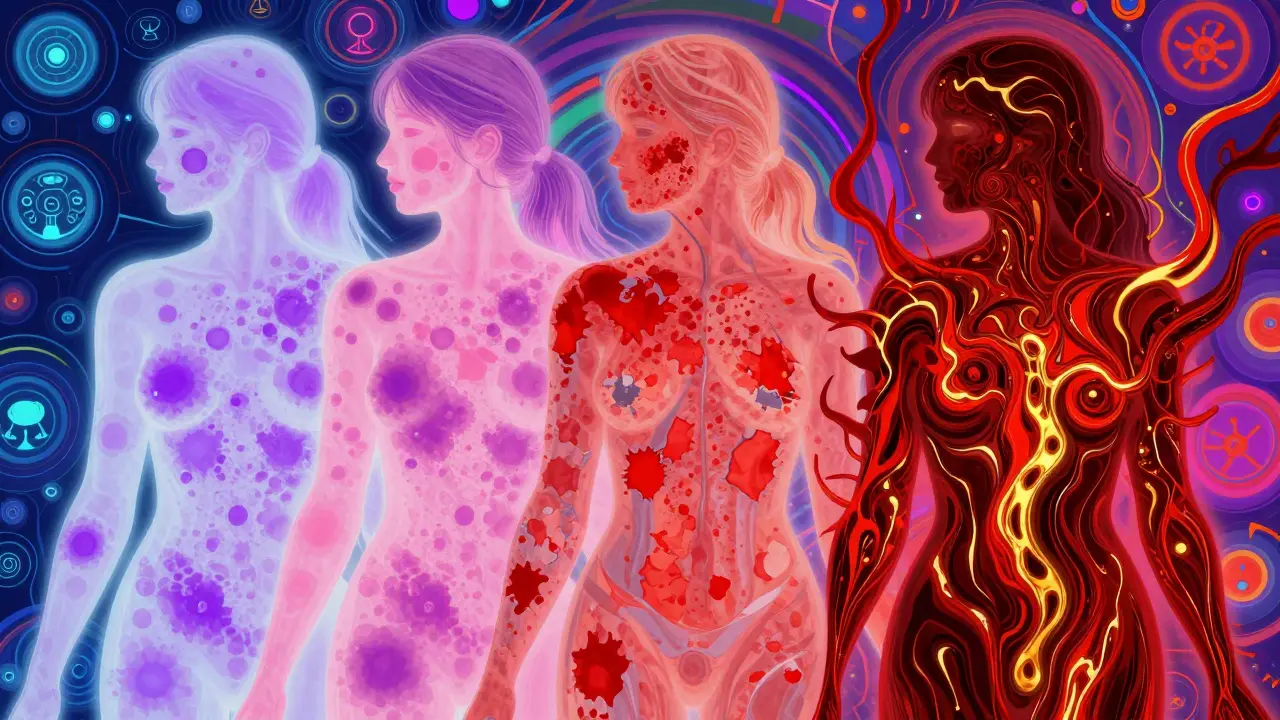
For a long time, doctors thought SJS and TEN were different diseases. We now know they are actually the same condition, just at different stages of severity. Think of it as a spectrum. The main thing that separates them is how much of your body is affected. Doctors use the percentage of Stevens-Johnson Syndrome and TEN based on Body Surface Area (BSA) detachment to decide the diagnosis.
- SJS: Less than 10% of the body's skin is detached.
- SJS/TEN Overlap: Between 10% and 30% of the skin is affected.
- TEN: More than 30% of the skin detaches. This is often called Lyell's syndrome.
While SJS is severe, TEN is catastrophic. The mortality rate for SJS usually sits between 5% and 15%, but for TEN, it can climb to around 25%. Death usually doesn't happen from the skin loss itself, but from the complications that follow, such as sepsis or multi-organ failure, because the skin is our primary barrier against infection.
How it Happens: The Trigger and the Attack
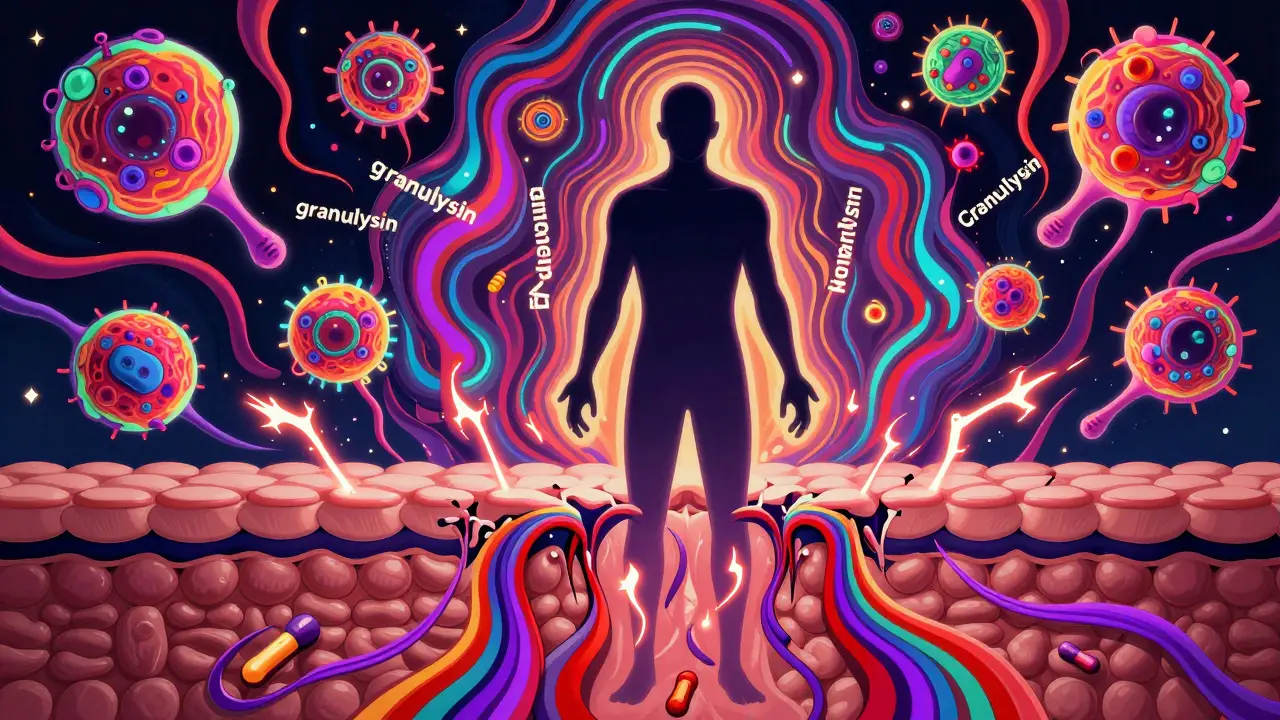
In about 80% of cases, these reactions are triggered by a medication. It's an extreme version of an allergic reaction. Your immune system produces cytotoxic T lymphocytes and natural killer cells. Instead of fighting a virus, these cells release a protein called granulysin that tells your skin cells (keratinocytes) to commit suicide. This leads to full-thickness epidermal necrosis-basically, the top layer of your skin dies and lifts off.
Certain medications are notorious for this. Antiepileptics like carbamazepine and lamotrigine are common culprits, making up about 30% of cases. Sulfonamides (antibiotics) account for 20%, and allopurinol (used for gout) is responsible for about 15%.
Interestingly, your genetics play a huge role. Some people carry specific HLA alleles-markers on your white blood cells-that make them hyper-reactive. For example, if you have the HLA-B*15:02 allele, your risk of having a reaction to carbamazepine increases by 1,000-fold. Because of this, some countries now require genetic screening before you even start these drugs.
Recognizing the Warning Signs
The reaction doesn't usually happen instantly. There is a "prodromal phase" that lasts a few days, typically occurring 1 to 3 weeks after you start a new medication. You'll feel like you have the flu: high fever (often over 38.9°C), a headache, a cough, and a very sore throat. Some people also get conjunctivitis (red, irritated eyes).
After the flu-like stage, the skin changes appear. It starts with flat, red or purple spots (macules) on the trunk, which then spread to the face and arms. These spots quickly turn into blisters. One of the hallmark signs doctors look for is the Nikolsky sign, where simply rubbing the skin with a finger causes the top layer to slide off.
Crucially, this isn't just a skin issue. Mucosal membranes-the moist linings of your body-are almost always hit. This means painful sores in the mouth, blisters on the eyes, and inflammation in the genital or respiratory tracts. About half of all patients will have three or more of these areas affected, making eating, drinking, and breathing incredibly difficult.
Diagnosis and the Danger Zone
Getting the diagnosis right is a race against time. Doctors use the RegiSCAR system to confirm the condition, combining clinical signs with a skin biopsy. The biopsy is the gold standard; it shows full-thickness death of the skin cells with very little inflammation in the deeper dermis.
It's easy to mistake SJS for other things, like Staphylococcal Scalded Skin Syndrome (which is more common in kids) or certain autoimmune blistering diseases. But the treatment for those is different, so a biopsy is vital.
| Feature | SJS | SJS/TEN Overlap | TEN (Lyell's) |
|---|---|---|---|
| Skin Detachment (BSA) | < 10% | 10% - 30% | > 30% |
| Typical Mortality | 5% - 15% | Intermediate | ~25% |
| Primary Driver | Immune Reaction | Immune Reaction | Immune Reaction |
| Care Setting | Hospital / Dermatology | Burn Unit / ICU | Burn Unit / ICU |
How Doctors Manage a Crisis
The moment SJS or TEN is suspected, the patient must be hospitalized-usually in a burn unit. Why a burn unit? Because the skin loss is functionally identical to a massive second-degree burn. You lose fluids, electrolytes, and the ability to regulate temperature at a staggering rate.
The first step is immediate: stop every single non-essential medication. Doctors have to play detective to figure out which drug caused the reaction so it's never used again.
Treatment focuses on three main areas:
- Fluid Resuscitation: Patients often need 3 to 4 times the normal amount of IV fluids to compensate for the moisture leaking out of their raw skin.
- Wound Care: Using non-adherent dressings that don't stick to the raw flesh, which would cause further damage during dressing changes.
- Eye Protection: This is a huge priority. Ophthalmologists must check the eyes daily to prevent the eyelids from fusing or the cornea from scarring, which can lead to permanent blindness.
There's a lot of debate about medications to stop the immune attack. Some use high-dose corticosteroids, but these can increase the risk of infection. Others use Cyclosporine, which some studies suggest can significantly lower mortality. More recently, researchers have looked at etanercept (a TNF-alpha inhibitor), showing promising results when given within the first 48 hours.
Life After the Acute Phase
Surviving the initial crisis is just the first part of the journey. Between 60% and 80% of survivors deal with long-term complications. The eyes are often the most affected; chronic dry eye syndrome and corneal scarring are common, requiring lifelong drops and specialist care.
The skin rarely returns to exactly how it was. Hyper-pigmentation (dark spots) or hypo-pigmentation (light spots) affect about 70% of people. Some people develop permanent scars or nail dystrophy, where the nails grow back deformed.
The mental toll is also heavy. Spending weeks in an ICU, dealing with excruciating pain and a transformed appearance, often leads to psychological trauma. About 40% of survivors develop Post-Traumatic Stress Disorder (PTSD). This highlights why multidisciplinary care-including mental health support-is just as important as the dermatological treatment.
Preventing the Unthinkable
The best way to handle SJS and TEN is to make sure they never happen. Pharmacogenomics-the study of how genes affect a person's response to drugs-is the key here. By screening for HLA-B*15:02 and HLA-B*58:01 before prescribing high-risk meds, we can practically eliminate these reactions in certain populations.
For instance, Taiwan implemented a national screening program for carbamazepine, and they saw an 80% drop in SJS/TEN cases over several years. It's a powerful example of how a simple genetic test can save thousands of lives.
Is Stevens-Johnson Syndrome contagious?
No, SJS and TEN are not contagious. They are not caused by a virus or bacteria that you can catch from someone else. Instead, they are severe immune reactions, usually triggered by a medication the patient has taken, or occasionally by an infection like Mycoplasma pneumoniae.
How long does the recovery process take?
The acute phase typically lasts 8 to 12 days, but full recovery of the skin can take weeks or months. Long-term recovery depends on the severity; those with TEN may require prolonged hospitalization and months of specialized wound care and ophthalmological treatment to manage scarring and dryness.
Can SJS happen more than once?
Yes, but only if the person is re-exposed to the same triggering drug. If a person takes a medication that previously caused SJS, the second reaction often happens much faster (sometimes within 48 hours) and can be significantly more severe.
What are the most common drugs that cause SJS?
The most common triggers include antiepileptic drugs (like carbamazepine, phenytoin, and lamotrigine), sulfonamide antibiotics (such as trimethoprim-sulfamethoxazole), and allopurinol. NSAIDs and certain HIV medications like nevirapine are also known triggers.
What is the SCORTEN score?
SCORTEN is a mortality prediction tool used by doctors in the first 24 hours of admission. it looks at seven factors: age over 40, presence of cancer, heart rate over 120 bpm, skin detachment over 10%, high serum urea, high serum glucose, and low serum bicarbonate. A higher score indicates a higher risk of death.