
When medicines vanish and prices spike
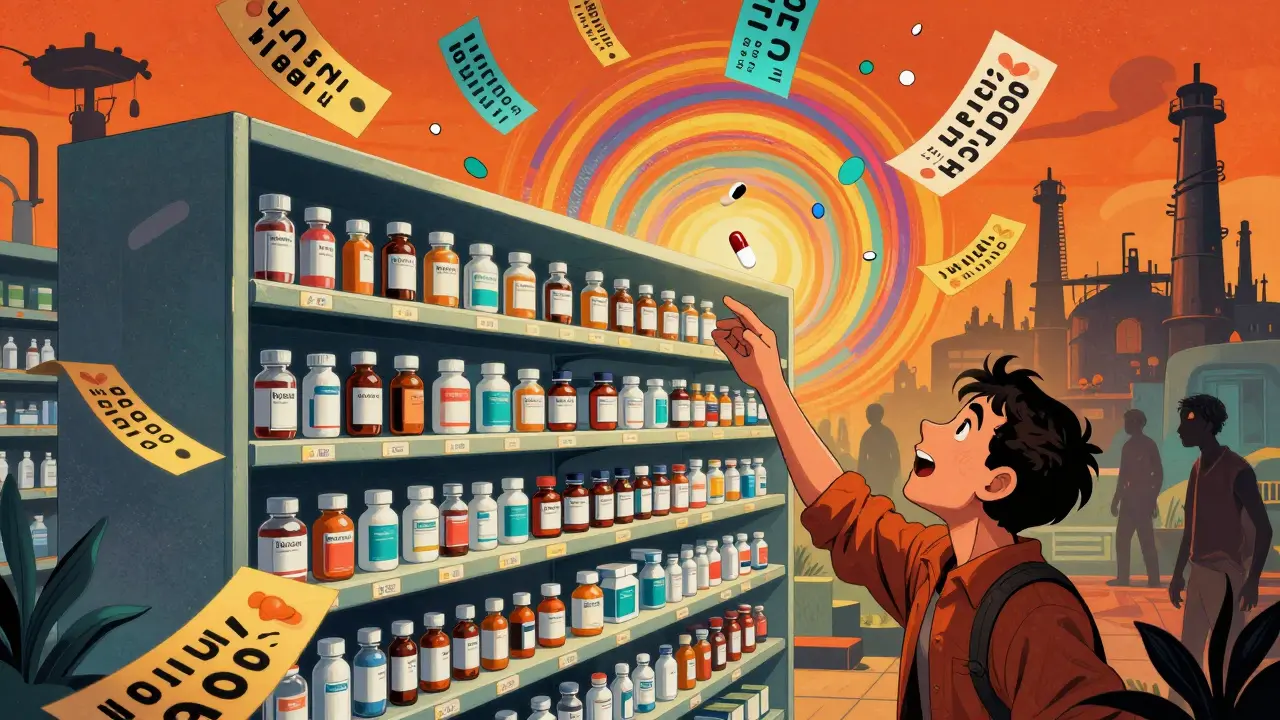
Imagine needing a common antibiotic, but your local pharmacy has been out for three weeks. Or your insulin co-pay jumps from $30 to $90 overnight. These aren’t hypotheticals-they’re happening right now. Between 2021 and 2023, supply chain disruptions pushed up the cost of critical drugs and medical supplies across the U.S. and Europe. The result? Patients delay care, clinics ration inventory, and hospitals scramble to find alternatives. This isn’t just about empty shelves-it’s about how pricing pressure and shortages are rewriting the rules of health economics.
Why do medicines disappear?
Shortages don’t happen because no one makes the drug. They happen because the system can’t adapt fast enough. Take the case of generic injectable antibiotics like vancomycin or cefazolin. In 2022, over 200 drug shortages were reported in the U.S. alone, according to the FDA. Many of these came from a handful of global manufacturers-mostly in India and China-that supply 80% of the world’s generic medicines. When a single factory shuts down due to quality issues, weather, or labor strikes, the ripple effect hits hospitals within weeks.
It’s not just production. Packaging materials like vials, syringes, and blister packs became scarce too. A 2023 study by the Cleveland Federal Reserve found that supply shocks in medical packaging raised the cost of producing generic drugs by 12-18% in just 12 months. And when input costs rise, manufacturers don’t absorb the hit-they pass it on. That’s pricing pressure in action.
How pricing pressure turns into patient pain
When a drug becomes scarce, the price doesn’t just go up-it goes wild. In 2021, the price of a single vial of naloxone, the opioid overdose reversal drug, jumped from $40 to $180 in some states. Why? Because demand surged as overdose rates climbed, while supply stayed flat. The Federal Reserve’s analysis shows that supply shocks increase drug prices three times faster than demand shocks alone.
Patients feel this in two ways: higher out-of-pocket costs and delayed care. A University of Michigan survey in Q2 2022 found that 58% of Americans worried about not being able to buy needed medical items. For seniors on fixed incomes, this meant skipping doses or splitting pills. One 72-year-old in Ohio told a local news outlet she was using her husband’s leftover blood pressure pills because her own prescription was on backorder. That’s not just risky-it’s dangerous.
Who’s behind the shortages?
It’s easy to blame big pharma, but the problem runs deeper. Most generic drugs are made by companies with razor-thin margins. They don’t have the cash to build extra capacity or diversify suppliers. When one supplier fails, there’s no backup. The European Central Bank found that during peak disruption, 65% of pharmaceutical manufacturers relied on just one source for key active ingredients.
Then there’s the labor shortage. Pharmacies need pharmacists to dispense, technicians to pack, and drivers to deliver. In 2022, the U.S. had 1.5 million fewer healthcare workers than needed, according to the Health Resources and Services Administration. Many left the field during the pandemic. Those who stayed faced burnout. The result? Pharmacies can’t restock fast enough-even when the drugs are available.
Policy mistakes that made things worse
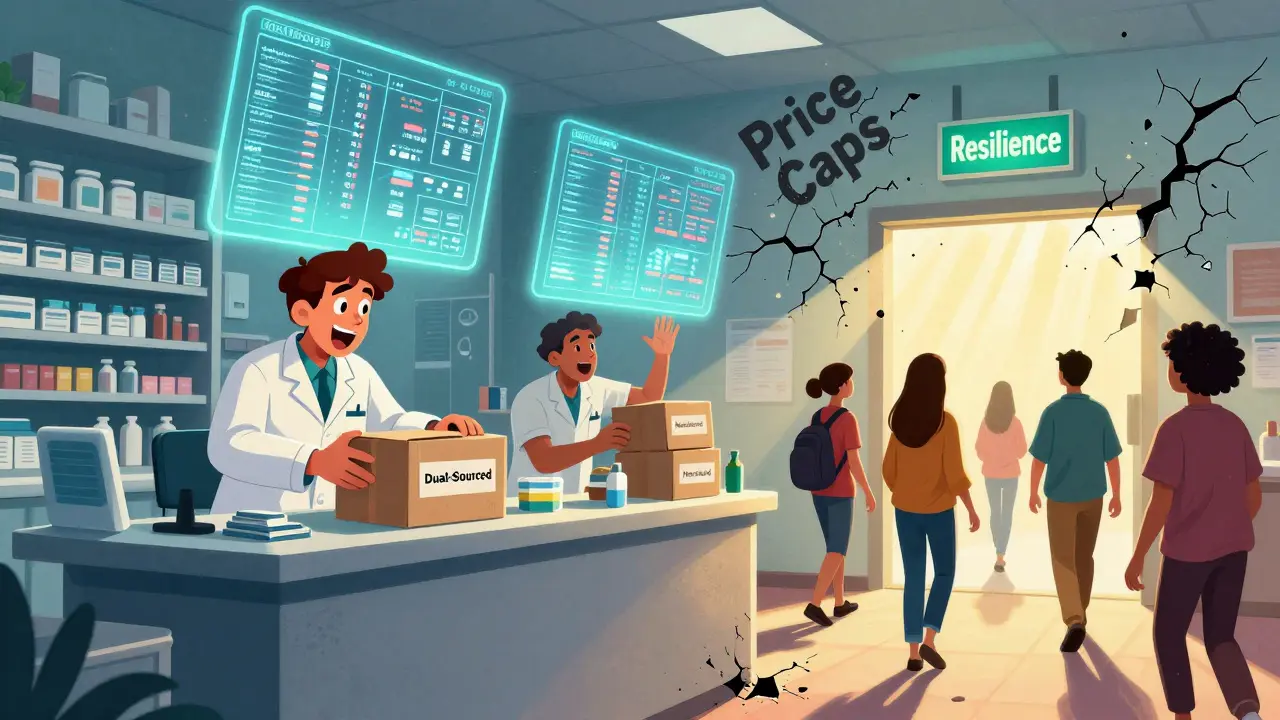
Some government actions, meant to help, made shortages worse. In the UK, the government capped energy prices to protect households. But that same logic was applied to drug pricing in some states. When regulators cap the price of a drug, manufacturers have no incentive to produce more if costs are rising. The Office for Budget Responsibility found that in 2021, 27 small UK drug distributors went bankrupt after being forced to sell insulin at fixed prices while their input costs doubled.
Price controls don’t fix scarcity-they hide it. Instead of increasing supply, they trigger panic buying. Patients stockpile. Clinics hoard. And the shortage gets worse before it gets better. Harvard economist Martin Weitzman showed this pattern decades ago: when prices are artificially low, scarcity becomes invisible until it’s too late.

What’s working: real solutions from the front lines
Some organizations are fighting back-not with price caps, but with smarter systems. One hospital network in Minnesota started using digital supply chain tools that track inventory in real time. Within six months, they cut drug stockouts by 31%. Another pharmacy chain began dual-sourcing: buying critical drugs from two different suppliers instead of one. Their outage rate dropped by 40%.
Germany took a different approach. In 2021, they temporarily relaxed antitrust rules so that small drugmakers could share production capacity. The result? A 19% drop in pharmaceutical shortages within six weeks. It wasn’t about lowering prices-it was about increasing flexibility.
And then there’s nearshoring. Companies like Pfizer and Teva are moving some production from Asia to Eastern Europe and Mexico. It’s more expensive-production costs are 8-12% higher-but it’s faster. A drug that took 45 days to ship from India now arrives in 12 days from Mexico. That’s a game-changer for emergency meds.
The future: more volatility, not less
Don’t expect this to go away. The San Francisco Federal Reserve’s Global Supply Chain Pressure Index showed that while overall supply chain stress returned to normal by early 2023, medical supply chains remained 15-20% more fragile than before the pandemic. Why? Because climate events, geopolitical tensions, and aging infrastructure are making disruptions more common.
Climate change is already affecting drug manufacturing. Floods in India in 2022 shut down 12 pharmaceutical plants for months. A fire at a U.S. packaging facility in 2023 delayed production of 14 essential drugs. These aren’t one-offs-they’re becoming the new normal.
By 2025, Gartner predicts 60% of major drug companies will use digital twin technology to simulate supply chain shocks before they happen. That’s progress. But it won’t help small clinics or rural pharmacies without the budget for tech upgrades.
What patients and providers can do now
- Ask your pharmacist: If your drug is out of stock, ask if there’s a therapeutically equivalent alternative. Many generics are interchangeable.
- Check the FDA shortage list: The FDA publishes a public list of current drug shortages. Know what’s at risk before your refill is due.
- Plan ahead: If you’re on a long-term medication, request a 90-day supply when possible. That gives you a buffer.
- Advocate: Tell your lawmakers that drug supply chains need investment-not price controls. Support policies that reward diversification and resilience.
Healthcare isn’t just about doctors and pills. It’s about logistics, labor, and markets. When pricing pressure and shortages hit, the system doesn’t break-it bends. And if we don’t fix the underlying weaknesses, the next crisis won’t be a surprise. It’ll be predictable.
Why are generic drugs in short supply?
Generic drugs are often made by manufacturers with low profit margins and minimal backup suppliers. When one factory shuts down-due to quality issues, labor strikes, or natural disasters-there’s no quick replacement. Over 80% of generic drug ingredients come from just two countries, India and China. Any disruption there ripples globally.
Do price controls help with drug shortages?
No. Price controls prevent manufacturers from raising prices to cover rising costs, so they reduce production or stop making the drug entirely. In the UK, price caps on energy led to 27 energy company failures. The same happened with some drug distributors-when they couldn’t pass on higher costs, they went out of business, making shortages worse.
Can hospitals and pharmacies prepare for future shortages?
Yes. Hospitals using real-time inventory tracking systems cut stockouts by over 30%. Dual-sourcing-buying from two suppliers instead of one-reduces disruption risk by 40%. Investing in digital tools and building relationships with regional suppliers are the most effective strategies right now.
Why are some drugs more affected than others?
Drugs with complex manufacturing processes, unstable ingredients, or few manufacturers are most vulnerable. Injectable antibiotics, insulin, and chemotherapy agents are common examples. Simple pills with many producers, like ibuprofen, rarely have shortages. It’s about complexity and concentration, not popularity.
Is nearshoring a long-term solution?
It’s part of the solution. Moving production closer to home-like from China to Mexico-cuts shipping time from 45 days to 12. That reduces risk. But it increases costs by 8-12%. It won’t fix everything, but it makes systems more resilient. For life-saving drugs, that trade-off is worth it.
How do supply chain issues affect rural communities?
Rural areas feel the impact harder. They have fewer pharmacies, less inventory buffer, and longer delivery times. When a shipment is delayed, a small clinic might go days without essential meds. Urban hospitals can pivot faster. Rural providers often can’t. That’s why supply chain equity matters as much as supply chain efficiency.
Harbans Singh
December 25, 2025 AT 23:37Been seeing this in my pharmacy back home in Punjab-same generics, same delays. It’s wild how a factory in China or India can ripple through clinics from Ohio to Odisha. We don’t talk enough about how global supply chains aren’t just economic-they’re life-or-death. And yeah, price caps sound nice until you’re the one waiting for insulin.
Lindsay Hensel
December 26, 2025 AT 21:41The systemic fragility of our pharmaceutical infrastructure is not merely a logistical concern-it is a moral emergency. When patients are forced to ration life-sustaining medications due to artificial price ceilings and monolithic supply dependencies, we are not managing a market-we are failing a covenant of care.
Michael Dillon
December 27, 2025 AT 23:48Let’s be real-this whole article reads like a NPR op-ed written by a grad student who’s never worked a day in a hospital. Nobody cares that a vial cost $40 to make and now sells for $180. People care that they can’t get it. Stop overanalyzing. Just fix the damn supply chain. And no, ‘nearshoring’ isn’t a magic fix-it’s just expensive band-aid.
Oluwatosin Ayodele
December 28, 2025 AT 15:17You think this is new? I worked in a Lagos pharmacy in 2019-same story. No backup suppliers, no inventory tracking, just prayers and hope. The U.S. acts like it’s shocked, but this is how the global South has lived for decades. Now you’re catching up. The real problem? You still think you’re the center of the supply chain.
Jason Jasper
December 28, 2025 AT 22:31My uncle’s a pharmacist in rural Kentucky. He told me last month he had to call six distributors before finding one vial of vancomycin. They finally got it-but it cost 3x the usual. He didn’t raise the price. He just ate the difference. No one’s talking about the people on the front lines who keep showing up, even when the system’s broken.
Mussin Machhour
December 29, 2025 AT 15:05Real talk: if we want to fix this, we need to stop treating drugs like commodities and start treating them like public infrastructure-like roads or water. We fund bridges, we fund power grids. Why not drug pipelines? Dual-sourcing, digital tracking, regional hubs-it’s not rocket science. We just need to stop pretending profit margins should dictate who lives and who doesn’t.
Winni Victor
December 29, 2025 AT 21:27Oh honey, here we go again-another ‘deep dive’ that blames capitalism while ignoring the fact that the FDA’s approval process for generics is a 7-year-long Kafkaesque nightmare. Meanwhile, some guy in Bangalore is making your metformin in a shed with a fan and a prayer. Let’s not romanticize the system that made this mess. It’s not broken-it’s designed this way.
Sophie Stallkind
December 30, 2025 AT 21:51While the proposed solutions-dual-sourcing, digital twin technology, and regional production-are commendable, they remain inaccessible to the majority of small and rural healthcare providers. Without equitable investment and federal subsidy structures to support infrastructure modernization at the community level, these innovations will exacerbate existing disparities rather than mitigate them. A systemic response must prioritize accessibility over efficiency.