

A perforated eardrum isn’t something you can ignore. It’s not just a minor earache-it’s a tear in the thin membrane that separates your ear canal from the middle ear. This membrane doesn’t just help you hear; it keeps bacteria and water out, balances pressure, and sends sound vibrations to the inner ear. When it’s damaged, everything changes. The good news? Most perforated eardrums heal on their own. The bad news? If you don’t protect it properly, you could end up with lasting hearing loss, chronic infections, or even surgery.
How Long Does It Take to Heal?
There’s no one-size-fits-all answer. Healing time depends on how big the hole is, what caused it, and whether you let it get infected. Small tears-like those from a minor pop or a light blow to the ear-usually close up in three to six weeks. Some heal even faster, within two weeks. Larger tears, especially those from loud explosions or deep insertions (like cotton swabs pushed too far), can take two to three months or longer.Here’s what happens during healing, week by week:
- Days 1-3: Pain peaks, then drops sharply. If your pain is still bad after three days, something’s wrong-maybe an infection.
- Week 2-3: New tissue starts forming at the edges of the tear. You’ll notice less pressure in your ear and less ringing.
- Week 4-6: The hole shrinks noticeably. Hearing improves slowly. This is the critical window where water exposure or pressure changes can undo progress.
- Week 6-8: Most small perforations are fully closed. Your ear pressure normalizes, and hearing returns to normal or near-normal levels.
According to Mount Sinai Medical Center, if your eardrum hasn’t started healing by the fourth week, you should see an ear specialist. Waiting too long increases the chance of permanent damage.
What Causes a Perforated Eardrum?
Knowing how it happened helps you avoid it again. The most common causes:- Ear infections: Fluid builds up behind the eardrum, pressure rises, and it bursts. This is especially common in kids.
- Pressure changes: Flying during a cold, scuba diving, or even a loud bass drop at a concert can rupture the membrane.
- Physical trauma: Cotton swabs, bobby pins, or even a slap to the ear can cause a tear.
- Loud noises: Explosions, gunshots, or sudden loud blasts can create shockwaves that tear the eardrum.
One thing to remember: you don’t need to feel a pop to have a perforation. Some people only notice hearing loss, muffled sounds, or fluid draining from the ear later on.
Protection: What You Must Do (and Not Do)
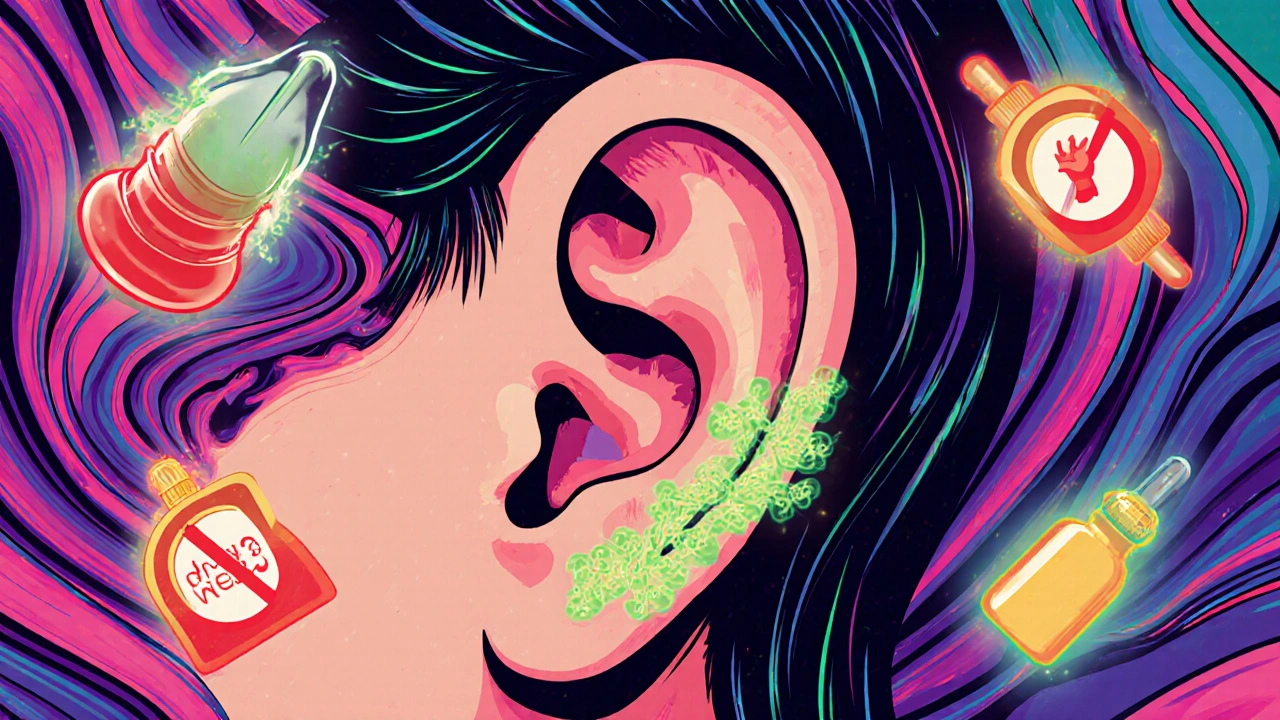
This is where most people mess up. You think, “It’s just an ear-it’ll heal.” But without protection, you’re risking infection, delayed healing, or permanent damage.Keep it dry. Water is the #1 enemy during healing. Showering? Use a waterproof earplug made of silicone. If you don’t have one, pack a cotton ball coated in petroleum jelly. Never let water get inside. Swimming? Absolutely off-limits until your doctor says it’s safe.
Don’t clean your ear. No cotton swabs. No ear candles. No picking. Your body is trying to repair itself-don’t disturb the healing tissue. Earwax is actually helping by forming a natural barrier.
Avoid pressure changes. Flying? Hold off until your eardrum is fully healed. Diving? Forget it. Even blowing your nose too hard can push air into the middle ear and reopen the tear. If you need to clear your nose, do it gently-one nostril at a time.
Don’t use over-the-counter ear drops. Unless your doctor gives them to you, don’t put anything in your ear. Some drops can damage the healing tissue or cause dizziness.
Follow-up appointments matter. Your doctor will check progress with an otoscope. If the hole isn’t shrinking after six weeks, they might suggest a patch or surgery.
Treatment: When It Doesn’t Heal on Its Own
Most perforations heal without help. But if it’s large, infected, or hasn’t closed by 8-12 weeks, you’ll need medical intervention.If there’s an infection, your doctor will prescribe antibiotics-either oral or as eardrops. Pain can be managed with ibuprofen or acetaminophen. Never use aspirin in children.
For stubborn cases, two procedures are common:
- Myringoplasty: A tiny patch-made of gel, paper, or fat-is placed over the hole. It’s quick (10-30 minutes), done under local anesthesia, and has a success rate of 85-90% with newer materials like hyaluronic acid or platelet-rich plasma.
- Tympanoplasty: For larger holes, surgeons use your own tissue (often from behind the ear) to rebuild the eardrum. This takes longer (30-120 minutes) and requires general anesthesia.
These aren’t emergency surgeries. They’re planned, low-risk, and highly effective. Success rates have improved dramatically in the last five years thanks to better materials and techniques.
What Happens If You Ignore It?
Ignoring a perforated eardrum isn’t just risky-it’s dangerous. Complications aren’t rare:- Chronic ear infection: Up to 10% of untreated cases develop ongoing drainage and inflammation.
- Permanent hearing loss: About 3-5% of people lose some hearing permanently if the eardrum doesn’t heal properly or if the inner ear gets damaged.
- Mastoiditis: Infection spreads to the bone behind the ear. This happens in 1-2% of cases and can be life-threatening if not treated.
- Vertigo and dizziness: If the inner ear is affected, you might feel off-balance for weeks or months.
Mount Sinai’s clinical data shows that following protection rules reduces the need for surgery by 70-80%. That’s not a small number. It means most people who avoid water, pressure, and trauma heal completely without ever needing a scalpel.
When to Call a Doctor
You don’t need to panic, but you do need to pay attention. Call your doctor if:- Pain doesn’t improve after 3 days
- You notice pus or blood draining from the ear
- Hearing doesn’t start improving after 2 weeks
- You feel dizzy, nauseous, or have a fever
- Symptoms return after seeming to get better
Don’t wait for it to get worse. Early intervention prevents long-term problems.
The Bottom Line
A perforated eardrum sounds scary, but it’s one of the most treatable ear injuries out there. With the right care, 95% of people recover fully. The key isn’t fancy medicine-it’s discipline. Stay dry. Avoid pressure. Don’t poke your ear. Follow up. That’s it.Healing takes time, but your hearing is worth the patience. Skip the shortcuts. Don’t risk permanent damage because you wanted to shower or fly home early. Your eardrum is a delicate, powerful part of your body. Treat it like one.
Can a perforated eardrum heal on its own?
Yes, most small perforations heal naturally within 3 to 6 weeks. Larger tears may take up to 2-3 months. Healing depends on size, cause, and whether the ear stays dry and protected. Around 90% of cases heal without surgery if proper care is followed.
Can I shower with a perforated eardrum?
You can shower, but you must keep water out of the ear. Use a waterproof silicone earplug or a cotton ball coated in petroleum jelly. Never let water enter the ear canal. Avoid baths if possible-steam and moisture increase infection risk. Swimming is strictly off-limits until fully healed.
Is it safe to fly with a perforated eardrum?
It’s not recommended until the eardrum is fully healed. Changes in cabin pressure during takeoff and landing can cause pain, delay healing, or even reopen the tear. If you must fly, use decongestants beforehand and chew gum during ascent/descent. Always check with your doctor first.
How do I know if my eardrum is infected?
Signs of infection include yellow or green drainage from the ear, increasing pain, fever, foul odor, or swelling around the ear. If you notice any of these after the first few days, see a doctor immediately. Infections can prevent healing and lead to serious complications like mastoiditis.
Will I lose my hearing permanently?
Temporary hearing loss is common with a perforated eardrum, but permanent loss is rare-only about 3-5% of cases. It usually happens if the inner ear is damaged, the perforation doesn’t heal, or infection spreads. Following protection guidelines dramatically lowers this risk.
Can I use over-the-counter ear drops?
No. Unless your doctor prescribes them, do not put anything in your ear-including drops, oils, or home remedies. These can irritate the healing tissue, cause dizziness, or lead to infection. Only use medications approved by your healthcare provider.
How long should I avoid blowing my nose?
Avoid forceful nose-blowing for at least 4-6 weeks, or until your doctor confirms healing. Blowing hard creates pressure that can push air into the middle ear and reopen the tear. If you must clear your nose, do it gently-one nostril at a time, while keeping your mouth open.
What’s the difference between myringoplasty and tympanoplasty?
Myringoplasty is for smaller holes and uses a patch (gel, paper, or fat) to seal the tear. It’s quick, done under local anesthesia, and takes 10-30 minutes. Tympanoplasty is for larger perforations and rebuilds the eardrum using your own tissue. It’s more involved, takes 30-120 minutes, and requires general anesthesia. Both have high success rates, especially with modern materials.
King Property
November 29, 2025 AT 00:45Let me break this down for you people who think ears are just decorative. A perforated eardrum isn’t some minor inconvenience-it’s a full-on structural failure in your auditory system. You think you can just ‘wait it out’ while you’re blasting music or taking showers? Nah. You’re not healing, you’re just delaying disaster. I’ve seen guys with holes bigger than a pencil eraser try to swim and end up with mastoiditis. Bone infection. In their skull. Because they thought ‘it’ll heal.’ It won’t. Not if you’re an idiot.
Mount Sinai says 90% heal with care? That’s only if you follow the rules. Not if you’re ‘too busy’ or ‘don’t have time’ for silicone plugs. Your ear isn’t asking for your schedule. It’s asking for respect. Stop treating it like a broken phone you’ll fix ‘later.’
Yash Hemrajani
November 29, 2025 AT 10:14Oh wow, a whole article about not sticking cotton swabs in your ear? Groundbreaking. I’m sure the 12-year-old who did this to himself last week will now cry into his pillow and vow never to clean his ears again.
Meanwhile, in India, grandmas have been using warm mustard oil for centuries. No doctor, no plugs, no drama. Just a drop and a nap. But sure, let’s all go buy $20 silicone earplugs because Western medicine says so. 🤡
Pawittar Singh
December 1, 2025 AT 09:52Hey everyone-first off, you’re not alone. I had a perforation last year after a bad cold and a sneeze that felt like my head exploded. Felt like a warzone in there for days.
But here’s the thing: I followed the rules. Silicone plugs? Bought ‘em. Didn’t shower for 3 weeks? Yep. Didn’t blow my nose like a foghorn? Hell yeah. And guess what? Fully healed in 6 weeks. No surgery. No drama.
To the guy who said ‘mustard oil’-I get it, traditional remedies are cool. But your ear isn’t a curry pot. Water + infection + perforation = bad combo. Trust science, not your cousin’s uncle’s YouTube video.
You got this. Stay dry. Be patient. Your ears will thank you later. 🙌
P.S. If you’re reading this and you’re scared? You’re not weak. You’re smart. Keep going.
Josh Evans
December 2, 2025 AT 02:58Just had this happen to me last month after a concert. Felt like someone punched me in the ear. Thought I was gonna go deaf. Turned out it was just a tiny tear.
Used the cotton ball + Vaseline trick-worked like a charm. Didn’t even buy the fancy plugs. Showered every day, just held my hand over it like a weird little shield. No infections. Hearing’s back to normal.
Also, don’t panic. It’s not the end of the world. Just don’t be dumb and you’ll be fine. 😅
Allison Reed
December 3, 2025 AT 01:42One of the most practical, well-researched posts I’ve seen on this topic. Thank you for not sugarcoating it. Too many people treat ear injuries like they’re temporary inconveniences, when in reality, your eardrum is a precision instrument that doesn’t forgive carelessness.
I’m a nurse, and I’ve seen patients come in with chronic infections because they ignored symptoms for months. ‘It stopped hurting, so I figured it was fine.’ No. It just went deeper.
Please, if you’re reading this and you’re healing-be kind to yourself. This isn’t about being perfect. It’s about being consistent. One day at a time. You’ve got this.
Jacob Keil
December 4, 2025 AT 18:30so like... if your eardrum pops from a loud noise... is that like... your soul getting punctured? i mean, sound is energy, right? and your ear is the gateway... so when it tears... are you not just losing part of your connection to the universe? like... the vibration of life? i think we need to talk about the metaphysics of ear trauma. also i typed this on my phone so sorry for the typos.
also why do doctors always say 'follow up' like its some kind of religious ritual? what if i just... don't? what if i trust my body? what if i believe in natural healing? what if i just... let go?
also i'm pretty sure the government uses ear infections to track people. ask yourself why they push so hard for 'checkups'.
Rosy Wilkens
December 5, 2025 AT 20:17Let’s be real-this whole ‘healing on its own’ narrative is a corporate lie. The ENT industry makes billions off of myringoplasties and tympanoplasties. Why do you think they push ‘follow-up appointments’ so hard? They need you to come back. They need you to feel insecure.
And silicone earplugs? Made by the same companies that sell you noise-canceling headphones. They want you to believe you’re fragile. You’re not. Your body has been healing itself for 300,000 years without a single FDA-approved plug.
Also-why are you being told not to blow your nose? Who benefits from that? The decongestant companies? The airlines? They don’t want you flying because they know your ear is vulnerable. But what if the real danger is the pressurized cabin itself? Think about it.
Wake up. They’re selling fear as medicine.
Andrea Jones
December 7, 2025 AT 12:26Okay, but can we talk about how weird it is that the entire medical advice for this is basically: ‘don’t do anything fun ever again for two months’?
Like, I get it. I don’t want to go deaf. But also-I’m not a robot. I love showers. I love flying. I love loud music. So what’s the actual risk? Is it 3% hearing loss? Or is it 100% boredom?
I mean… I’m not gonna lie. I’m tempted to just take my chances. But then I remember my grandma’s ear infection turned into a hospital stay. So… maybe I’ll get the silicone plugs. Just for the peace of mind.
Also-why is everyone so serious about this? It’s an ear. Not a heart. We’re gonna be okay. 😘
Justina Maynard
December 7, 2025 AT 14:17So I’m sitting here thinking-why is it that when you have a broken leg, everyone brings you soup and tells you to rest? But when you have a perforated eardrum, you’re somehow expected to be ‘tough’ and just ‘wait it out’ while your whole life gets put on pause?
And why is the advice so… rigid? No water. No flying. No blowing your nose? What if I have a cold? What if I’m a swim coach? What if I’m a pilot? Do we just… stop living?
I’m not saying ignore it. I’m saying: why is the tone so apocalyptic? It’s a membrane. Not a dam holding back the ocean. Maybe we need to talk about *context*. Not just fear.
Also-I just used a Q-tip on my other ear. I feel like a monster now. 🤦♀️
Evelyn Salazar Garcia
December 8, 2025 AT 22:55Too much info. Just don’t get one. Simple.