
Opioid Sleep Apnea Risk Calculator
Calculate Your Sleep Apnea Risk
Opioids can suppress breathing during sleep, especially for people with sleep apnea. This tool estimates your risk based on your medication use and other factors.
Your Risk Assessment
When you take opioids for pain, you’re not just managing discomfort-you’re also quietly slowing down your breathing. This isn’t a side effect you can feel in the moment. It happens while you sleep. And for people with sleep apnea, it can turn a routine prescription into a life-threatening situation.
What Happens When Opioids Meet Your Breathing
Opioids like oxycodone, hydrocodone, fentanyl, and morphine bind to specific receptors in your brainstem-the part that controls automatic functions like breathing. These receptors, called μ-opioid receptors (MOR), are found in key areas like the parabrachial complex and the pre-Bötzinger complex. When activated, they don’t just block pain. They also suppress the signals that tell your body to breathe deeply and regularly. The result? Your breaths become shallow, slower, and sometimes stop entirely. This is called opioid-induced respiratory depression (OIRD). It’s not just a theoretical risk. According to the CDC, respiratory depression accounts for about 70% of all opioid overdose deaths. And if you already have sleep apnea, the danger multiplies.How Sleep Apnea Makes Opioids More Dangerous
Sleep apnea means your airway collapses or your brain stops sending breathing signals during sleep. There are two types: obstructive (airway blockage) and central (brain doesn’t signal to breathe). Opioids make both worse. In obstructive sleep apnea, opioids reduce muscle tone in your upper airway by up to 60%. That means your tongue and throat muscles relax more than normal, increasing the chance your airway shuts down. In central sleep apnea, opioids directly silence the brain’s breathing command center. Studies show people on high-dose opioids (100 morphine milligram equivalents or more daily) have an average of 15.7 breathing interruptions per hour during sleep. For comparison, people not on opioids average just 4.2. The worst part? You won’t wake up gasping every time. Many people just feel exhausted in the morning, with headaches or brain fog-symptoms they blame on stress or aging. But it’s often hypoxemia: low oxygen levels during sleep that strain your heart and brain over time.The Neural Mechanism: Why It’s So Hard to Fix
Researchers have pinpointed exactly where opioids hit hardest. The parabrachial complex, especially the Kölliker-Fuse nucleus, is the main driver of life-threatening apnea. When opioids activate MORs here, they prolong expiration and trigger long pauses in breathing. Animal studies show that removing these receptors reduces morphine-induced apneas by 75-80%. The pre-Bötzinger complex, which controls breathing rhythm, is also affected-but targeting it alone doesn’t help at high doses. That’s why naloxone (the overdose reversal drug) works, but only if given quickly. It blocks opioid receptors across the board, but it doesn’t distinguish between pain relief and breathing suppression. This is why new drugs are being developed. Scientists are testing “biased agonists”-opioid-like molecules that activate pain pathways but avoid the ones linked to breathing. Early versions in lab models show 70-80% pain relief with only 20-30% respiratory depression. That’s promising. But they’re still years away from widespread use.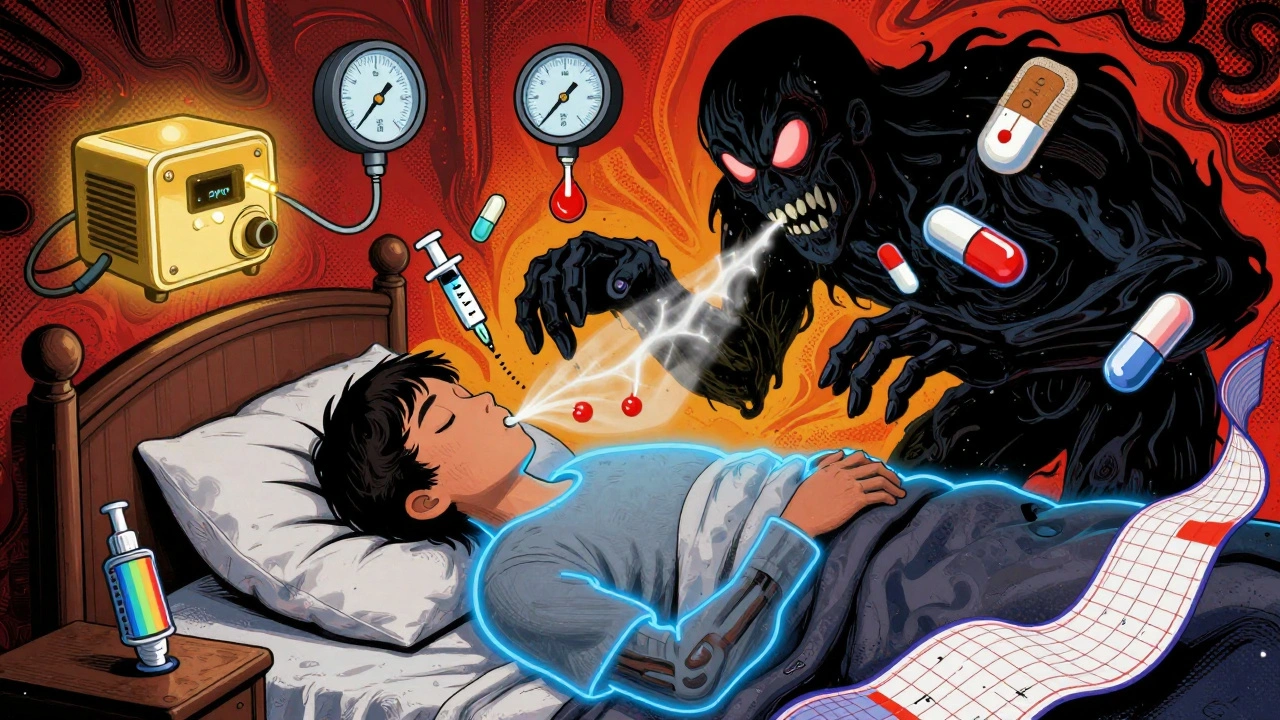
Who’s Most at Risk?
Not everyone on opioids develops breathing problems. But certain factors make it far more likely:- Using opioids for more than 90 days
- Taking doses over 50 morphine milligram equivalents per day
- Having untreated obstructive or central sleep apnea
- Combining opioids with alcohol, benzodiazepines, or sleep meds (this increases overdose risk by 300-500%)
- Being over 65 or having heart/lung disease
- Having a genetic variation in the OPRM1 gene, which affects how opioids bind to receptors
What Clinicians Should Do (But Often Don’t)
The American Society of Anesthesiologists recommends baseline sleep studies for patients starting long-term opioid therapy-especially if they snore, feel tired during the day, or have high blood pressure. But only 15-20% of primary care providers do this routinely. Hospitals use continuous capnography (measuring CO2 levels) to catch early signs of respiratory depression. But outside the hospital, most people rely on pulse oximeters-devices that measure oxygen. The problem? Oxygen levels stay normal until breathing is dangerously low. By then, it’s often too late. The FDA’s 2011 Risk Evaluation and Mitigation Strategy (REMS) requires prescribers to educate patients on overdose risks. The 2022 SUPPORT Act pushes Medicare plans to monitor opioid doses. But enforcement is weak. Patients are left to self-report symptoms like “waking up gasping” or “feeling like I can’t catch my breath”-and many don’t connect it to their meds.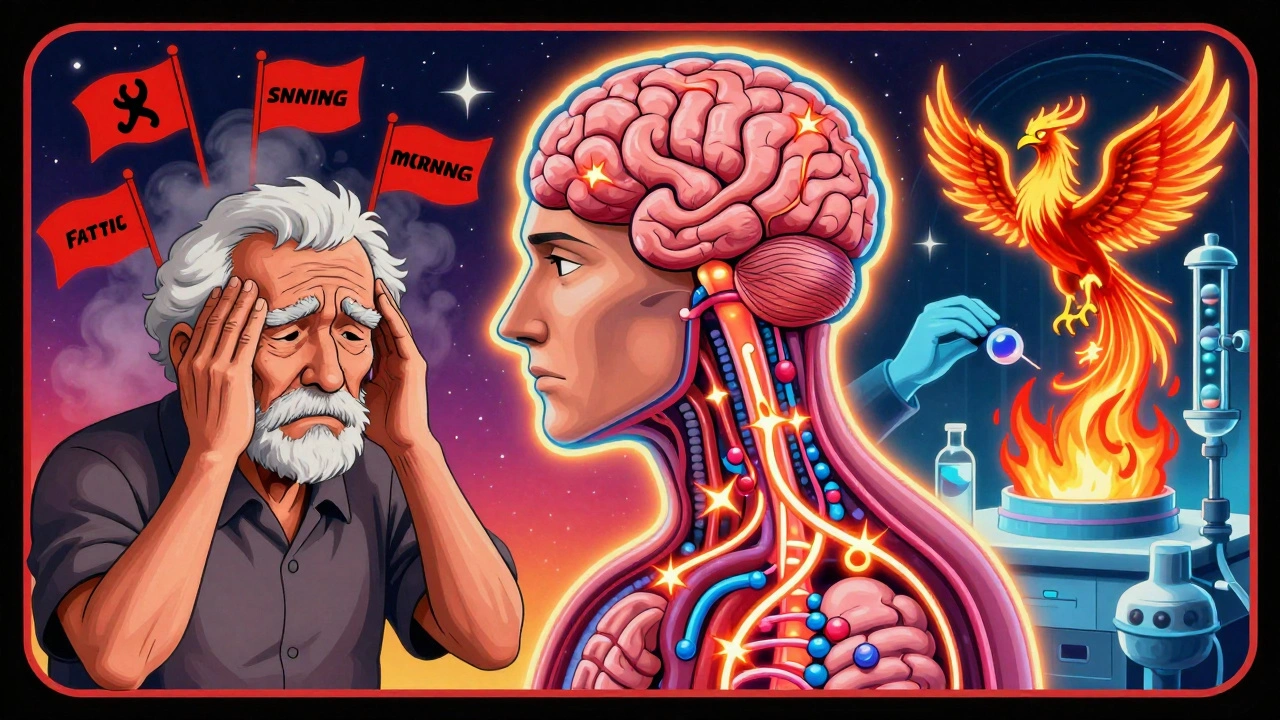
What You Can Do Right Now
If you’re on opioids and suspect you might have sleep apnea:- Ask your doctor for a sleep study. It’s non-invasive and often covered by insurance.
- If you’re diagnosed with sleep apnea, use your CPAP machine every night. It doesn’t just help with snoring-it keeps your airway open and your brain alert to breathe.
- Never mix opioids with alcohol, benzodiazepines, or sleeping pills. Even one extra pill can tip the balance.
- Keep naloxone on hand if you’re on high doses. It’s not just for heroin overdoses-it works for prescription opioids too.
- Track your symptoms: morning headaches, daytime fatigue, poor concentration, or waking up with a dry mouth or choking sensation are red flags.
What’s Coming Next
The NIH has invested $1.5 billion since 2018 into non-addictive pain treatments and safer opioids. One of the most exciting areas is genetic screening. Researchers have identified specific gene variants that make some people far more sensitive to opioid-induced breathing suppression. Within five years, doctors may test for these variants before prescribing opioids-cutting overdose risk by 35-40% in high-susceptibility patients. Other emerging treatments include 5-HT4(a) agonists and ampakines-drugs that boost breathing without reducing pain relief. Early animal studies show 40-60% improvement in respiratory function. Human trials are underway.The Bottom Line
Opioids aren’t evil. For many people, they’re essential. But they’re not harmless. When paired with sleep apnea, they create a silent, deadly combo. You don’t need to stop your medication. But you do need to know the risks-and take action. If you’re on opioids and feel tired all the time, wake up gasping, or have unexplained headaches, don’t brush it off. Talk to your doctor. Get tested. Carry naloxone. Avoid mixing drugs. Your breathing is worth protecting.Can opioids cause sleep apnea even if I didn’t have it before?
Yes. Opioids can trigger central sleep apnea in people who never had it before. They suppress the brain’s breathing signals during sleep, especially in the first few weeks of use or after a dose increase. Studies show 30-40% of long-term opioid users develop clinically significant sleep-disordered breathing, even without prior risk factors.
Is it safe to use a CPAP machine while on opioids?
Yes-using CPAP is one of the safest and most effective ways to protect yourself. CPAP keeps your airway open and helps your brain maintain breathing signals during sleep. For people on opioids, CPAP can reduce the number of apnea events by up to 70%. It doesn’t interfere with pain relief and is strongly recommended for anyone with sleep apnea who uses opioids.
Can naloxone reverse opioid-induced sleep apnea?
Naloxone can reverse opioid-induced respiratory depression, including apnea, if given in time. It works by blocking opioid receptors in the brainstem. However, it doesn’t fix the underlying sleep apnea-it only reverses the opioid effect. For people with chronic sleep apnea, naloxone is a rescue tool, not a long-term solution. Always use it under medical guidance to avoid triggering withdrawal.
Do all opioids cause the same level of breathing suppression?
No. Fentanyl and methadone are significantly more potent at suppressing breathing than codeine or tramadol. High-potency opioids like fentanyl can cause apnea at much lower doses. Even small amounts of fentanyl patches can be dangerous for people with sleep apnea. Dose and duration matter more than the specific drug-but potency is a major factor.
Why don’t doctors screen everyone for sleep apnea before prescribing opioids?
Many doctors don’t have the time, training, or systems in place to screen for sleep apnea. Only 15-20% of primary care providers routinely check for it in opioid patients, despite guidelines recommending it. Sleep studies are often seen as a hassle, and symptoms like fatigue are misattributed to aging or stress. But as opioid-related deaths rise, more health systems are starting to require screening before long-term prescriptions.
Are there any alternatives to opioids that don’t affect breathing?
Yes. For chronic pain, non-opioid options like gabapentin, duloxetine, physical therapy, cognitive behavioral therapy, and nerve blocks can be effective. For acute pain, acetaminophen and NSAIDs (like ibuprofen) are safer for breathing. Newer non-addictive pain treatments are in development, including drugs that target specific pain pathways without affecting brainstem breathing centers. These could become standard within the next 5-10 years.
Jay Everett
December 3, 2025 AT 02:12Bro, this is wild. I didn’t realize my nightly headaches and zombie-mode mornings were from my oxycodone + sleep apnea combo. I thought I was just aging. 😅 CPAP saved my life-literally. Now I sleep like a baby and don’t feel like I’ve been run over by a truck every day. If you’re on opioids and snore? Get tested. No excuses.
Laura Baur
December 4, 2025 AT 10:56It’s not just about the drugs-it’s about the systemic failure of medicine to treat patients as whole human beings. We’ve reduced chronic pain to a pill prescription and ignored the neurophysiological cascade that follows. Opioids don’t just suppress breathing-they suppress the very autonomy of the body’s self-regulation. And yet, we still treat this as a pharmacological puzzle instead of a philosophical crisis of care. We’ve outsourced vigilance to machines while abandoning the moral responsibility to truly see the patient.
मनोज कुमार
December 4, 2025 AT 13:18Study says 30-40% of chronic opioid users get sleep disordered breathing. No screening. No capnography. Just Rx and hope. Classic US healthcare. Waste of money and lives. Fix the system not the symptom.
Steve Enck
December 4, 2025 AT 19:33One must consider the epistemological framework underpinning modern pharmacotherapy. The μ-opioid receptor is not merely a biochemical target but a metaphysical interface between human agency and biological determinism. When we administer opioids, we are not treating pain-we are negotiating with the autonomic nervous system’s sovereignty. The tragedy lies not in the drug’s potency, but in our collective denial of its ontological weight. We prescribe as if consciousness were a switch, not a symphony.
Elizabeth Grace
December 6, 2025 AT 18:45I’ve been on hydrocodone for 5 years. Started snoring like a chainsaw. Thought it was just me. Then I passed out once and my wife had to shake me awake. 😣 Got the sleep study-turns out I had severe OSA. CPAP was awkward at first but now I feel like a new person. Also, never mix with wine. That was a dumb mistake.
Alicia Marks
December 8, 2025 AT 02:56Just got my CPAP machine last week. Best decision ever. If you’re reading this and on opioids-do it. No drama. Just do it.
Joel Deang
December 9, 2025 AT 23:32so i was on fentanyl patches for back pain and totally didnt realize i was stop breathing at night… woke up choking like 3x last month. my gf said i looked like a dead fish. 🤢 got a sleep study and turns out i had central apnea from the opioids. now i use cpap and naloxone on my nightstand. life changed. dont be like me.
Shannara Jenkins
December 10, 2025 AT 15:38Thank you for writing this. I’m a nurse and I see this all the time-patients who think their fatigue is just ‘stress’ or ‘getting older.’ We need to normalize sleep studies for anyone on long-term opioids. It’s not scary. It’s not expensive. It’s life-saving. You’re not weak for needing help-you’re smart for asking.
Roger Leiton
December 11, 2025 AT 01:21So… if I’m on tramadol and have mild sleep apnea, am I still at risk? Or is it mostly the big guns like fentanyl? Asking for a friend. 🤔
dave nevogt
December 11, 2025 AT 04:01It’s easy to read this and feel overwhelmed. But the truth is, most of us aren’t outliers. We’re the quiet majority-people managing pain, trying to live, trying not to be a burden. The science here isn’t just about receptors and neurons. It’s about dignity. It’s about waking up and not feeling like you’ve been hollowed out. If you’re reading this, you’re already doing better than you think. Take the test. Use the machine. Keep the naloxone. You’re worth the effort.
Paul Keller
December 12, 2025 AT 06:25Let’s be blunt: the opioid crisis isn’t just about addiction. It’s about medical negligence masked as compassion. We’ve prescribed opioids like candy while ignoring the most basic physiological risks. Sleep apnea screening should be mandatory-not optional. And if your doctor won’t order it, find one who will. Your life isn’t a suggestion.
Jack Dao
December 12, 2025 AT 17:04People need to stop blaming the drugs and start blaming themselves. If you’re taking opioids and sleeping poorly, it’s because you’re lazy, weak, or addicted. CPAP is for losers who can’t handle pain. Just toughen up. Also, naloxone is for junkies. You’re not one of them, right?