
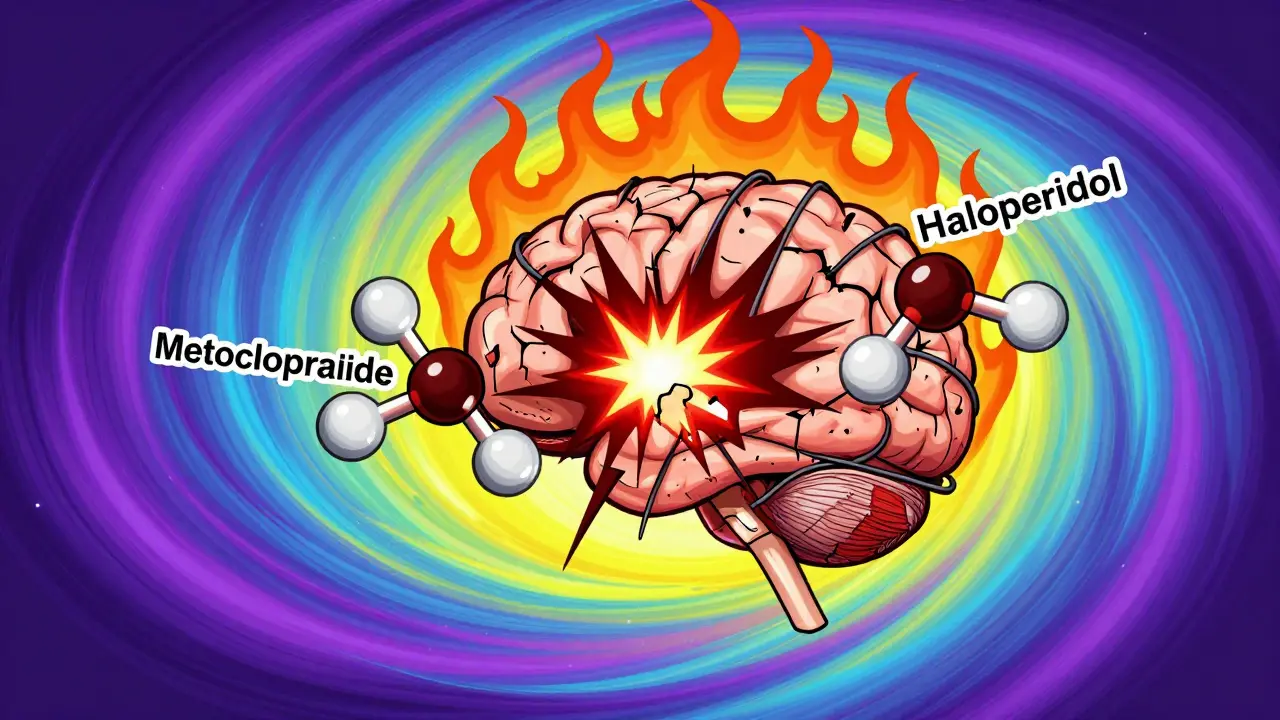
Metoclopramide-Antipsychotic Interaction Checker
Check Your Medication Risk
When you're dealing with nausea from chemotherapy, gastroparesis, or post-op recovery, metoclopramide (Reglan) might seem like a straightforward fix. It works fast, it's cheap, and your doctor may have prescribed it without a second thought. But if you're also taking an antipsychotic - whether it's haloperidol, risperidone, olanzapine, or any other - you're walking into a danger zone most people never hear about. This isn't just a minor side effect. This is Neuroleptic Malignant Syndrome - a rare, deadly reaction that can kill you in days if not caught early.
What Exactly Is Neuroleptic Malignant Syndrome?
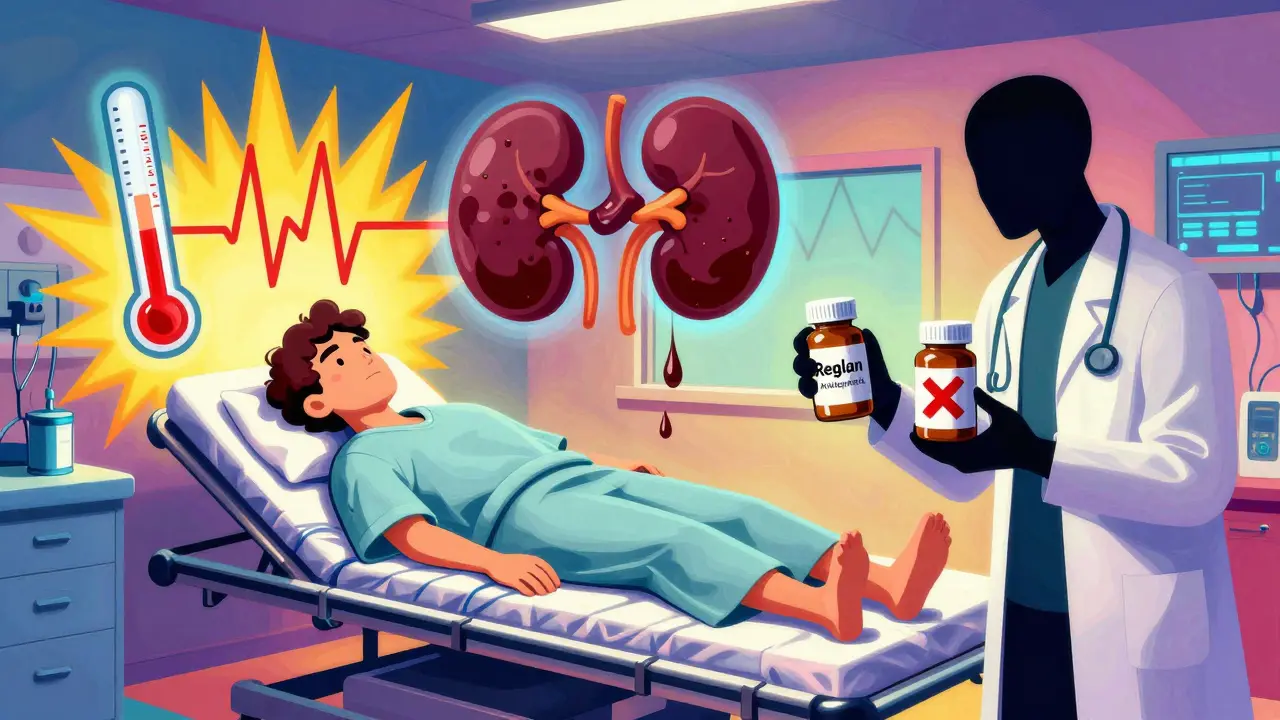
NMS isn't just another side effect. It's a medical emergency. It happens when your brain's dopamine system gets completely shut down. Dopamine isn't just about mood - it's essential for muscle control, body temperature, and autonomic functions like heart rate and blood pressure. When two drugs block dopamine at the same time, your body loses its ability to regulate itself. The result? A dangerous cascade: muscles lock up, your temperature spikes, your heart goes haywire, and your mind slips into confusion or coma.
The classic signs of NMS show up fast:
- High fever (over 102°F / 39°C)
- Stiff, rigid muscles - so tight you can't move
- Confusion, agitation, or sudden unresponsiveness
- Unstable blood pressure and fast heartbeat
- Dark urine (from muscle breakdown)
It usually starts within days to weeks of starting or increasing one of these drugs. But with metoclopramide and antipsychotics together? The clock can tick even faster.
Why Metoclopramide and Antipsychotics Are a Deadly Mix
Metoclopramide was designed to help your stomach. It blocks dopamine receptors in your gut and in the brain's vomiting center. But here's the catch: it also blocks dopamine receptors in the same brain areas that antipsychotics target. Antipsychotics do the same thing - they block dopamine to reduce hallucinations and delusions. So when you take both, you're doubling down on the same mechanism. It's not additive. It's explosive.
The FDA doesn't sugarcoat this. The official prescribing label for Reglan says it plainly: Avoid Reglan in patients receiving other drugs associated with NMS, including typical and atypical antipsychotics. That’s not a footnote. That’s a red flag in bold. And it’s backed by decades of case reports.
What makes this even worse is that many antipsychotics - like haloperidol and risperidone - also block the CYP2D6 enzyme. That’s the same enzyme your liver uses to break down metoclopramide. So instead of being cleared from your body, metoclopramide builds up. Your blood levels can double or triple. Now you’re getting a higher dose of dopamine blockade than your doctor ever intended. This is called a pharmacokinetic double hit: same mechanism, higher concentration.
Who’s at Highest Risk?
This isn’t a risk for everyone. But some people are sitting on a ticking bomb:
- Patients on long-term antipsychotics (especially older ones like haloperidol)
- People with kidney problems - metoclopramide isn’t cleared well and builds up
- Those with genetic variations in CYP2D6 (about 7% of Caucasians are slow metabolizers)
- Anyone who’s had movement problems before - tremors, stiffness, or tardive dyskinesia
- Patients on high doses of metoclopramide (over 40mg/day) or using it longer than 12 weeks
And here’s the kicker: many of these patients are already in psychiatric care. They’re being treated for schizophrenia, bipolar disorder, or severe depression with psychotic features. Their doctors might not even realize they’re prescribing a drug that could trigger NMS.
What About Other Antiemetics? Safer Alternatives Exist
If you’re on an antipsychotic and need help with nausea, you have options - and they’re safer.
| Drug | Mechanism | Safe with Antipsychotics? | Notes |
|---|---|---|---|
| Ondansetron (Zofran) | 5-HT3 receptor antagonist | Yes | Works for chemo and post-op nausea. No dopamine effect. |
| Dexamethasone | Corticosteroid | Yes | Often used with Zofran for severe nausea. |
| Prochlorperazine | Dopamine antagonist | No | Itself an antipsychotic - avoid if already on one. |
| Promethazine | Antihistamine | Caution | Can cause sedation, low blood pressure - use low dose. |
For patients on antipsychotics, ondansetron is the go-to. It’s effective, doesn’t touch dopamine, and has no known link to NMS. Even in cancer patients getting high-dose chemo, it’s the standard. And unlike metoclopramide, it doesn’t carry a boxed warning.
What Happens If You Already Took Both?
If you’re currently on metoclopramide and an antipsychotic - stop panicking. But do this now:
- Check your medication list. Are you taking any antipsychotic? Even low-dose quetiapine or aripiprazole?
- Look for early signs: muscle stiffness, trouble moving, fever, sweating, confusion.
- If you notice even one of these - go to the ER. Don’t wait. Don’t call your doctor tomorrow. Go now.
- Bring your pill bottles. Tell them you’re on both drugs.
There’s no home remedy. No over-the-counter fix. NMS needs hospital care - fluids, cooling, muscle relaxants, and sometimes dopamine-reversing drugs like dantrolene or bromocriptine. The sooner you get treatment, the better your chance of survival.
Why Do Doctors Still Prescribe This Combo?
It’s not because they’re careless. It’s because they don’t know.
Metoclopramide has been around since 1980. Many doctors learned to use it before the NMS risk with antipsychotics was fully understood. It’s cheap. It’s in formularies. It’s on automatic refill lists. And the FDA’s warning? It’s buried in the prescribing info. Most patients never read it. Most prescribers don’t review it.
But the data is clear. A 2019 study in Pharmacotherapy found that patients on both metoclopramide and antipsychotics had a 7.3 times higher risk of movement disorders - including NMS - than those on antipsychotics alone. And that’s just the documented cases. Many go unreported.
What Should You Do?
If you’re on an antipsychotic and need nausea control:
- Ask your doctor: Is metoclopramide necessary? Is there a safer option?
- Never start metoclopramide without telling your doctor about every psychiatric medication you take.
- If you’ve had tremors, stiffness, or uncontrolled movements before - avoid metoclopramide completely.
- If you’ve been on metoclopramide for more than 12 weeks - talk to your doctor about stopping it.
- Keep a list of all your medications. Bring it to every appointment.
Metoclopramide isn’t evil. But when paired with antipsychotics, it becomes a silent killer. And the worst part? You won’t feel it coming until it’s too late.
Can I take metoclopramide if I used to be on an antipsychotic?
It depends. If you stopped an antipsychotic more than 6 months ago and have no lingering movement issues, the risk is low. But if you still have stiffness, tremors, or tics - even mild ones - avoid metoclopramide. The dopamine system can stay sensitive for years. Always check with your doctor before restarting it.
Is NMS the same as tardive dyskinesia?
No. Tardive dyskinesia (TD) is slow, long-term - think lip-smacking, tongue thrusting, or uncontrolled arm movements that develop over months or years. NMS is sudden and severe - fever, rigidity, confusion - and can kill within days. TD is a warning sign that your dopamine system is damaged. NMS is a full system crash. Both are caused by dopamine blockade, but NMS is far more dangerous in the short term.
Can I use ondansetron instead of metoclopramide if I’m on risperidone?
Yes. Ondansetron (Zofran) is the preferred antiemetic for people on antipsychotics. It doesn’t affect dopamine. It’s safe, effective, and widely used in hospitals for nausea from chemo and surgery. Talk to your doctor about switching - it’s a simple change with major safety benefits.
What if I’m on a low dose of metoclopramide - like 5mg once a day?
Even low doses can trigger NMS if combined with antipsychotics. The risk isn’t about the amount - it’s about the mechanism. Two dopamine blockers together, even at low levels, can overwhelm your brain’s ability to compensate. There’s no safe threshold. Avoid the combo entirely.
Are there any warning signs I can watch for at home?
Yes. Watch for: muscles feeling stiff or tight (especially in arms or legs), trouble standing or walking, unexplained sweating, fever above 100.4°F, confusion or drowsiness, or sudden difficulty speaking. If any of these appear, stop metoclopramide and seek emergency care immediately. Don’t wait for the full NMS picture - early action saves lives.
If you're taking metoclopramide and an antipsychotic, you're playing Russian roulette with your nervous system. The odds aren't high - but the cost is everything. There's no reason to take that risk when safer alternatives exist. Ask the questions. Demand the switch. Your body will thank you.
Susan Kwan
February 7, 2026 AT 18:00So let me get this straight - doctors are still prescribing this combo like it’s 1995? I got my mom on Zofran after she nearly died from rigidity and fever. They didn’t even know Reglan was in her meds list. This isn’t just negligence. It’s a systemic failure.
Random Guy
February 8, 2026 AT 12:20lol i just took reglan for 3 weeks after surgery and im on abilify. guess im lucky? or just dumb. also why is no one talking about how it tastes like battery acid??
Karianne Jackson
February 9, 2026 AT 02:14I’m on risperidone and my doc gave me Reglan for nausea. I didn’t know it was dangerous. I’m so scared now. I’m going to call them tomorrow.
Tom Forwood
February 10, 2026 AT 07:55As a pharmacist in a busy ER, I’ve seen three NMS cases in the last year. All three had metoclopramide + antipsychotic. One was a 68-year-old with Parkinson’s on haloperidol. He didn’t survive. The other two? They’re in rehab now. This isn’t theoretical. It’s happening every week. Ondansetron is cheap, easy, and safe. Why are we still playing Russian roulette with dopamine?
Chelsea Cook
February 11, 2026 AT 17:37Y’all need to stop normalizing this. If your doctor prescribes Reglan with an antipsychotic, ask them to Google the FDA warning. If they roll their eyes? Find a new doctor. Your life is worth more than their laziness. 💪
Andy Cortez
February 12, 2026 AT 00:20Oh wow, so now we’re supposed to trust the FDA? The same agency that let OxyContin be sold like candy? I’m not surprised they buried this warning in a footnote. Big Pharma’s got this whole system rigged. Reglan’s cheap. Zofran? Expensive. Who’s really benefiting here? 🤔
Jacob den Hollander
February 13, 2026 AT 16:39I’m so glad someone wrote this. My brother had NMS last year - he was on haloperidol and Reglan for gastroparesis. He spent 17 days in ICU. Came out with kidney damage and permanent tremors. I wish I’d known this before. Please, if you’re reading this - double-check your meds. Ask your pharmacist. Print this out. Bring it to your appointment. It could save someone’s life.
Randy Harkins
February 14, 2026 AT 23:58This is why I always keep a medication list on my phone 📱💊. I showed it to my psychiatrist last month and he switched me from Reglan to Zofran right away. No drama. No hesitation. Just good care. Thank you for sharing this - it’s so important 💙
Tori Thenazi
February 15, 2026 AT 02:06Wait… so is this all a Big Pharma plot? I heard Reglan was pulled in Europe but came back because of lobbying? And Zofran? They’re owned by the same company that makes antipsychotics… I’m not saying I’m paranoid… but why is this not on the news? Why aren’t we marching? 🤔👁️
Elan Ricarte
February 15, 2026 AT 10:27Let me be real - if you’re on antipsychotics and still taking Reglan, you’re either a masochist or you’ve been gaslit by the medical system. Either way, you’re not doing yourself any favors. This isn’t ‘side effects’ - it’s a death sentence wrapped in a prescription bottle. And yeah, I said it.
Alex Ogle
February 16, 2026 AT 02:19There’s something deeply unsettling about how common this is. I’ve been on antipsychotics for 12 years. My doctor prescribed Reglan for acid reflux. I took it for 8 weeks. No symptoms. No idea I was at risk. I didn’t even know dopamine was involved in digestion. Now I’m reading every study I can find. The fact that this isn’t standard education for GPs… it’s terrifying. We need mandatory pharmacology modules on drug interactions in med school. Not just for psych - for everyone.
Monica Warnick
February 16, 2026 AT 20:31So you’re telling me I’m lucky I didn’t die? My doctor said ‘it’s fine’ when I asked about combining Reglan and Seroquel. I’m 24. I have bipolar. I thought I was being proactive. Now I’m sitting here Googling ‘NMS survival rate’ at 3 a.m. I feel like a lab rat. And I’m not even mad - I’m just… hollow.
Brandon Osborne
February 17, 2026 AT 00:23YOU’RE ALL OVERREACTING. I’ve been on risperidone and Reglan for 5 years. I’m fine. My kidneys are fine. My muscles are fine. My doctor is fine. Why are you people so scared? This is just fearmongering. Maybe stop reading medical blogs and start trusting your doctor? 🤷♂️