
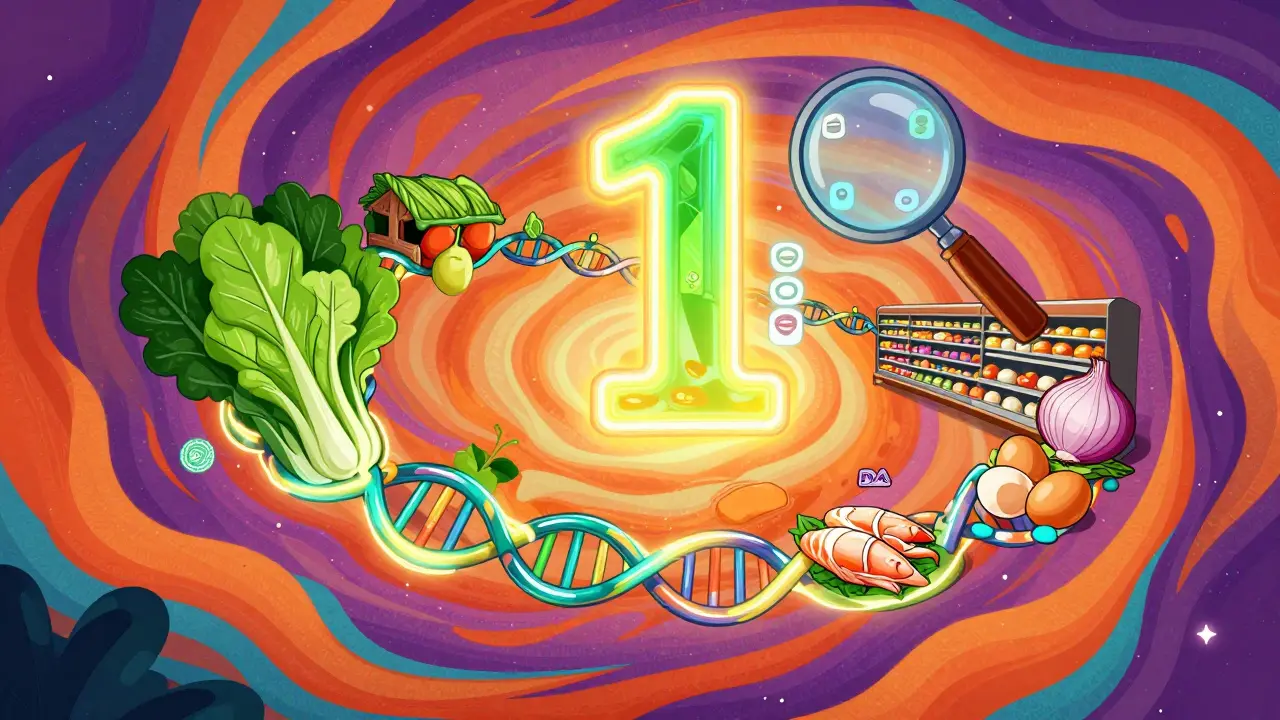
The FDA doesn’t guess when a foodborne illness outbreak hits. It doesn’t wait weeks to trace contaminated spinach or recalled eggs back to the farm. Instead, it uses a single, powerful tool: the Lot Number Tracking system, officially called the Traceability Lot Code (TLC). This isn’t just a barcode on a box. It’s the backbone of how the U.S. food supply is monitored for safety - and how dangerous batches are pulled before more people get sick.
What Exactly Is a Traceability Lot Code?
A Traceability Lot Code (TLC) is a unique identifier - usually a mix of letters and numbers - assigned to a specific group of food products at key moments in the supply chain. Think of it like a birth certificate for a batch of food. Once assigned, that code travels with the product through every step: from the farm, to the packing plant, to the distributor, and finally to the grocery shelf. If an outbreak happens, the FDA can use that code to track exactly where the product came from and where it went - in hours, not weeks.This system was created under the Food Safety Modernization Act (FSMA), specifically Section 204. The rule became official on November 15, 2022, and applies only to foods on the Food Traceability List (FTL). That list includes high-risk items like leafy greens, tomatoes, onions, fresh-cut fruits and vegetables, nut butters, certain cheeses, eggs, and specific seafood. These foods make up about 15% of the U.S. food supply by volume, but they’re responsible for a disproportionate number of outbreaks.
When and Where Is the Lot Code Assigned?
The TLC isn’t just slapped on anytime a company feels like it. The FDA has strict rules about when it must be added:- When raw agricultural commodities (like lettuce or tomatoes) are first packed at the farm or field
- When seafood from fishing vessels is first received on land
- When food is transformed - meaning it’s cooked, chopped, mixed, or repackaged into a new product
Once assigned, the TLC must stay the same until the food is transformed again. If a processor takes in 10 different lots of spinach and mixes them into a salad kit, they must create a new TLC for that kit - but they must also keep a record linking the new code back to the original lots. This chain of custody is what makes the system work.
The Seven Key Data Elements That Make It Work
A TLC alone isn’t enough. The FDA requires that each code be tied to seven specific pieces of information, called Key Data Elements (KDEs). These are the details that turn a code into a trail:- Traceability Lot Code (TLC)
- TLC Source (where and when the code was assigned)
- Product description (what the food is)
- Quantity and unit of measure (how much was packed)
- Transaction information (who received the food and when)
- Location of the facility where the code was assigned
- Any other identifying information required by the FDA
When the FDA investigates a contamination case, they can demand all of these details within 24 hours. That’s why electronic records are strongly encouraged - even though they’re not required. If a company keeps paper logs, they must still be able to pull up the right data fast. The FDA accepts CSV, Excel, or other common formats. No handwritten notes on napkins.

How This Changes Everything Compared to the Old Way
Before the TLC system, companies used internal lot codes for quality control. But those codes weren’t standardized. One company’s "Lot #12345" meant nothing to the next. During an outbreak, investigators had to call dozens of suppliers, sift through invoices, and follow a paper trail that could take weeks. In 2018, a romaine lettuce outbreak took over five months to trace back to its source. By then, thousands were sick, and millions of heads were destroyed.The TLC system flips that model. Instead of chasing records, the FDA can start with one code and follow it backward - like GPS for food. The FDA estimates this could reduce outbreak response times from weeks to under 24 hours. That’s not just faster. It saves lives.
Early pilot programs showed that faster tracing could cut foodborne illnesses by 20-30%. That’s tens of thousands of people avoiding hospital visits every year. The FDA’s economic analysis says the system will save $60 million annually in health and recall costs - even though it costs the industry $6.5 million to implement.
What Foods Are Covered - And What’s Missing
The Food Traceability List (FTL) is focused on the highest-risk foods. But critics say it’s too narrow. Melons, for example, have been linked to multiple outbreaks in recent years, yet they’re not on the list. Consumers Union pointed out in 2022 that this creates dangerous gaps. Other high-risk items like sprouts and deli meats are also missing.The FDA has admitted this. In May 2023, Commissioner Robert Califf told Congress that melons and ready-to-eat foods are under active review for inclusion. The system is designed to expand - but slowly, to avoid overwhelming small businesses.
Industry Pushback and Real-World Challenges
Not everyone is thrilled. Many companies already had their own lot-coding systems in place - some using GS1 barcodes, others using internal ERP software. The fear was they’d now have to run two systems: their old one, plus the new TLC. That’s called "tandem coding," and it’s expensive and confusing.The FDA addressed this head-on: if your current lot code meets the TLC requirements - it’s your TLC. You don’t need a second code. But many companies still added a new one, just to be safe. A 2023 survey found that 78% of produce companies had already updated their systems. The average cost per company was $42,500. For small farms, that’s a big hit.
Other challenges include:
- Integrating TLC systems with old software (65% of companies reported issues)
- Training staff to use new tools (58%)
- Getting suppliers and distributors to consistently use the code (71%)
The FDA has responded with free training modules, technical assistance programs for small businesses, and even funding for blockchain pilots. Walmart and Kroger have gone further than required, using blockchain to track leafy greens from farm to shelf since 2019. But most of the industry still uses basic digital systems.
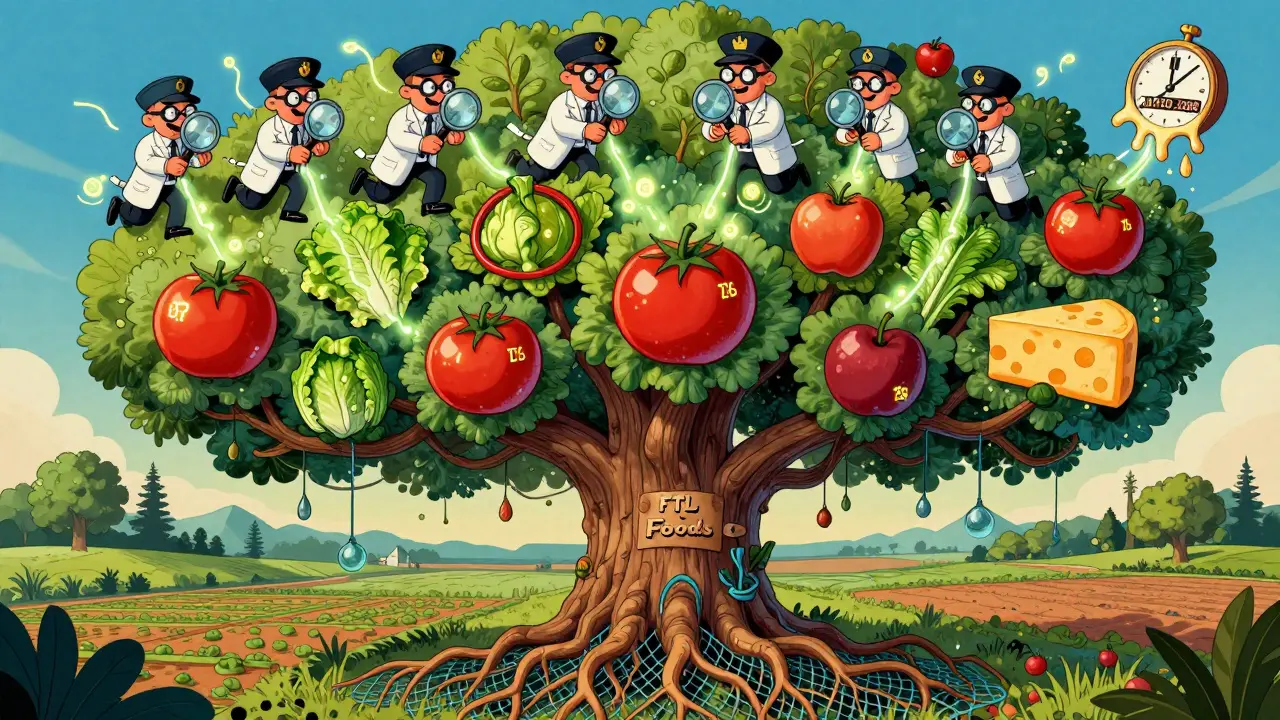
What’s Next for Lot Number Tracking?
The compliance deadline was originally January 20, 2026. But in September 2023, the FDA proposed pushing it back to July 20, 2028 - a 30-month extension - after hearing from hundreds of businesses struggling to adapt. This isn’t a delay. It’s a recognition that food safety can’t be rushed.Future updates will likely include:
- Standardized electronic data formats for KDEs (draft expected in 2024)
- Expansion of the FTL to include melons, sprouts, and deli meats
- Greater use of IoT sensors and blockchain for real-time tracking
- International alignment with the EU’s Digital Product Passport
The U.S. food traceability market is expected to grow from $1.87 billion in 2022 to $4.62 billion by 2028. That’s not just about compliance - it’s about trust. Consumers want to know their food is safe. Retailers want to avoid recalls. And the FDA? They just want to stop the next outbreak before it starts.
Why This Matters to You
You might think, "I’m not a farmer or a distributor. Why should I care?" But here’s the truth: when the FDA can trace a contaminated batch faster, fewer people get sick. Fewer restaurants shut down. Fewer families lose trust in their groceries. When a recall happens, you’ll see a news alert - but you won’t see the chaos behind it. That chaos is now being prevented by a simple code on a box.Next time you buy a bag of spinach or a carton of eggs, look for the lot number. It’s not just a label. It’s a lifeline.
What is the difference between a regular lot number and a Traceability Lot Code (TLC)?
A regular lot number is used internally by a company for quality control or inventory. It’s not standardized and doesn’t have to be shared with regulators. A Traceability Lot Code (TLC) is a mandatory, FDA-defined identifier that must be assigned at specific points in the supply chain and linked to seven required data elements. It’s designed to be passed between companies and used by the FDA to trace food during outbreaks.
Which foods are required to have a Traceability Lot Code?
Only foods on the FDA’s Food Traceability List (FTL) must have a TLC. This includes leafy greens, tomatoes, onions, fresh-cut fruits and vegetables, nut butters, certain cheeses, eggs, and specific seafood. These are high-risk items linked to most foodborne illness outbreaks. Melons, sprouts, and deli meats are not currently on the list but are under review for future inclusion.
Do I need to change my current lot numbering system?
No, not if your current lot code already meets the FDA’s requirements. The FDA allows companies to use their existing lot codes as TLCs - as long as they’re unique, assigned at the right points, and linked to the seven Key Data Elements. You don’t need a second code unless your current system doesn’t meet the rules.
How quickly must companies provide lot code data to the FDA during an investigation?
Companies must provide all required Traceability Lot Code data and associated Key Data Elements within 24 hours of a request from the FDA. This includes the code itself, where it was assigned, what product it’s for, quantities, and transaction details. Electronic records that are sortable and exportable (like CSV files) make this much easier.
What happens if a company doesn’t comply with the TLC rule?
Non-compliance can lead to enforcement actions by the FDA, including warning letters, product seizures, or import refusals. For businesses that handle FTL foods, failing to assign or maintain TLC records means they’re operating illegally under the Food Safety Modernization Act. While the FDA focuses on education and support first, especially for small businesses, repeated or willful violations can result in fines or suspension of operations.
Is blockchain required for lot number tracking?
No, blockchain is not required. The FDA’s Traceability Lot Code rule does not mandate any specific technology. Companies can use spreadsheets, ERP systems, or specialized traceability software. However, some large retailers like Walmart and Kroger have adopted blockchain voluntarily to go beyond the minimum requirements. Blockchain is just one tool - and not the only one - that can help meet the rule’s goals.
When is the new compliance deadline for the TLC system?
The FDA proposed extending the compliance deadline from January 20, 2026, to July 20, 2028. This 30-month delay was announced in September 2023 to give businesses more time to implement the system. While the rule is already in effect, enforcement for most companies will begin on July 20, 2028, unless further changes are made.
What to Do If You’re Affected
If you’re a small farm, distributor, or processor handling FTL foods:- Review the FDA’s official Traceability Plan template
- Identify where your TLCs are currently assigned - and whether they meet the rules
- Use your existing lot code if it qualifies - don’t create a duplicate
- Train your team on the seven Key Data Elements
- Take advantage of the FDA’s free Traceability Assistance Program
The goal isn’t to overwhelm you with paperwork. It’s to make sure that when something goes wrong, no one has to wait weeks to find out why - or who’s at risk.
Andy Heinlein
January 2, 2026 AT 07:47lol i just checked my spinach bag and the lot code looks like a phone number my grandma would write in crayon. glad they’re finally tracking this stuff tho.
Bill Medley
January 3, 2026 AT 07:44This system is a necessary evolution in food safety. The precision and accountability it introduces are long overdue. Compliance is not optional-it is a public health imperative.
gerard najera
January 3, 2026 AT 20:05Codes on boxes. That’s all it takes. Simplicity wins.
Ann Romine
January 4, 2026 AT 19:45I never realized how much trust we place in those tiny labels. It’s humbling to think a single code could prevent a family from losing someone to food poisoning.
Todd Nickel
January 6, 2026 AT 10:21It’s interesting how the FDA’s approach here mirrors the principles of systems thinking-each Key Data Element is a node in a network, and the TLC is the central identifier that collapses uncertainty into actionable data. The real innovation isn’t the code itself, but the enforced interoperability across supply chain actors. Most private systems were siloed, but now you’ve got standardized data points that can be aggregated, queried, and cross-referenced in real time. That’s not just traceability-it’s systemic resilience. And yet, the fact that 65% of companies still struggle with legacy software integration suggests we’re underestimating the friction of institutional inertia. The $6.5M industry cost is trivial compared to the human and economic toll of delayed responses. We’re not just digitizing labels-we’re reengineering trust.
Austin Mac-Anabraba
January 8, 2026 AT 04:15Of course the FDA wants to control everything. They didn’t need this rule-what they needed was to stop letting mega-farms poison people in the first place. This is just another bureaucratic layer to make you feel safe while the real culprits keep getting subsidies.
Phoebe McKenzie
January 9, 2026 AT 09:44They’re lying. This isn’t about safety-it’s about control. Who authorized them to dictate how every farmer labels their produce? This is the first step to mandatory GPS trackers on your groceries. Next thing you know, the government will know exactly when you ate your spinach-and judge you for it.
Stephen Gikuma
January 11, 2026 AT 03:01Why are we trusting a federal agency with this? I’ve seen what happens when they get access to data. This is just a backdoor to track every American’s diet. The FDA doesn’t care about outbreaks-they care about power. And they’re using ‘food safety’ as the excuse.
Bobby Collins
January 13, 2026 AT 02:51wait so if i buy eggs and the lot code gets flagged… does that mean the feds can track which fridge i kept them in? 😳