
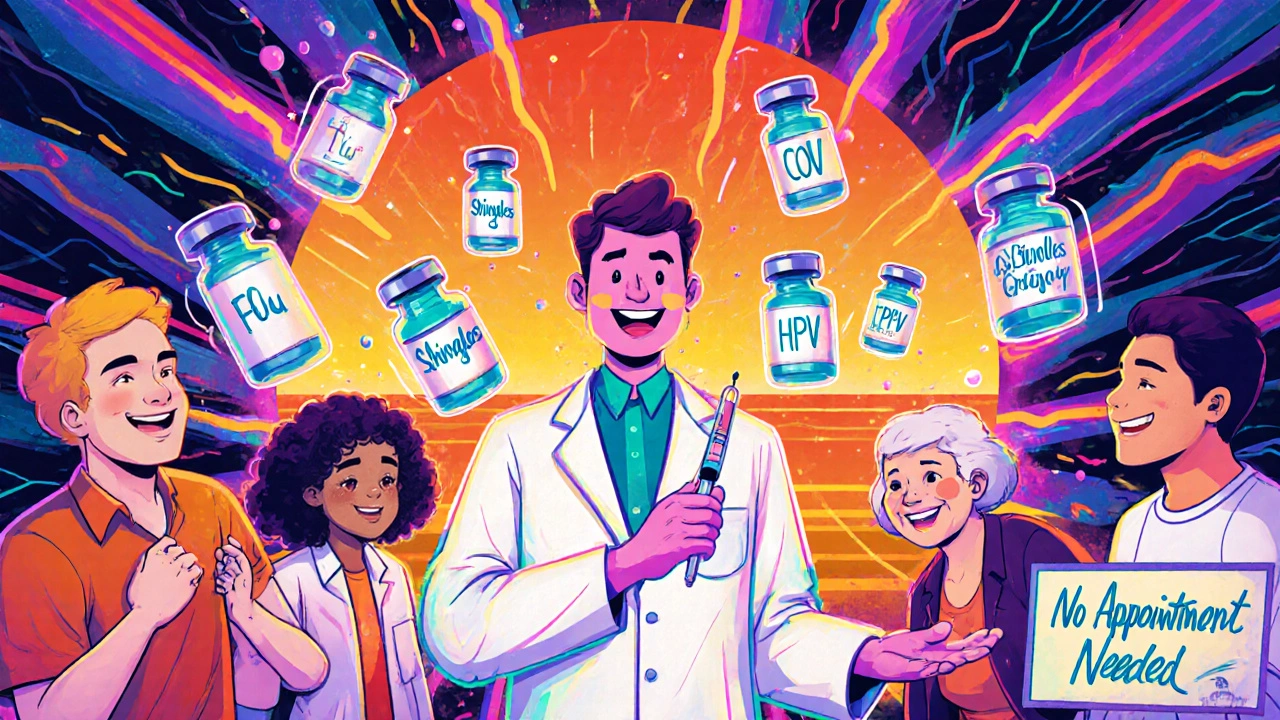
When you walk into a pharmacy for a cold medicine, you might think the pharmacist is just there to hand you a bottle. But in 2025, that’s only part of the story. Across the U.S., pharmacists are stepping into roles they never had before-giving vaccines, pushing for cheaper meds, and fighting to make sure patients get the care they need. And it’s not just about filling prescriptions anymore. It’s about pharmacist advocacy-using their access, knowledge, and trust to change how healthcare works at the ground level.
Pharmacists Are Now Vaccine Providers-And They’re Filling a Huge Gap
Think about the last time you got a flu shot. Chances are, you didn’t go to a doctor’s office. You walked into a CVS, Walgreens, or your local independent pharmacy, walked out 15 minutes later, and didn’t need an appointment. That’s not an accident. It’s the result of a 30-year push by pharmacists to become frontline immunization providers.
In 1995, only nine states let pharmacists give vaccines. Today, all 50 states, D.C., and Puerto Rico do. And it’s not just flu shots anymore. Pharmacists now give vaccines for shingles, pneumonia, HPV, COVID-19, and more. The CDC says community pharmacies delivered 32% of all adult flu vaccines in the 2019-2020 season. By 2023, that number had grown. Chain pharmacies alone gave over 35 million flu shots in the 2022-2023 season.
Why does this matter? Because pharmacies are everywhere. Ninety-three percent of Americans live within five miles of one. They’re open late, on weekends, and often without appointments. For working parents, seniors without cars, or people without a regular doctor, the pharmacy is the only place they can get vaccinated on time.
How Pharmacists Talk People Into Getting Vaccinated
Getting a vaccine isn’t just about availability-it’s about trust. Many people are hesitant. They’ve heard rumors. They’re scared of side effects. Or they think, “I’m healthy, why do I need this?”
Pharmacists don’t just hand out shots. They talk. They listen. They answer questions. A 2023 survey from Pharmacy Times found that pharmacists spend an average of 7 to 10 minutes per patient explaining why a vaccine matters. On Reddit, users shared stories of pharmacists convincing vaccine-hesitant teens to get their first HPV shot by explaining it in plain language-not medical jargon.
In California, pharmacists are now allowed to start vaccines for anyone three years and older. That means they can catch kids who missed their routine shots or give boosters to adults who thought they were “done” with vaccines. One pharmacist in San Diego told a patient, “You don’t need to wait for your doctor. I’ve got the vaccine. I’ve got the training. And I’m here now.” That’s advocacy in action.
Generic Prescriptions: The Other Half of the Fight
While vaccines get headlines, pharmacists are just as passionate about making sure people can afford their daily meds. Generic drugs are just as safe and effective as brand names-but often cost 80% less. Yet, many patients still pay more because of how insurance and pharmacy benefit managers (PBMs) work.
PBMs are middlemen between insurers, drugmakers, and pharmacies. They decide which drugs get covered, how much pharmacies get paid, and what patients pay at the counter. The problem? Many PBMs pay pharmacies less than it costs to buy the generic drug. That means pharmacies lose money every time they fill a prescription.
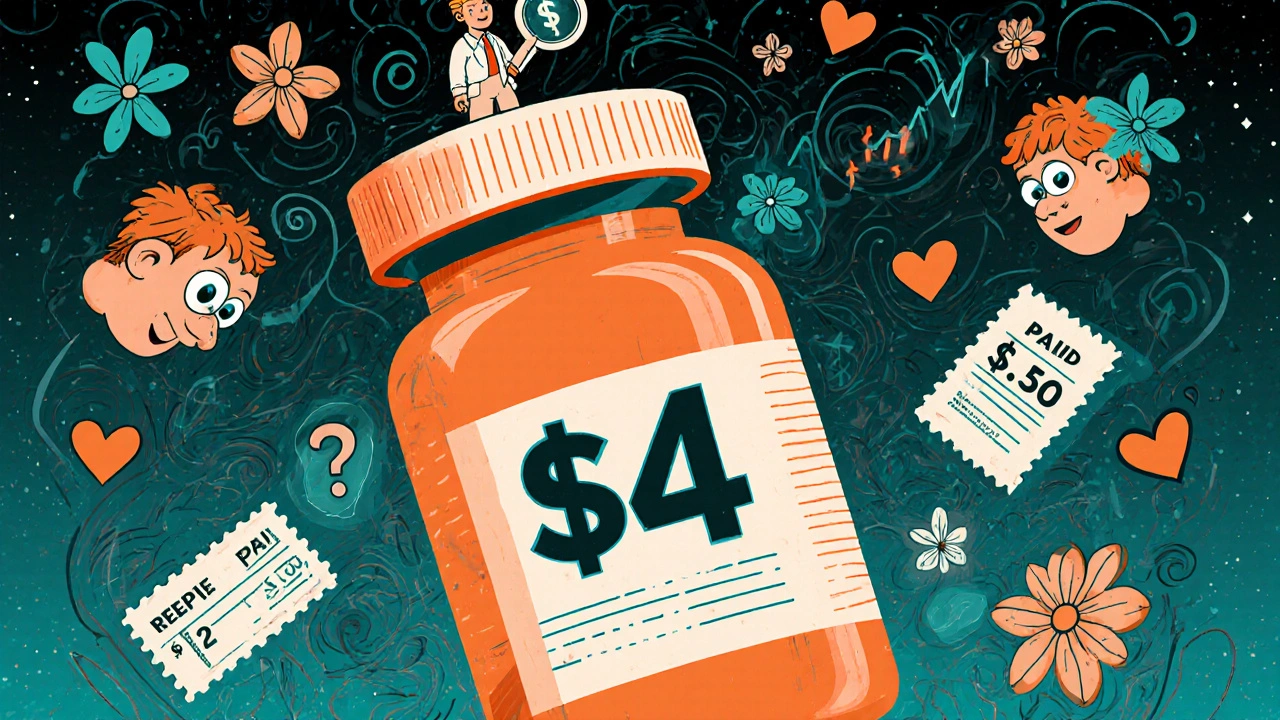
The National Community Pharmacists Association found that 78% of independent pharmacists say PBM practices hurt their ability to care for patients. One pharmacist in Ohio said, “I filled a $4 generic for a diabetic patient. The PBM paid me $2. I lost $1.50 on the transaction. But I still gave him the medicine. Because he needed it.”
That’s why pharmacists are pushing for PBM reform. They’re not just asking for better pay-they’re asking for transparency. They want patients to know what their meds really cost and why some generics are priced higher than others. In 2023, over 23,000 pharmacists sent letters to Congress demanding fair reimbursement for both vaccines and generic prescriptions.
The System Is Broken-And Pharmacists Are Trying to Fix It
Here’s the ugly truth: even though pharmacists are doing more, they’re not getting paid enough. Medicare reimburses pharmacies for vaccine administration at only 87% of the actual cost. That means for every $20 shot, they’re getting paid $17.40. The rest? They absorb it. Or they skip it.
Small, independent pharmacies are hit hardest. Chain stores have the volume to absorb losses. But mom-and-pop pharmacies? They’re on the edge. Yet, 92% of them now offer vaccines-up from 65% in 2015. Why? Because they believe in this work.
And it’s not just about money. The paperwork is a nightmare. Thirty-four states require pharmacists to report every vaccine to state registries within 72 hours. Sixteen states have looser rules. Some require special training. Others demand specific software. One pharmacist in Minnesota said, “I spent three hours last week just entering data. That’s three hours I could’ve spent counseling a patient.”
Even vaccine storage is a problem. Twelve percent of pharmacies have lost vaccines due to temperature spikes. Each incident costs an average of $1,200. That’s not just a financial hit-it’s a public health risk. If a vaccine spoils, someone goes without protection.
What’s Changing-and What’s Still Holding Pharmacists Back
Change is happening. Between 2020 and 2023, 27 states expanded pharmacists’ scope of practice. Fourteen removed age restrictions, letting pharmacists vaccinate kids as young as three. California passed AB 577, letting pharmacists order and interpret lab tests. That’s huge. It means a pharmacist can check your cholesterol, give you a flu shot, and adjust your blood pressure med-all in one visit.
But the system still doesn’t talk to itself. Your doctor’s office, the hospital, and the pharmacy often don’t share records. The CDC says better electronic integration is critical. Right now, a patient might get a vaccine at the pharmacy, but their primary care doctor doesn’t know about it. That leads to missed doses or double shots.
Pharmacists want a unified system. A 2022 ASHP survey found that 89% of them support integrated immunization records across all healthcare settings. Until that happens, the system stays fragmented.
What Patients Should Know
If you’re wondering whether to get your shot at the pharmacy-go ahead. It’s safe, convenient, and often cheaper. Most insurance plans cover vaccines at no cost to you. If you’re unsure, ask your pharmacist. They’re trained to know which vaccines you need based on your age, health, and travel history.
For generic prescriptions, always ask: “Is there a generic version?” Even if your doctor didn’t prescribe one, your pharmacist can suggest it. And if you’re being charged more than $10 for a common generic like metformin or lisinopril, it’s worth asking why. You might be paying a PBM markup.
Don’t be afraid to push back. Pharmacists are on your side. They’re not salespeople. They’re the last line of defense between you and a preventable illness or an unaffordable bill.
What’s Next for Pharmacist Advocacy
By 2026, analysts predict pharmacists will administer over half of all adult vaccines in the U.S. That’s not a fantasy-it’s a trajectory. More states are considering laws to let pharmacists prescribe for minor conditions like strep throat or urinary tract infections. Some are even exploring pharmacist-led chronic disease management programs.
But none of this will stick unless reimbursement improves. Without fair pay, independent pharmacies will keep closing. And when that happens, rural communities lose their only healthcare access point.
The future of healthcare isn’t just in hospitals or big clinics. It’s in the corner pharmacy. The one with the fluorescent lights, the waiting room with magazines, and the pharmacist who remembers your name. That’s where the real change is happening. And it’s not just about giving shots or filling bottles. It’s about standing up-for patients, for access, for fairness.
Can pharmacists really give vaccines legally?
Yes. All 50 U.S. states, D.C., and Puerto Rico allow pharmacists to administer vaccines. The specific vaccines they can give and the age limits vary by state. Most can give flu, shingles, and COVID-19 shots to adults. Some states, like California, allow them to vaccinate children as young as three. Pharmacists must complete certified training programs and follow state guidelines.
Why are generic drugs cheaper, and are they safe?
Generic drugs contain the same active ingredients as brand-name drugs and must meet the same FDA standards for safety, strength, and effectiveness. They’re cheaper because they don’t require expensive research, marketing, or patent protection. A generic version of a drug can cost 80% less than the brand name. Pharmacists often recommend generics to help patients save money without sacrificing quality.
Do pharmacies get paid enough for giving vaccines?
Not always. Medicare and some private insurers reimburse pharmacies at rates below the actual cost of administering a vaccine. For example, Medicare pays about 87% of the true cost. Independent pharmacies often lose money on each shot, especially when they also have to cover storage, staff time, and paperwork. This is one reason many small pharmacies struggle to keep offering services.
How do pharmacy benefit managers (PBMs) affect generic drug prices?
PBMs negotiate drug prices between insurers and manufacturers, but their practices can hurt patients and pharmacies. Some PBMs charge pharmacies more than the drug’s actual cost, forcing them to lose money on generics. Others use secret rebate systems that make brand-name drugs appear cheaper than generics-even when the opposite is true. This confuses patients and makes it harder for pharmacists to recommend the most affordable option.
What can I do to support pharmacist advocacy?
Ask your pharmacist if they offer vaccines and generics. Use their services instead of skipping care because of cost or inconvenience. If you’re billed incorrectly for a vaccine or generic, speak up-contact your insurer or pharmacy. You can also support policy changes by signing petitions or contacting your representatives. Pharmacist advocacy works best when patients stand with them.
Bill Camp
November 19, 2025 AT 17:35Pharmacists giving vaccines? Great. Now let’s make sure they’re American-trained, American-certified, and American-paid. No foreign-trained pharmacists taking our jobs while we sit back and watch. This country built its healthcare system on hard work, not convenience. If you want a shot, go to a doctor. Not some guy in a white coat behind a counter with a flu spray.
Lemmy Coco
November 21, 2025 AT 14:46i just got my flu shot at the walgreens down the street and the pharmacist asked if i was okay with the generic version of my blood pressure med instead of the brand. i said yes and saved like 60 bucks. he even wrote down my next appointment date. kinda cool how they just… care?
rob lafata
November 23, 2025 AT 06:42Oh wow, so now pharmacists are doctors? Let me guess-next they’ll be reading MRIs and performing C-sections. This is the exact same script they’ve been using since 2010: ‘We’re underpaid! We’re overworked! We’re the real heroes!’ Meanwhile, your average pharmacist spends 80% of their day arguing with insurance bots and reprocessing denied claims. You want advocacy? Fix the damn PBM structure. Stop romanticizing people who are just glorified clerks with a PharmD they paid $200k for.
Matthew McCraney
November 24, 2025 AT 19:29They’re giving vaccines? Sure. But did you know the CDC secretly tracks every shot via microchips embedded in the vials? And the generics? They’re not cheaper-they’re laced with fillers from China. That’s why your ‘generic’ metformin makes you dizzy. Pharmacists are pawns. They’re told what to say, what to push, what to hide. They don’t even know what’s in those vials. Wake up. The system is rigged.
serge jane
November 26, 2025 AT 14:44There’s something deeply human about the corner pharmacy. It’s not just about the medicine. It’s about the person who remembers your kid’s name, who notices you’re walking slower this week, who quietly slips you a coupon when you look tired. The system fails us in so many ways-cost, access, bureaucracy-but the pharmacist, in that fluorescent-lit room with the smell of antiseptic and old magazines, still shows up. And that’s not policy. That’s decency. And decency is becoming a rare thing.
Nick Naylor
November 26, 2025 AT 19:16Pharmacists: licensed, certified, trained, regulated, accountable. Vaccines: FDA-approved, CDC-monitored, state-registered, traceable, documented. PBMs: opaque, unregulated, profit-driven, conflict-ridden, corrupt. Generic drugs: bioequivalent, cost-effective, evidence-based, safe, and legally identical. Yet, the public remains confused. Why? Because misinformation is profitable. And pharmacists-despite systemic underfunding-are the only ones consistently telling the truth.
Brianna Groleau
November 26, 2025 AT 19:28I’m from a small town in Alabama where the only pharmacy is a two-block walk from the church. Last year, my grandma missed her pneumonia shot because the doctor’s office was closed for a week. The pharmacist there-Ms. Loretta-called her personally, drove her the vaccine in her own car, and sat with her while she got it. No one wrote a news story about that. But I did. I told everyone. Because that’s what care looks like when the system forgets you. And I’m not just talking about vaccines. I’m talking about dignity.
Rusty Thomas
November 27, 2025 AT 10:22OMG I JUST GOT MY SHINGLES VACCINE AND THE PHARMACIST GAVE ME A HUG AND A STICKER?? I CRIED. I’M 67 AND I’VE NEVER FELT SO SEEN. ALSO I ASKED FOR A GENERIC AND THEY GAVE ME ONE FOR $3 AND I’M SO HAPPY I’M TWEETING THIS TO MY 300 FOLLOWERS 😭💉 #PharmacistsAreHeroes #GenericLife
Sarah Swiatek
November 28, 2025 AT 13:43You know what’s ironic? The same people who scream about doctors being overpaid are the ones who refuse to go to a clinic but will stand in line for an hour at CVS for a flu shot. And then they blame the pharmacist when their insurance denies the claim. The truth? Pharmacists are the last honest people left in healthcare. They’re not selling you anything. They’re trying to keep you alive while the system eats its own tail. The real tragedy isn’t that they’re underpaid-it’s that we’ve normalized it. We’ve turned compassion into a burden and expected them to carry it silently. So next time you get your meds, say thank you. Not because it’s polite. But because they’re the only ones still showing up.