
Why Your Medications Expire Sooner Than They Should
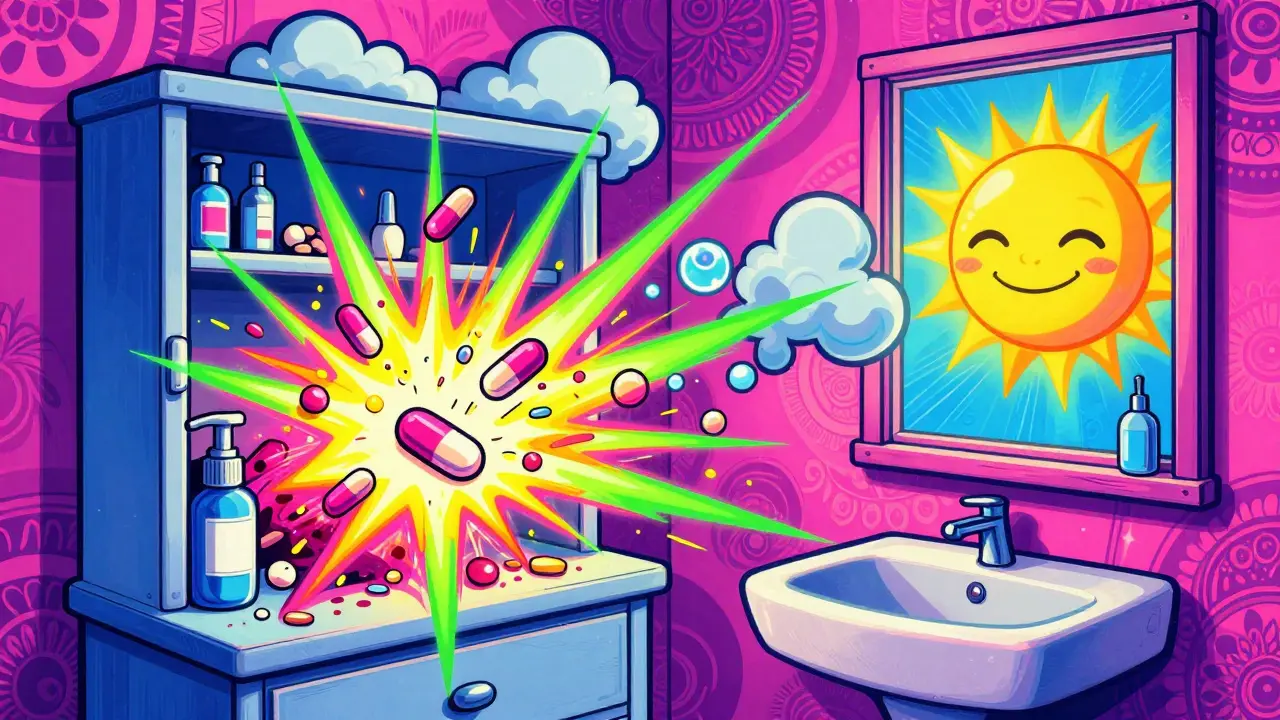
You bought that antibiotic last fall, and it’s still sitting in your bathroom cabinet. The expiration date says next year, so you assume it’s fine. But here’s the truth: medication doesn’t just sit there quietly waiting to be used. Heat, moisture, and light are quietly breaking it down - often long before the printed date. In fact, 37% of premature medication expiration in homes comes from bad storage, not age. And the biggest culprit? Your bathroom.
The FDA says expiration dates aren’t arbitrary. They’re based on real testing that shows when a drug drops below 90% of its labeled potency. That’s not a safety cutoff - it’s a performance one. A pill that’s lost 15% of its strength might not kill you, but it might not help you either. For antibiotics, blood pressure meds, or insulin, that difference can be dangerous.
Where Not to Store Your Medications
The bathroom medicine cabinet is the worst place in your house for most drugs. Every time you take a hot shower, humidity spikes to 85-95%. That’s like putting your pills in a steam room. Aspirin breaks down faster in that environment - up to 300% faster - turning into acetic acid (vinegar). That’s why old aspirin sometimes smells sour. It’s not just stale; it’s chemically changed.
Don’t keep meds near the stove, oven, or radiator either. Kitchens swing in temperature by 15°C or more during cooking. A 2022 study from Swedish Medical Center found that 42% of common antibiotics lost effectiveness within 90 days when stored near heat sources. Even a windowsill above the sink gets direct sunlight - and UV light degrades pills and liquids alike.
And no, the car isn’t safe either. A car parked in the sun can hit 60°C inside. That’s enough to melt capsules and ruin liquid suspensions. Even winter cold can be harmful. Some medications freeze and separate, making them unsafe.
Where to Store Them Instead
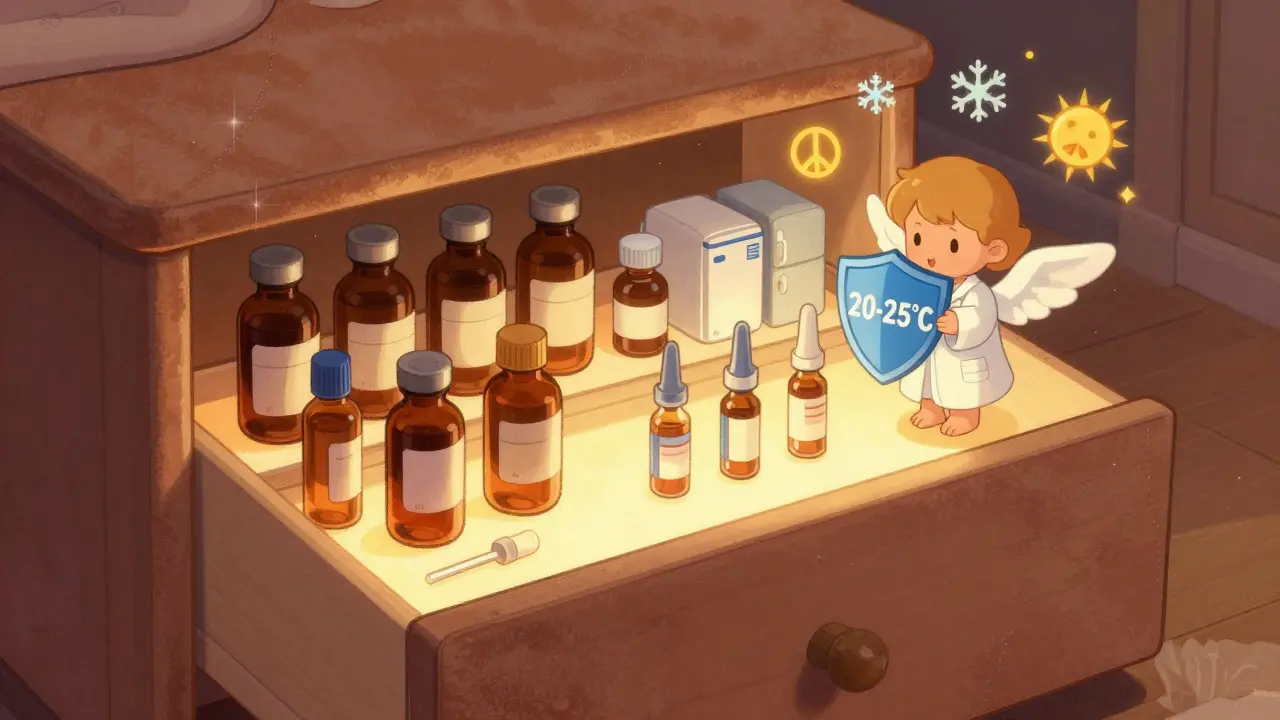
Find a cool, dry, dark spot. A bedroom dresser drawer is ideal. It’s away from humidity, heat, and light. The ideal temperature range for most tablets and capsules is 20-25°C (68-77°F), with humidity under 60%. You don’t need a climate-controlled room - just avoid the worst offenders.
For liquid medications, insulin, or eye drops, refrigeration is often required. Keep them in the main part of the fridge, not the door. The door swings open and closed, causing temperature spikes. The center shelf stays steady at 2-8°C. Always check the label. Some insulins can be kept at room temperature for up to 28 days after opening - but only if they haven’t been exposed to extreme heat.
Original packaging matters. Those amber bottles? They block 97% of UV light. Clear plastic containers? Not so much. If you transfer pills to a pill organizer, keep the original bottle as a backup. It has the expiration date, dosage, and warnings - and it’s designed to protect the medicine.
Special Cases: What Needs Extra Care
Not all meds are created equal. Some need very specific conditions:
- Nitroglycerin (for chest pain): Must stay in its original dark glass bottle. Exposure to air and light makes it useless within minutes. Keep it tightly closed and never transfer it.
- Insulin: Unopened vials go in the fridge. Once opened, most types last 28 days at room temperature. But if your house hits 30°C or higher, even that’s too warm. New heat-stable versions (like Merck’s approved in late 2023) can handle up to 30°C for 56 days - but only if labeled as such.
- Eye drops: Once opened, they can grow bacteria. The American Society of Health-System Pharmacists found 78% of expired eye drops contained Pseudomonas aeruginosa - a bacteria that can cause serious eye infections. Toss them after the date on the bottle, even if they look fine.
- Suppositories and creams: These can melt or separate in heat. Store them in the fridge if the label says so.
How to Spot When a Medication Has Gone Bad
Expiration dates aren’t magic. Sometimes meds degrade before the date. Here’s what to look for:
- Smell: Aspirin that smells like vinegar? Toss it. That’s acetylsalicylic acid breaking down.
- Color: Tablets or capsules that are darker, lighter, or have spots? Don’t take them. A 15% change in color is a red flag.
- Texture: Pills that crumble easily, or capsules that are sticky or swollen? That’s moisture damage.
- Liquids: Cloudiness, particles, or a strange odor in syrups, eye drops, or injections? Discard immediately.
If you’re unsure, don’t guess. Call your pharmacist. They’ve seen it all.
Organize and Track What You Have
Most people don’t know what’s in their medicine cabinet - or when it expires. A simple system cuts waste and risk.
One effective method is the color-dot system used by the University of Wisconsin: use red stickers for meds expiring this year, blue for next year, and green for two years out. It takes 30 seconds per bottle, and it cuts expired medication incidents by 63%.
Assign one person in the household to check all meds once a month. Just grab the bottle, read the date, and ask: “Have I used this in the last 6 months?” If not, it’s probably not needed. Put it aside for safe disposal.
Keep all medications in one locked cabinet - not scattered in drawers, purses, or nightstands. That helps with organization, safety (especially with kids or pets), and temperature control.
Dispose of Expired or Unneeded Meds Safely
Never flush pills down the toilet. That pollutes water systems. Don’t throw them in the trash either - someone could find them.
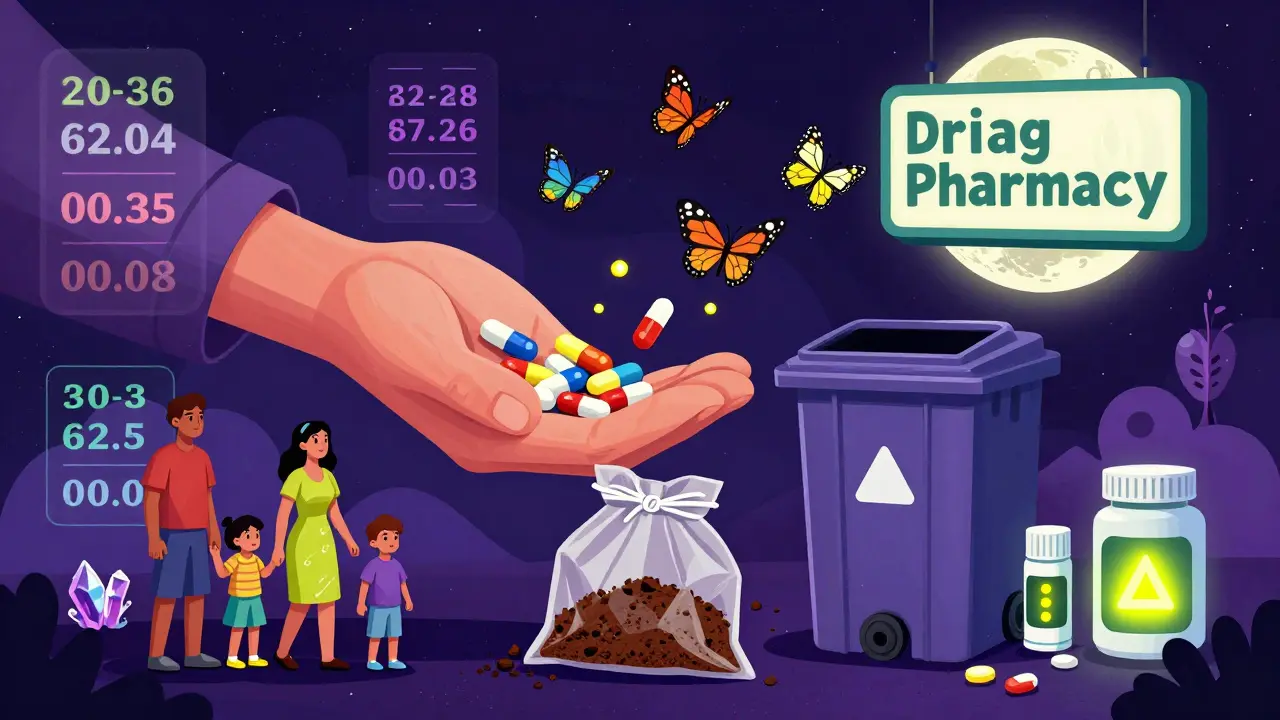
The safest way is through a drug take-back program. The DEA runs National Prescription Drug Take Back Day twice a year. In 2024, there will be over 11,000 collection sites across the U.S. You can also find permanent drop boxes at many pharmacies and police stations.
If no take-back is available, mix pills with coffee grounds or cat litter in a sealed bag before tossing. It makes them unappealing and unusable. But always check local guidelines - rules vary by state.
The Bigger Picture: Why This Matters
Wasted meds cost the U.S. $20 billion a year. That’s money spent on pills that never worked because they were stored wrong. It’s also a public health risk. People who take degraded antibiotics might not recover, leading to longer illness or resistant infections.
And it’s not just about money. For someone with diabetes, a weakened insulin dose can mean a trip to the ER. For someone with heart disease, a faulty blood pressure pill can be life-threatening.
There’s progress being made. New prescription labels now include icons for storage - like a snowflake for refrigerated or a sun for room temperature. Smart pillboxes with built-in sensors can alert you if your meds are overheating. And researchers are testing bottles with silica gel inside to keep humidity low.
But the biggest change starts with you. Knowing where to store your meds - and checking them regularly - saves money, keeps you safe, and helps your body do what it’s supposed to do: heal.
Frequently Asked Questions
Can I still use medicine after the expiration date?
The expiration date is the last day the manufacturer guarantees full potency. Most pills don’t suddenly become toxic after that date - but they may not work as well. For critical medications like insulin, heart drugs, or epinephrine, never use expired ones. For occasional pain relievers, if stored properly and showing no signs of damage, they may still be effective for a short time. But when in doubt, replace them.
Is it safe to store medications in the fridge?
Only if the label says so. Most tablets and capsules don’t need refrigeration - and cold can actually damage them by causing condensation when taken out. But liquids, insulin, and some suppositories must be kept cold. Always store them in the center of the fridge, not the door, to avoid temperature swings.
What should I do if my medication looks different?
If your pills are discolored, cracked, sticky, or have an odd smell - don’t take them. Same with cloudy or particle-filled liquids. These are signs of chemical breakdown or contamination. Even if the date hasn’t passed, the medicine may be unsafe. Bring it to your pharmacist for advice.
How do I know if my medicine needs to be refrigerated?
Check the label first. Look for phrases like “store in refrigerator,” “keep refrigerated,” or a snowflake icon. If you’re unsure, ask your pharmacist or call the manufacturer. Never assume - some oral suspensions, eye drops, and biologics require cold storage, while others don’t.
Can I transfer pills to a pill organizer?
Yes - but only for short-term use, like a week or two. Long-term storage in plastic organizers exposes pills to air and moisture, which can degrade them. Always keep the original bottle as your main storage. Use the organizer as a helper, not a replacement.
Are there smart tools to help track medication storage?
Yes. Devices like the MedMinder Pro track temperature and humidity inside your medicine box and send alerts if conditions get too hot or damp. Some smart bottles also have built-in silica gel to reduce moisture. These are especially helpful for people managing multiple medications or living in hot, humid climates.
Solomon Ahonsi
February 2, 2026 AT 08:45Wow, so the bathroom cabinet is basically a drug death trap? Thanks for the wake-up call. I’ve been storing my blood pressure pills next to the shower since 2020. Guess I’m lucky I haven’t keeled over yet.
George Firican
February 3, 2026 AT 05:30There’s something deeply poetic about how we treat our health with such casual neglect-storing life-sustaining chemicals in the most humid, temperature-fluctuating room of the house, as if biology were a hobby that only needs occasional attention. The body doesn’t care about convenience; it responds to chemistry, and chemistry doesn’t forgive ignorance. We treat pills like spare socks, when they’re more like finely tuned instruments in a symphony that can only play once.
Matt W
February 4, 2026 AT 04:08This is so helpful. I had no idea aspirin turns into vinegar. Now I get why my old bottle smelled weird. I’m moving everything to my bedroom drawer tonight. Also, color-dot system? Genius. I’m stealing that.
Anthony Massirman
February 6, 2026 AT 02:34Stop storing meds in the bathroom. Done.
Brett MacDonald
February 7, 2026 AT 10:35so like… if i keep my tylenol in the glovebox of my car, does that mean it’s basically a hot tub for pills? lol
phara don
February 8, 2026 AT 01:12Interesting. I always assumed expiration dates were just a marketing tactic. But the part about insulin losing potency… that’s scary. Do you know if refrigeration affects the absorption rate once you inject it? Or is it just about maintaining chemical stability?
Murarikar Satishwar
February 8, 2026 AT 10:14Excellent breakdown. I’ve been using the color-dot system for over a year now-my elderly mother even adopted it. We check meds every Sunday morning over tea. It’s become a quiet ritual. Also, never underestimate the power of original packaging. That amber bottle isn’t just tradition-it’s science. And for those who say, ‘It’s just a pill,’ remember: a half-dose of anticoagulant isn’t a minor inconvenience. It’s a silent countdown.
Bob Hynes
February 9, 2026 AT 01:23OMG I JUST REALIZED I’VE BEEN KEEPING MY INSULIN ON THE KITCHEN COUNTER LIKE A SPICE JAR. MY MOM IS GONNA KILL ME. I’M MOVING IT TO THE FRIDGE RIGHT NOW. ALSO, WHY DOESN’T EVERY MEDICINE COME WITH A LITTLE HUMIDITY SENSOR???
Nick Flake
February 10, 2026 AT 03:26This post is a gift. Seriously. I used to think ‘store at room temperature’ meant ‘anywhere in the house.’ Now I know it means ‘away from the sun, the steam, and the chaos.’ I bought one of those smart pillboxes with the temp sensor last month. It beeped at me because my nightstand hit 32°C. I felt like a kid getting scolded by a robot. But hey-I’m alive, and my meds are still good. 🙏
Akhona Myeki
February 11, 2026 AT 13:09As a South African healthcare professional, I must emphasize: this is not a Western luxury-it is a global public health imperative. In rural clinics, degraded antiretrovirals and antibiotics are not theoretical risks. They are daily tragedies. Proper storage is not optional. It is ethical. The fact that you have to explain this to people in 2025 is a reflection of systemic neglect, not individual ignorance. Dispose of expired medications properly. Do not flush. Do not litter. Your community is watching.