
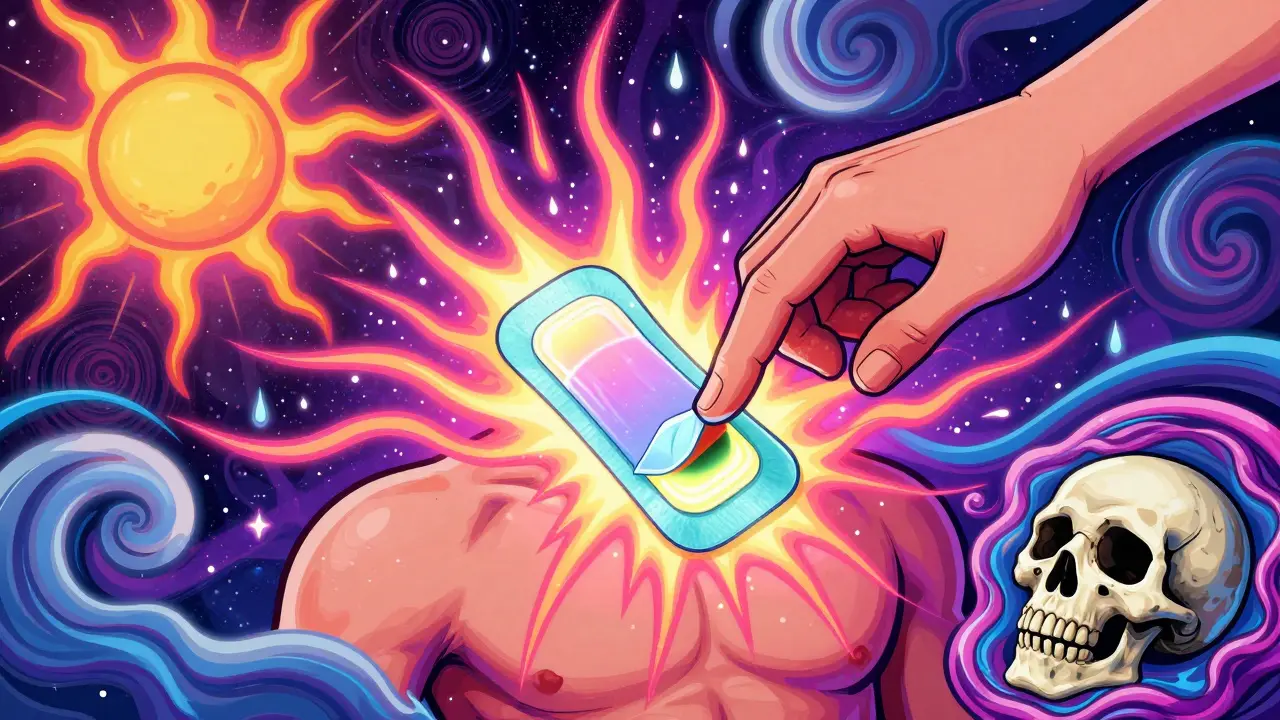
Overdose isn’t just a street drug problem. It happens every day to people taking prescribed medications exactly as directed - because the form of the drug makes it more dangerous than they realize. Transdermal patches, liquid formulations, and extended-release tablets are designed to deliver medicine slowly, safely, and steadily. But if you don’t understand how they work, or if you accidentally break their design, the result can be deadly.
Why These Forms Are Riskier Than You Think
Patches, liquids, and extended-release pills aren’t just different ways to take medicine. They’re engineered with specific mechanisms that, when tampered with or misunderstood, turn into silent killers.Take a fentanyl patch. It’s meant to release a steady dose of opioid over 72 hours. But if someone cuts it open to get the gel inside - thinking they’re "getting more bang for the buck" - they’re not just increasing the dose. They’re dumping a full day’s worth of fentanyl into their system all at once. That’s enough to stop breathing in minutes.
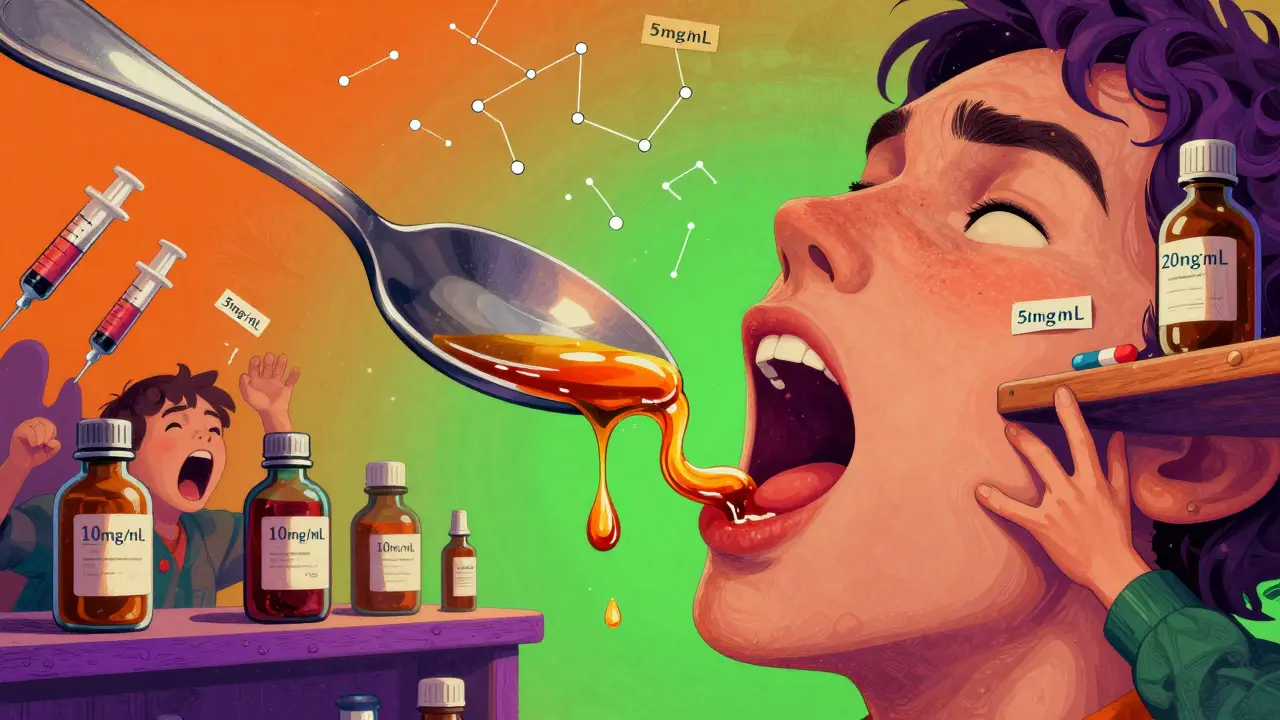
Liquid opioids, like morphine or oxycodone syrup, are even trickier. A teaspoon might be the right dose. A tablespoon? That’s a hospital trip. Many people use kitchen spoons to measure. But kitchen spoons vary wildly in size. One person’s "teaspoon" might be 5 milliliters. Another’s might be 8. That 3-milliliter difference? Could be the line between relief and respiratory arrest.
Extended-release tablets - like OxyContin or generic oxycodone ER - are coated or layered to release slowly. Crush them. Chew them. Dissolve them. And you’re no longer getting 12 hours of pain relief. You’re getting a full, lethal dose in under a minute. That’s why emergency rooms see so many overdoses from people who thought they were "just taking their pill like normal."
Three Rules for Patch Users
- Never cut, chew, or heat the patch. Heat from a heating pad, hot shower, or even sitting in the sun can speed up drug release. One study found that heating a fentanyl patch increased absorption by up to 500%. That’s not a bonus - it’s a death sentence.
- Apply it to clean, dry skin. Oily or sweaty skin changes how fast the drug gets into your body. If you’re using it for pain, don’t put it over a scar or tattoo - those areas absorb differently.
- Dispose of used patches safely. Fold the sticky side onto itself, flush it down the toilet, or take it to a pharmacy take-back program. A single used patch still has enough fentanyl to kill a child or pet.
How to Use Liquid Medications Without Risk
- Always use the measuring device that came with the bottle. That’s usually a syringe, dosing cup, or oral dispenser. Never use a kitchen spoon. Even if it says "teaspoon," it’s not accurate.
- Double-check the concentration. Liquid opioids come in different strengths: 5 mg per mL, 10 mg per mL, even 20 mg per mL. If your doctor changes the brand, the concentration might change too. Always ask: "How many milligrams are in each milliliter?" Write it down.
- Keep it locked up. If you have kids, pets, or roommates, store it in a locked box. A 2024 CDC report showed that over 1,200 pediatric overdoses in the U.S. last year came from unsecured liquid medications.
Extended-Release Pills: Don’t Break the System
- Swallow whole. Never crush, chew, or split. Even if the pill is hard to swallow, don’t break it. Talk to your pharmacist about alternatives - like liquid or patch forms - if swallowing is an issue.
- Don’t take it with alcohol or sleeping pills. Extended-release opioids already slow your breathing. Add benzodiazepines, muscle relaxers, or even a glass of wine, and your body can’t keep up.
- Follow the schedule. No "extra" doses. If you forget a dose, don’t take two later. The drug is still in your system. Taking more just piles on the risk.
Naloxone Isn’t Optional - It’s Essential
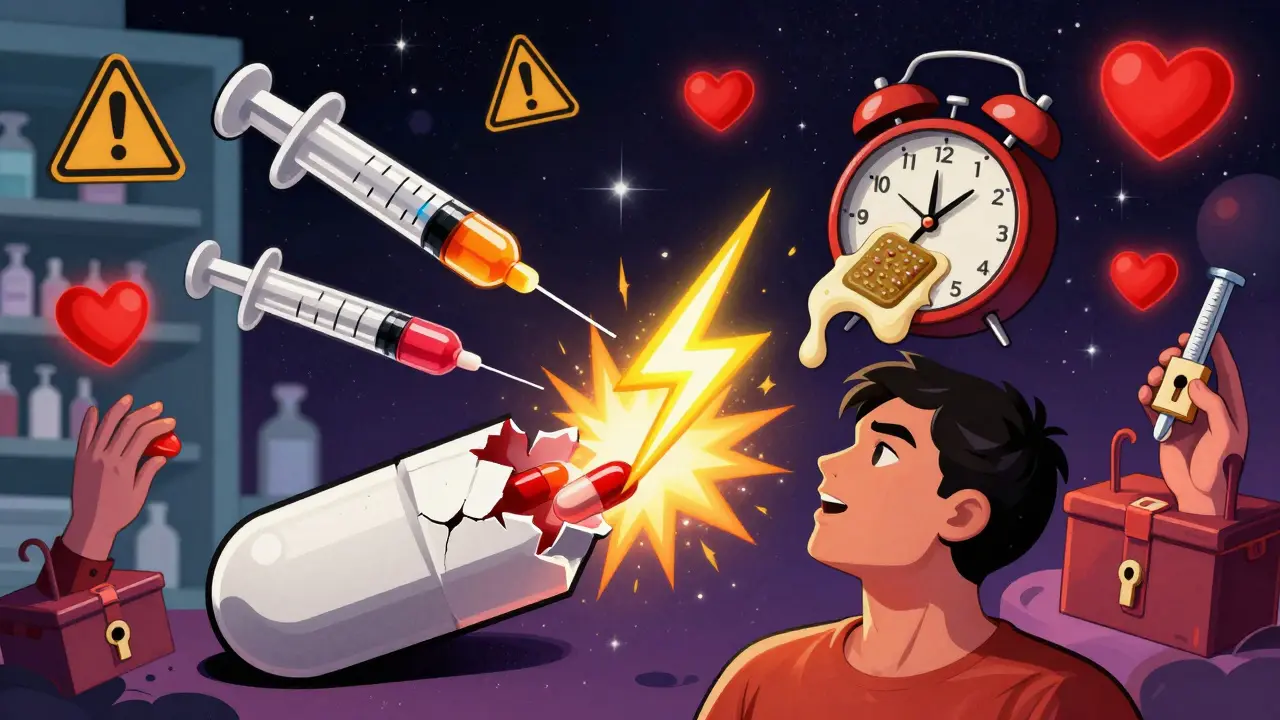
Naloxone (Narcan) reverses opioid overdoses. But here’s the part most people miss: it doesn’t last as long as extended-release drugs. If you overdose on an extended-release pill or a fentanyl patch, naloxone might wake you up - but 30 to 90 minutes later, the opioid in your system starts working again. You could slip back into overdose. That’s called renarcotization.
That’s why you need two doses of naloxone on hand if you’re using extended-release meds. And why you must call 911 even if naloxone works. Emergency crews need to monitor you for at least 4 hours.
And don’t wait until you think you need it. Keep naloxone in your medicine cabinet, your car, your purse. If you’re taking any of these medications - even if you’re not "using" them recreationally - you’re at risk. Your family, your roommate, your neighbor might need it more than you.
What to Do If You’re Worried
If you’re scared you’ve been taking too much - or if you’ve ever thought about crushing a pill or cutting a patch - talk to your pharmacist or doctor. No judgment. No shame. These are common mistakes.
Ask your doctor: "Is there a safer way to manage my pain?" There might be non-opioid options, or a different formulation that doesn’t carry the same risks. Pharmacies in Australia now offer naloxone without a prescription. Ask for it. Take it home. Teach someone how to use it.
And if you live alone? Tell someone - anyone - what you’re taking. Set a daily check-in text. Use a smartwatch with fall detection. Make a plan. Overdose doesn’t always come with warning signs. Sometimes, it just happens.
Final Reminder: It’s Not About Willpower
People don’t overdose because they’re careless. They overdose because the system didn’t give them clear, simple, visual instructions. A patch looks like a Band-Aid. A liquid looks like cough syrup. A pill looks like any other tablet. But their danger isn’t visible.
Prevention isn’t about being perfect. It’s about knowing the risks and having tools ready. Naloxone. A proper measuring tool. A locked box. A person who knows what’s going on. That’s all it takes to turn a silent killer into something you can survive.
Justin Fauth
February 4, 2026 AT 15:05Y'all gotta stop treating these patches like they're just fancy Band-Aids. I had a cousin who thought heating it up would "help the pain faster." He didn't make it to the hospital. Don't be that person.
Joy Johnston
February 5, 2026 AT 05:08This is one of the clearest, most vital public health explainers I've seen in years. Seriously - if you're on any extended-release opioid, keep naloxone on hand. Not "maybe," not "just in case." Keep it. Like your EpiPen. Like your smoke detector. It's not about fear. It's about preparedness.
Also - if your pharmacy doesn't stock it without a script, ask them why. Push back. This isn't a luxury. It's a lifeline.
Alec Stewart Stewart
February 5, 2026 AT 18:35My grandma’s on fentanyl patches. I made sure she got the right measuring cup, locked up her meds, and taught my cousin how to use Narcan. She doesn’t even know I did it. But if something happens? He’ll know what to do. 🙏
Joseph Cooksey
February 7, 2026 AT 03:53Let’s be honest - the system is designed to fail people. The pharmaceutical companies don’t want you to know how dangerous these formulations are, because if you did, you’d stop buying them. They market patches like they’re harmless, then bury the warnings in 14-point font on a leaflet you’ll never read. And when someone overdoses? It’s "user error." No - it’s corporate negligence wrapped in a white coat.
And don’t get me started on liquid formulations. I’ve seen people use measuring spoons from their kitchen drawer. That’s not negligence - it’s criminal. The FDA should require tamper-proof packaging, color-coded dosing tools, and mandatory pictograms. But they won’t. Because profit > prevention.
Katherine Urbahn
February 7, 2026 AT 08:55It is imperative to note, however, that the majority of these tragedies are entirely preventable - provided one exercises due diligence, consults with a licensed pharmacist, and refrains from engaging in any form of self-experimentation. The fact that individuals continue to misuse these medications - even in the absence of recreational intent - speaks to a profound failure in patient education. One must not assume that "as directed" equates to "safe."
Moreover, the notion that "naloxone is sufficient" is dangerously misleading. Naloxone’s half-life is significantly shorter than that of extended-release opioids. Therefore, one must remain under medical supervision for a minimum of four hours post-administration - a fact that is, shockingly, omitted from public service announcements. This is not hyperbole. It is physiology.
And yet - despite the clarity of the evidence - we continue to treat this as a moral failing rather than a pharmacological one. We must reframe the discourse. This is not about willpower. It is about pharmacokinetics.
Caleb Sutton
February 8, 2026 AT 16:46They're putting fentanyl in everything now. I heard the government's been mixing it into prescription meds to control the population. They want you dependent. Then they'll take your kids. You think this is about pain? It's about control.
Rachel Kipps
February 9, 2026 AT 19:50i read this and i had no idea how dangerous these patches were. my mom uses one for back pain. i'm gonna go talk to her pharmacist tomorrow. thanks for sharing this.
Geri Rogers
February 10, 2026 AT 03:40YES. YES. YES. 🙌 I keep two Narcan kits in my car, one in my purse, and one in my mom’s medicine cabinet. I taught my 17-year-old nephew how to use it last week. He said, "Why do we need this?" I said, "Because someone you love might need you to save them one day." This isn’t about drugs. It’s about love. 💙
Samuel Bradway
February 11, 2026 AT 01:56My brother died from crushing an OxyContin. He didn't even know it was extended-release. He thought it was just a big pill. We never talked about it. I wish we had.
Now I carry Narcan. I tell everyone I know. I don't care if it's awkward. Better awkward than dead.
Coy Huffman
February 12, 2026 AT 13:49man… i just realized i’ve been using a kitchen spoon for my liquid pain med. 😳 i thought a tsp was a tsp. turns out my spoon was like 7ml? holy crap. i’m getting the syringe tomorrow. thanks for the wake up call.
also - naloxone in the glovebox now. 🤞
Wendy Lamb
February 13, 2026 AT 17:37My sister’s on a patch. I showed her how to fold it before tossing it. She didn’t know. No one told her.
Simple things save lives.
Meenal Khurana
February 14, 2026 AT 20:47Thank you for this. I will share with my family in India. Many use these without knowing risks.
Roshan Gudhe
February 16, 2026 AT 04:40It’s strange how something so life-saving - naloxone - is treated like a taboo. We vaccinate children, we carry EpiPens, we install smoke alarms… but we’re afraid to talk about opioid reversal? Why? Is it the stigma? Or is it that we don’t want to admit that medicine can kill us too?
Maybe the real danger isn’t the drug… it’s our silence.
Prajwal Manjunath Shanthappa
February 16, 2026 AT 08:29One must recognize, with unequivocal clarity, that the pharmaceutical-industrial complex has engineered a system wherein patient safety is not merely an afterthought - it is anathema to profitability. The very design of these formulations - slow-release, heat-sensitive, concentration-variable - constitutes a predatory architecture. The FDA, in its regulatory capture, permits this. The CDC, in its bureaucratic inertia, merely publishes statistics. And the public? They remain blissfully ignorant - until it’s too late.
It is not negligence. It is malice, disguised as medicine.
Katherine Urbahn
February 17, 2026 AT 03:40Thank you for the correction, but I must emphasize: even if naloxone is administered, it is imperative to remain under medical supervision. The pharmacokinetic half-life of extended-release opioids can exceed 12 hours - whereas naloxone’s duration is typically less than 90 minutes. This discrepancy is not theoretical. It is documented in peer-reviewed journals. Emergency responders must be notified regardless of apparent recovery.