
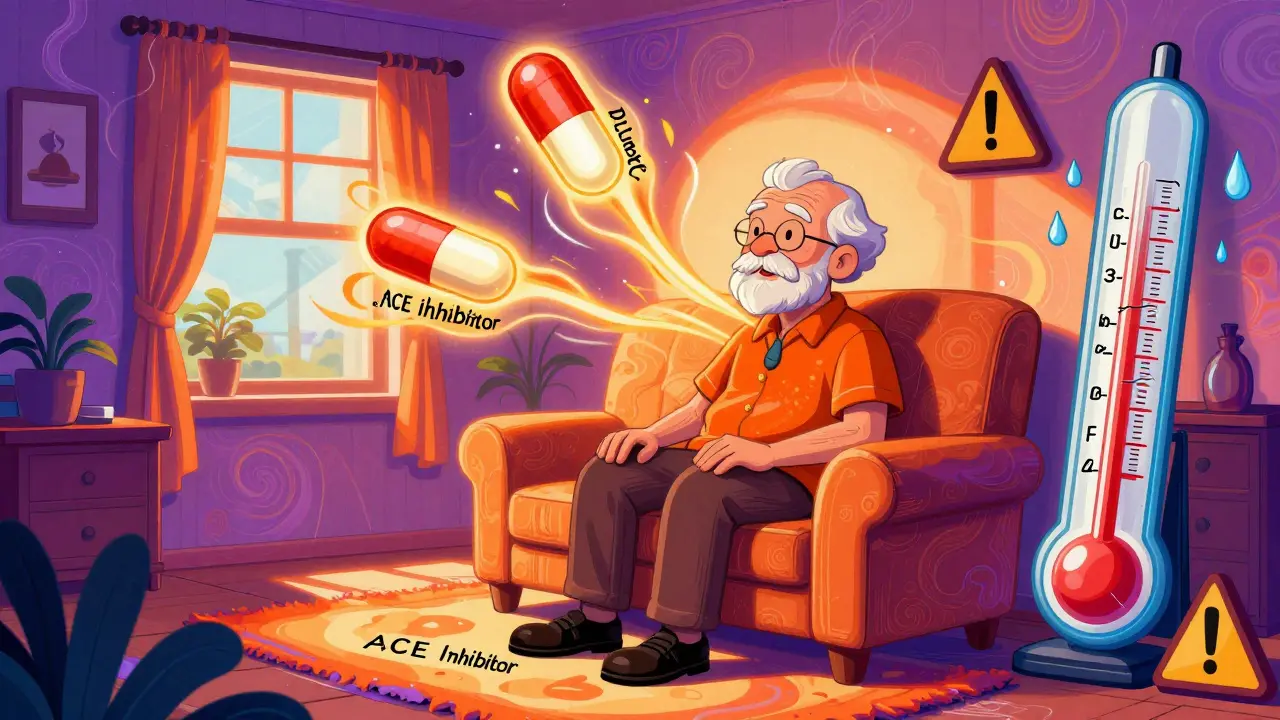
Heat Can Turn Common Medications Into Hidden Dangers for Seniors
When the temperature rises, most people think about staying cool, drinking water, and avoiding the sun. But for seniors taking certain medications, heat isn’t just uncomfortable-it can be deadly. Many everyday prescriptions quietly interfere with the body’s ability to cool down, leading to heat exhaustion, heat stroke, or even sudden death. The CDC reports that heat-related deaths among seniors have jumped 67% since 2004, and a big part of that rise is tied to medications that seem harmless in normal weather but turn dangerous in the heat.
It’s not just about being outside. Even indoor temperatures above 78°F (25.6°C) can trigger problems if someone is on the wrong combination of drugs. Seniors are especially vulnerable because their bodies naturally hold less water, sweat less, and struggle to adjust to temperature changes. Add in medications that block sweating, lower blood volume, or mess with thirst signals, and you’ve got a ticking time bomb.
These Medications Are the Biggest Culprits
Not all meds are risky-but some are far more dangerous in hot weather than others. Here are the top offenders, backed by clinical data:
- Diuretics (like hydrochlorothiazide and furosemide): These are prescribed for high blood pressure and heart failure, but they make seniors lose more fluid through urine. A 2022 study found they reduce thirst sensation by 30-40%, meaning many seniors don’t drink enough-even when their bodies are screaming for water.
- ACE inhibitors and ARBs (like benazepril, losartan): These blood pressure meds also dull thirst by about 25%. Worse, when combined with diuretics, they can cause sodium levels to drop below 135 mmol/L, leading to confusion, falls, and seizures.
- Antipsychotics (like quetiapine, clozapine): Often used for dementia or Parkinson’s, these drugs disrupt the brain’s thermostat. Research from the Mayo Clinic shows they can raise core body temperature by 1.5-2.0°F, even without physical activity.
- Anticholinergics (like diphenhydramine in Benadryl or Tylenol PM): These block sweat production by 35-50%. That means the body can’t cool itself naturally. Many seniors take these for sleep or allergies, not realizing they’re disabling their main cooling system.
- Certain antibiotics and antifungals: Some, like tetracycline or fluconazole, make skin extremely sensitive to sunlight. Sunburn risk can jump 4-6 times higher, increasing the chance of heat-related illness.
Here’s the scary part: 87% of seniors over 65 take two or more prescription drugs. That means the risk isn’t just from one medication-it’s from how they interact. A diuretic plus an anticholinergic? That’s a double hit on hydration and cooling. An ACE inhibitor plus an antipsychotic? That’s a one-two punch to blood pressure and body temperature control.
Medication Reviews Are Not Optional-They’re Life-Saving
Most seniors don’t realize their meds could be putting them at risk. That’s why a medication review before summer is critical. It’s not just about checking for side effects-it’s about asking: “Which of these drugs make it harder for my body to handle heat?”
Dr. Scott Hall, a pharmacist at Mayo Clinic, recommends this simple checklist for every senior’s summer plan:
- Bring all prescriptions, supplements, and over-the-counter meds to your doctor or pharmacist.
- Ask: “Which of these increase my risk for heat illness?”
- Find out if any doses need to be lowered on hot days.
- Ask if you can temporarily pause non-essential meds (like nighttime sleep aids with anticholinergics) during heat waves.
- Get a written plan for what to do if you feel dizzy, nauseous, or confused in the heat.
A 2022 study from Johns Hopkins showed that seniors who had structured medication reviews before summer had 37% fewer emergency room visits for heat-related problems. That’s not a small number-it’s a life-changing difference.
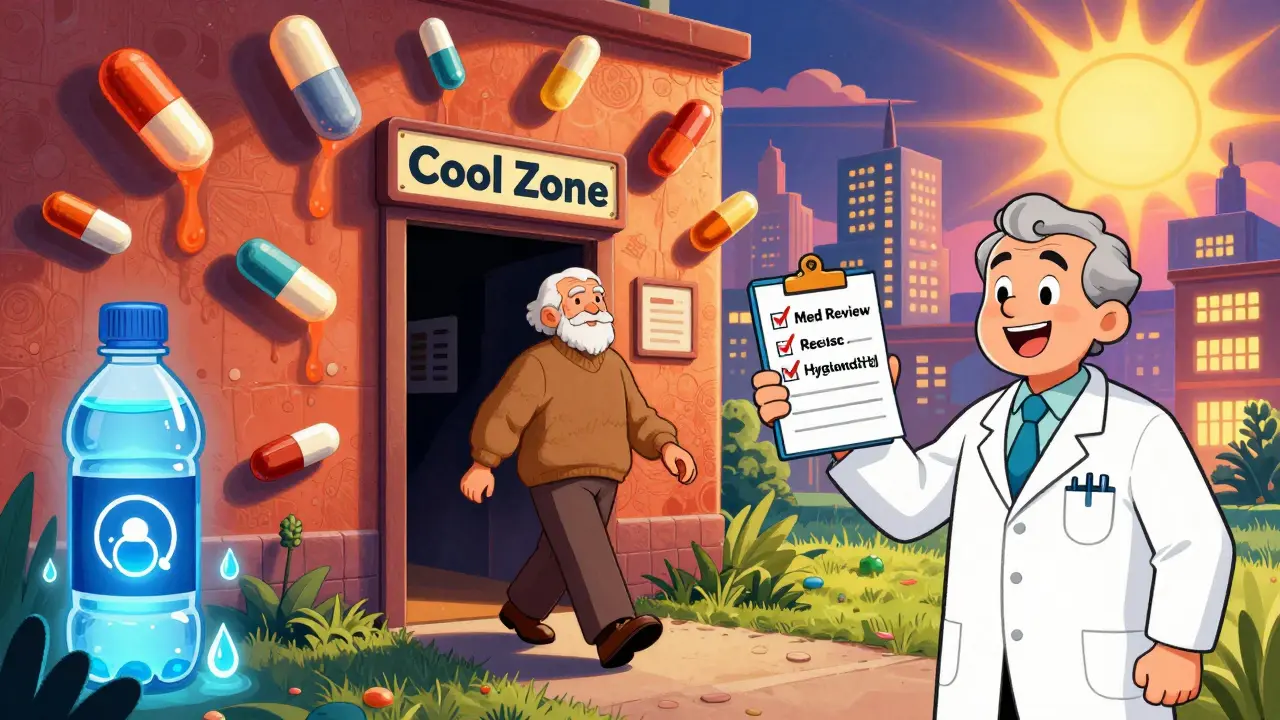
Hydration Rules for Seniors on Medications
“Drink more water” sounds simple-but for seniors on certain meds, it’s not that easy. Some are told to limit fluids because of heart failure. Others feel no thirst. So how do you stay safe?
The National Institute on Aging recommends:
- Drink 8-10 eight-ounce glasses of water daily during hot weather-even if you’re not thirsty.
- If you’re on a fluid restriction (common with heart failure), talk to your doctor about a temporary adjustment during heat waves. About 43% of these patients develop dangerous electrolyte imbalances when they stick to strict limits in hot weather.
- For those on diuretics, choose electrolyte drinks with 120-150 mg of sodium per 8 oz. Plain water alone won’t replace what’s lost.
- Avoid alcohol and caffeine. Both act as diuretics and can increase urine output by 40-60%, making dehydration worse.
Keep a water bottle with you at all times. Set phone alarms to drink every hour. If you’re taking meds that reduce thirst, you can’t rely on your body to tell you when to drink. You have to force it.
Environment Matters More Than You Think
Even if you’re indoors, heat can kill. The CDC says indoor temperatures above 78°F (25.6°C) are unsafe for seniors on high-risk meds. Air conditioning isn’t a luxury-it’s medical equipment.
Here’s what works:
- If you don’t have AC, go to a public library, mall, or community center during peak heat (10 a.m. to 4 p.m.).
- Use fans only if the room temperature is below 90°F. Fans blow hot air over skin-they don’t cool you down if the air is hotter than your body.
- Wear lightweight, loose-fitting clothes made of cotton or linen. Synthetic fabrics trap heat. Natural fibers can lower your perceived temperature by 5-7°F.
- Use broad-spectrum sunscreen with SPF 15 or higher, reapplied every two hours. Some meds make skin burn 4-6 times faster. A bad sunburn can trigger heat illness.
One assisted living facility in Arizona reduced heat-related incidents by 29% just by making sure residents had access to air-conditioned common areas during the hottest hours. It’s not rocket science-it’s basic care.
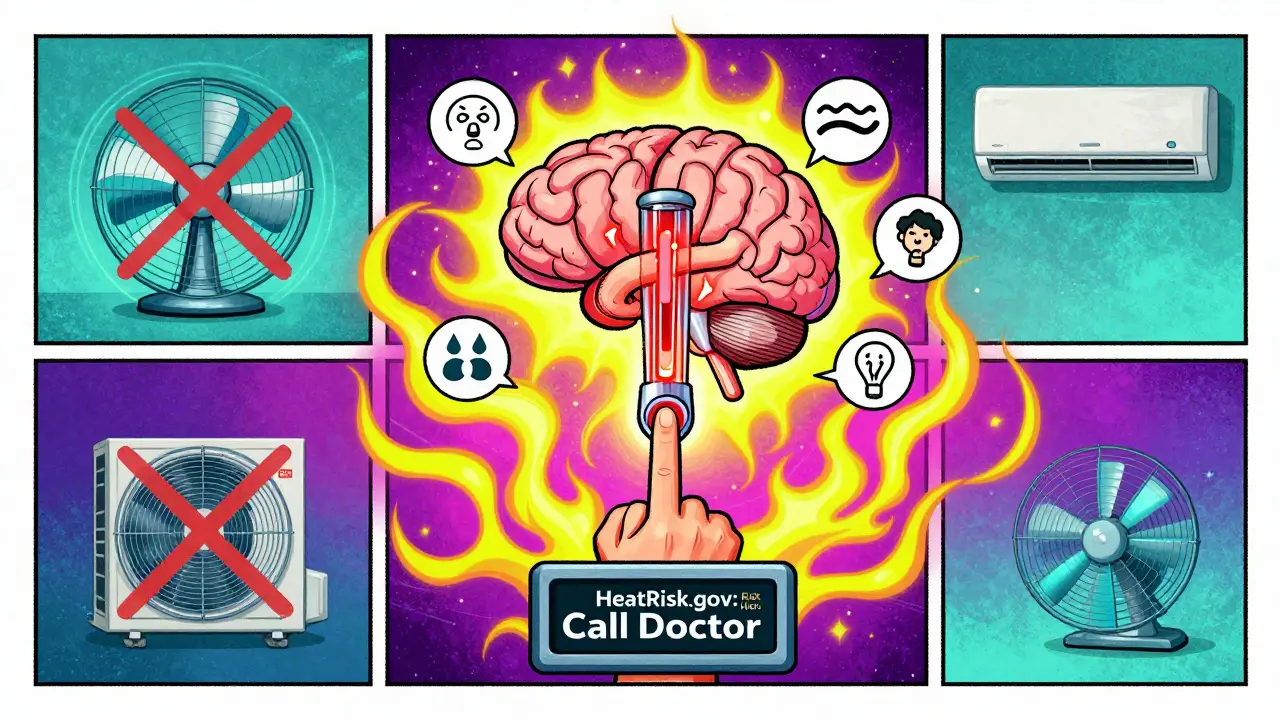
Watch for Signs No One Talks About
Heat exhaustion in seniors doesn’t always look like textbook symptoms. You won’t always see heavy sweating or flushed skin. Many seniors show subtle changes first:
- Sudden confusion or disorientation
- Slurred speech
- Unusual fatigue or drowsiness
- Loss of appetite or nausea
- Weakness or dizziness without obvious cause
According to UCLA research, 78% of seniors show these mental changes before physical symptoms appear. That’s why caregivers need to be alert-not just to temperature, but to behavior. If your parent or loved one seems “off,” don’t wait. Move them to a cooler place, offer water (if they can swallow), and call a doctor.
Heat stroke is an emergency. Signs include:
- Body temperature above 103°F (39.4°C)
- Hot, dry, or damp skin (no sweating)
- Rapid, strong pulse
- Loss of consciousness
If you see these, call 911 immediately. While waiting, move the person to shade, remove excess clothing, and cool them with wet towels or a cool bath. Don’t wait to see if they get better. Without quick treatment, 65% of heat exhaustion cases turn into heat stroke within 2-4 hours.
New Tools Are Helping Seniors Stay Safe
There’s new tech making prevention easier. The CDC launched the Heat and Medication Risk Assessment Tool (HM-RAT) in June 2023. You can input your meds and your location, and it gives you a personalized risk score based on local weather forecasts.
Plus, the National Institute on Aging and EPA teamed up to create HeatRisk.gov. It’s a free website that combines your medication list with real-time heat index data. Over 1.2 million seniors used it during the 2023 summer, and many got alerts before heat waves hit.
There’s even a new supplement in clinical trials designed for seniors on multiple meds. Early results show it improves thermoregulation by 28%. While it’s not on the market yet, it shows how seriously researchers are taking this issue.
What to Do Right Now
Don’t wait for a heat wave. Take action today:
- Make a list of every medication, supplement, and OTC drug you or your loved one takes.
- Call your doctor or pharmacist and ask: “Which of these increase heat risk?”
- Ask if any doses should be adjusted before summer.
- Set up daily water reminders and keep electrolyte drinks on hand.
- Identify cool places nearby-libraries, malls, community centers.
- Teach a caregiver or neighbor how to recognize early signs of heat stress.
Heat-related deaths aren’t accidents. They’re preventable. But they only stop when someone takes charge-before it’s too late.
Can seniors stop taking their meds during a heat wave?
No-never stop or change medication without talking to a doctor. Some meds, like those for blood pressure or heart conditions, can be dangerous if stopped suddenly. Instead, ask your provider if the dose can be temporarily lowered, or if a safer alternative exists during hot weather. Many seniors can safely adjust timing (like taking diuretics earlier in the day) to reduce risk.
Is it safe for seniors to use fans in hot weather?
Fans only help if the air is cooler than your body. When outdoor temperatures exceed 90°F (32°C), fans just blow hot air around and can make heat stress worse. For seniors on heat-risk meds, air conditioning is the only reliable way to stay cool. If you don’t have AC, go to a public cooling center.
What’s the best way to hydrate if I’m on a fluid restriction?
If you’re on fluid limits due to heart failure or kidney disease, talk to your doctor before the heat hits. You may need a temporary increase in your daily allowance during hot weather. Don’t guess-get written instructions. Some doctors allow extra fluids on hot days if you’re also taking electrolyte drinks to balance sodium levels.
Can I use over-the-counter pain relievers like Tylenol PM in the heat?
Tylenol PM contains diphenhydramine, an anticholinergic that cuts sweating by up to 50%. That’s extremely risky in heat. Use plain acetaminophen for pain instead, and avoid sleep aids with anticholinergics during summer. If you need help sleeping, ask your doctor for a safer option.
How do I know if my senior loved one is overheating?
Look for changes in behavior first: confusion, slurred speech, unusual tiredness, or not eating. These often come before sweating, dizziness, or nausea. If they seem “not themselves,” treat it like an emergency. Move them to a cool place, offer water, and call their doctor. Early action can prevent heat stroke.
Are there any supplements that help seniors handle heat better?
Right now, the only proven help is staying hydrated with water and electrolytes. Some supplements in trials show promise-like ones with sodium, potassium, and cooling compounds-but none are approved yet. Don’t buy unregulated “heat protection” pills. Stick to doctor-approved hydration and medication management.
John O'Brien
January 26, 2026 AT 17:19Paul Taylor
January 27, 2026 AT 20:12Candice Hartley
January 29, 2026 AT 02:20Kegan Powell
January 29, 2026 AT 20:24April Williams
January 31, 2026 AT 00:58Harry Henderson
February 1, 2026 AT 18:34suhail ahmed
February 3, 2026 AT 14:47Andrew Clausen
February 4, 2026 AT 17:05Anjula Jyala
February 4, 2026 AT 20:11Kirstin Santiago
February 6, 2026 AT 12:54Kathy McDaniel
February 8, 2026 AT 10:43