
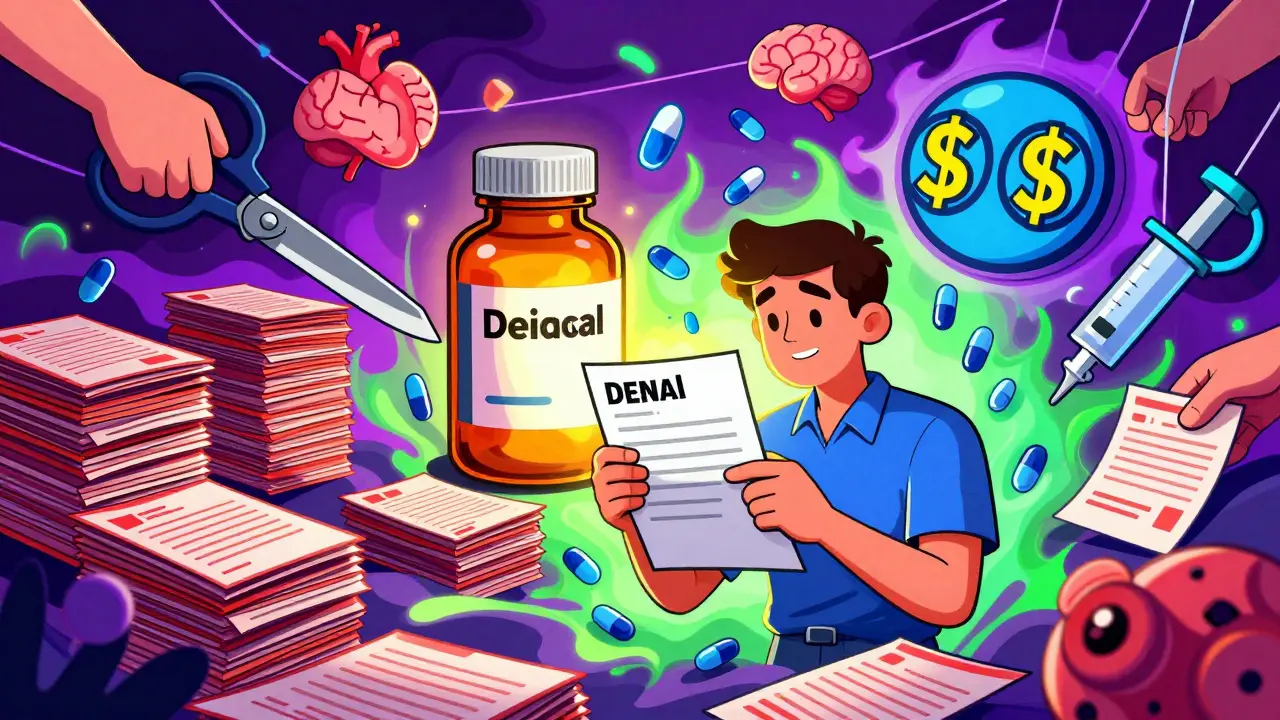
When your doctor prescribes a brand-name medication and your insurance says no, it’s not just a paperwork hiccup-it’s a threat to your health. This happens more often than you think. In 2022, nearly 1 in 6 prior authorization requests for specialty drugs were denied, and most of those were for brand-name medications. Insurers don’t always deny because the drug isn’t effective. Often, they’re just pushing you toward a cheaper generic version-even if that version didn’t work for you before.
Why Your Insurance Denies Brand-Name Medications
Insurance companies use formularies-lists of approved drugs-to control costs. If a generic version exists, they’ll usually require you to try it first. That’s called step therapy. But here’s the problem: generics aren’t always the same. For some conditions, even small differences in inactive ingredients or absorption rates can cause serious side effects or make the drug useless. For example, patients with epilepsy, autoimmune disorders, or type 1 diabetes often report that switching from a brand-name drug to a generic triggers seizures, flare-ups, or dangerous blood sugar swings. Yet insurers still deny coverage unless you’ve tried and failed the cheaper option first. And sometimes, they change their formulary without warning. You’ve been on the same brand-name drug for years, then one day, your pharmacy says it’s no longer covered. This isn’t random. It’s a business decision. In 2023, over half of commercial health plans required prior authorization for more than half of brand-name specialty drugs-up from less than 40% just five years ago. The pressure to cut costs is real. But your health shouldn’t be the price.What You Need to Do Right After a Denial
The moment you get a denial letter, don’t wait. Time is your biggest ally. Federal rules say insurers must send you a written denial within 15 days of making the decision. That letter should include the exact reason for the denial and instructions on how to appeal. Read it carefully. Look for phrases like:- “Generic equivalent available”
- “Not medically necessary per formulary guidelines”
- “Prior authorization not approved”
- Your diagnosis and how the brand-name drug treats it
- Specific failures with generic alternatives (e.g., “Patient experienced three hypoglycemic episodes in two weeks on generic insulin”)
- Lab results or clinical data showing the brand drug works better
- How the drug affects your daily life (ability to work, care for children, etc.)
- References to clinical guidelines (like ADA or FDA recommendations)
How to File an Internal Appeal
Once you have the letter, file your internal appeal. This is your first official step with the insurance company. You have up to 180 days from the denial date to submit it, but don’t wait that long. The sooner you file, the faster they have to respond. Your appeal letter should include:- Your full name, policy number, and member ID
- Date of denial and denial reference number
- Copy of the physician’s letter of medical necessity
- Any prior authorization forms or denial letters
- A clear request: “I am requesting coverage for [brand-name drug] because [reason]”
What Happens If Your Internal Appeal Is Denied
If the insurance company says no again, you move to the external review. This is where things get serious-and your chances of winning go up. External reviews are handled by independent third parties, not your insurer. In 2022, CMS reported that 58% of external appeals for brand-name drugs were approved, compared to just 39% for internal ones. That’s a big jump. Here’s how it works:- If you have a private insurance plan (not Medicare or Medicaid), contact your state’s insurance department. They’ll assign an independent reviewer.
- If your plan is governed by ERISA (which covers 61% of Americans), you must file with the U.S. Department of Health and Human Services.
Why Most Appeals Fail (And How to Avoid It)
The biggest reason appeals fail? Incomplete documentation. A 2023 GoodRx analysis of 1,200 denied cases found that 63% of failed appeals lacked clear evidence of prior treatment failure. Insurers don’t care what you think. They care about what the records show. Here’s what you must prove:- You tried the generic (and it didn’t work)
- You tried other brand-name alternatives (and they didn’t work)
- This specific drug is the only one that works for you
What to Do If You Still Get Denied
If external review fails, you have options-but they get harder. For ERISA plans, you can sue. But here’s the catch: you can’t sue until you’ve exhausted every appeal step. And even then, you won’t get a jury. Federal judges decide these cases, and they often side with insurers. Kantor & Kantor says patients with attorneys win 47% more often than those who go solo. If you can’t afford a lawyer, contact the Patient Advocate Foundation. They offer free case management for people fighting insurance denials. They’ll help you draft letters, track deadlines, and even call insurers for you. Some drug manufacturers also have patient assistance programs. Eli Lilly’s Insulin Value Program, for example, gives brand-name insulin for $35/month while you appeal. Other companies offer free samples or co-pay cards. Ask your pharmacist. They know what’s available.
How to Prevent This in the Future
Don’t wait until you’re denied to plan ahead. Before your next prescription:- Call your insurer and ask: “Is [drug name] covered? Do I need prior authorization?”
- Ask your pharmacist to check your coverage before they fill the script
- Use real-time benefit tools-if your plan offers them (new as of 2023 under the Consolidated Appropriations Act)
- Keep a printed record of every medication you’ve taken, with dates and outcomes
Real Stories, Real Results
One man in Ohio got denied coverage for his brand-name epilepsy drug. He’d been on it for 12 years. The generic made him have seizures. He filed an appeal with his doctor’s letter, hospital records, and a video of his seizure episodes. The external review approved it in 22 days. A mother in Texas fought a 6-month battle to get her daughter’s brand-name insulin covered. She called the insurer every day. She emailed her senator. She got help from a nonprofit. She won. Her daughter hasn’t had a low-blood-sugar episode since. These aren’t rare. They’re common. But they only happen when people fight back.What’s Changing in 2026
New rules are coming. The Biden administration’s 2023 executive order is pushing insurers to reduce denials. Medicare Part D plans now have to show you coverage status before you even leave the doctor’s office. AI systems are being tested to auto-approve appeals for drugs with clear clinical evidence. But until those systems are perfect, you still have to fight. And you can. You have rights. You have tools. And you’re not alone.Can I appeal if I’ve never tried the generic version?
Yes, but it’s harder. Insurers typically require you to try the generic first unless your doctor provides strong medical evidence that it’s unsafe or ineffective for you. If you’ve had a bad reaction to the generic in the past, include that in your appeal with medical records. If you’ve never tried it, your doctor may need to prescribe it first-then document the failure before filing your appeal.
How long does an insurance appeal take?
Internal appeals must be decided within 30 days for new prescriptions and 60 days for ongoing treatments. For urgent cases, insurers must respond in 4 business days. External reviews take 30-60 days, but can be rushed to 72 hours if your condition is life-threatening. Always follow up-if you don’t hear back, escalate.
Do I need a lawyer to appeal?
Not always, but it helps. If your plan is governed by ERISA (which covers most employer plans), legal help increases your success rate by 47%. For non-ERISA plans, patient advocates or nonprofit organizations can often help for free. If your case is complex, involves long-term medication, or you’ve been denied twice, consider legal help.
Can my doctor refuse to write a letter of medical necessity?
Some doctors may hesitate due to time or fear of insurer pushback. But they’re legally and ethically obligated to support your care. If they refuse, ask to speak to the office manager or request a referral to another provider. You can also use templates from the American Medical Association and hand them to your doctor’s office. Many clinics now use these templates routinely.
What if I can’t afford the medication while waiting for my appeal?
Many drug manufacturers offer patient assistance programs. Eli Lilly, Novo Nordisk, and others provide free or low-cost brand-name drugs during appeals. Pharmacies can also help you apply. Don’t skip doses-contact the Patient Advocate Foundation or your local health department. They can connect you with short-term aid while you wait.
Sangeeta Isaac
January 21, 2026 AT 09:52Dee Monroe
January 21, 2026 AT 10:34Alex Carletti Gouvea
January 22, 2026 AT 08:25Philip Williams
January 24, 2026 AT 07:04Ben McKibbin
January 25, 2026 AT 10:36Melanie Pearson
January 27, 2026 AT 05:18Uju Megafu
January 27, 2026 AT 12:14Samuel Mendoza
January 28, 2026 AT 05:48Steve Hesketh
January 28, 2026 AT 15:24shubham rathee
January 28, 2026 AT 16:59MAHENDRA MEGHWAL
January 29, 2026 AT 03:37Kevin Narvaes
January 30, 2026 AT 14:36Barbara Mahone
February 1, 2026 AT 09:51Kelly McRainey Moore
February 1, 2026 AT 20:17Stephen Rock
February 3, 2026 AT 02:32