
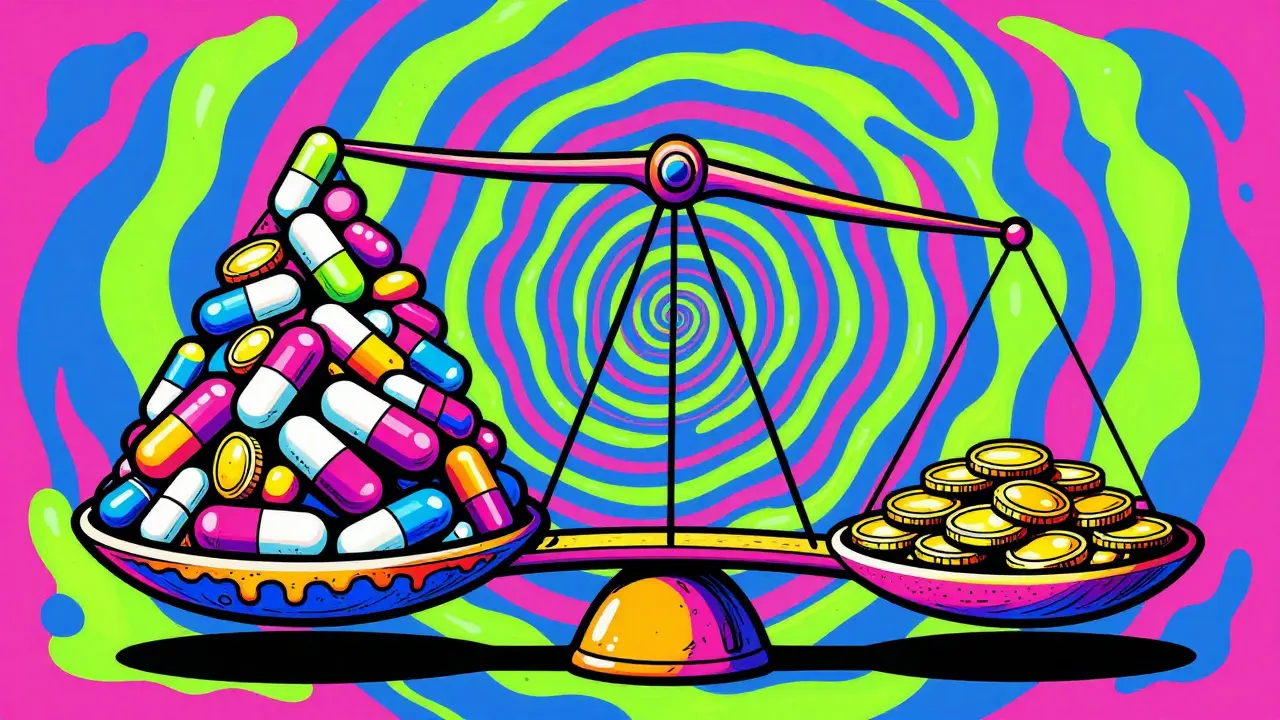
Prescription drugs are one of the heaviest burdens on state budgets, but there is a massive gap between how many pills are dispensed and how much they actually cost. In Medicaid, generics are the workhorse: they make up nearly 85% of all prescriptions but only account for about 16% of the total spending. This means that if a state can keep generic costs low, they save a fortune, but if a few key generics spike in price, the whole budget feels it. The real struggle for state leaders isn't just finding the cheapest drug, but doing so without causing shortages or pushing pharmacies out of business.
The Foundation: How the Medicaid Drug Rebate Program Works
To understand state strategies, you first have to look at the federal floor. The Medicaid Drug Rebate Program (MDRP) is the engine that drives pricing. Established by the Omnibus Budget Reconciliation Act of 1990, this program essentially tells drug makers: "If you want your drug covered by Medicaid, you have to give us a discount."
For generics, the math is fairly rigid. Manufacturers usually pay a base rebate of 13% of the Average Manufacturer Price (AMP), or the difference between the AMP and the best price they offer anyone else-whichever is higher. Because this is a federal formula, states don't have much room to negotiate individual deals for generics the way they might for expensive brand-name drugs. This limitation is exactly why states have had to get creative with their own internal policies to stop costs from spiraling.
Practical Tools States Use to Lower Costs
Since the federal rebate is a fixed starting point, states use a toolkit of administrative rules to shave off extra costs. These aren't just suggestions; they are hard rules that pharmacies and providers must follow.
- Maximum Allowable Cost (MAC) Lists: This is perhaps the most common tool. MAC lists are essentially price ceilings. The state says, "We will not pay more than X dollars for this generic drug," regardless of what the pharmacy paid for it. About 42 states use these, with many updating them quarterly to keep up with market shifts.
- Mandatory Generic Substitution: In 49 states, if a doctor prescribes a brand-name drug but a generic version is available, the pharmacy is required to switch it. This is the simplest way to ensure the lowest cost option is used.
- Therapeutic Class Utilization: Instead of just looking at a specific drug, 37 states restrict usage to a specific "class" of drugs. If three different generics treat the same condition, the state might only cover the cheapest one unless a doctor provides a strong medical reason for an alternative.
| Strategy | State Adoption (Approx.) | Primary Goal |
|---|---|---|
| MAC Lists | 42 States | Cap reimbursement per unit |
| Mandatory Generic Substitution | 49 States | Shift volume from brand to generic |
| Therapeutic Class Limits | 37 States | Force use of lowest-cost clinical alternative |
| Preferred Drug Lists (PDL) | 28 States | Prioritize high-value generics |
The Rise of Drug Affordability Boards and Anti-Gouging Laws
Lately, states have moved beyond simple pharmacy reimbursement and started attacking the problem at the source: the manufacturers. Some states are tired of "price gouging," where a company buys an old, off-patent generic drug and suddenly hikes the price by 500% because there are no competitors.
To fight this, Prescription Drug Affordability Boards (PDABs) are popping up. States like California, Colorado, and Maryland have set up these boards to review high-cost drugs and potentially set upper payment limits. Maryland went a step further in 2020, passing laws to penalize manufacturers who raise generic prices without providing new clinical data to justify the cost.
These policies represent a shift in philosophy. States are no longer just managing a budget; they are trying to regulate the market itself. While the Congressional Budget Office suggests these moves could cut generic spending by 5-8% annually, industry groups warn that if states push prices too low, manufacturers might simply stop making the drug, leading to dangerous shortages.
The PBM Problem: Middlemen and Transparency
You can't talk about Medicaid drug costs without mentioning Pharmacy Benefit Managers (PBMs). These are the middlemen-companies like OptumRx or Magellan-that states hire to run their pharmacy programs. PBMs negotiate with pharmacies and manufacturers, but for years, their operations were a "black box." States often didn't know the actual cost of the drug versus the rebate the PBM was pocketing.
In 2024, a wave of transparency laws hit. Over 27 states implemented new requirements forcing PBMs to disclose the actual acquisition costs of generics. Why does this matter? Because if a state's MAC list is set at $1.00 but the PBM's actual cost is $0.50, the state is overpaying. By shining a light on these margins, states can tighten their reimbursement schedules and save millions.

Supply Chain Risks and the "Shortage Cycle"
There is a dangerous side effect to aggressive cost-cutting. When states drive generic prices into the ground, the profit margin for manufacturers disappears. If a drug becomes "unprofitable," a company might shut down a production line or exit the market entirely. We saw this play out in 2023, where 23 states reported critical generic shortages lasting an average of 147 days.
Because of this, the strategy is shifting toward "supply chain resilience." Instead of just asking "How cheap can we get this?", states like Oregon and Washington are collaborating in purchasing pools to negotiate as a block. Others are introducing legislation for strategic stockpiling-essentially keeping a reserve of essential generics so a sudden factory shutdown in another country doesn't leave patients without medication.
Future Outlook: GLP-1s and High-Cost Generics
The next big challenge for Medicaid is the arrival of high-cost generics and "biosimilars." We are seeing this now with GLP-1 medications used for obesity and diabetes. With annual treatment costs hovering around $12,000 per patient, these drugs are stretching state budgets to the breaking point. KFF estimates that federal requirements to cover these could cost state programs an additional $1.2 billion annually.
As these complex drugs eventually go generic, states will likely apply the same "therapeutic class" and "prior authorization" rules they used for simpler generics. The goal remains the same: maintain the widest possible access for the patient while preventing a single drug class from bankrupting the state's healthcare fund.
What is a MAC list in Medicaid?
A Maximum Allowable Cost (MAC) list is a ceiling price that a state Medicaid program sets for generic drugs. It limits the amount the state will reimburse a pharmacy for a specific medication, regardless of the pharmacy's actual acquisition cost, to prevent overpayment.
How do generic drugs save Medicaid money compared to brands?
Generics are significantly cheaper to produce once the patent expires. In Medicaid, they currently make up about 84.7% of all prescriptions but only 15.9% of the total spend, meaning they provide the bulk of the medication volume at a fraction of the cost of brand-name drugs.
Do all states use the same generic drug policies?
No. While the federal Drug Rebate Program provides a baseline, states vary widely. For example, 49 states use mandatory substitution, but only 42 use MAC lists, and only a handful have established Prescription Drug Affordability Boards to fight price gouging.
Can state cost-cutting lead to drug shortages?
Yes. If reimbursement rates (like those in MAC lists) fall too low, manufacturers may find it unprofitable to produce the drug. This can lead to market exits and supply chain disruptions, which is why some states are now focusing on strategic stockpiling.
What is the role of PBMs in Medicaid generic pricing?
Pharmacy Benefit Managers (PBMs) act as middlemen that administer the pharmacy benefit for states. They negotiate prices and manage claims. Many states are now requiring PBMs to be more transparent about the actual cost of generic drugs to ensure the state is getting the best deal.