
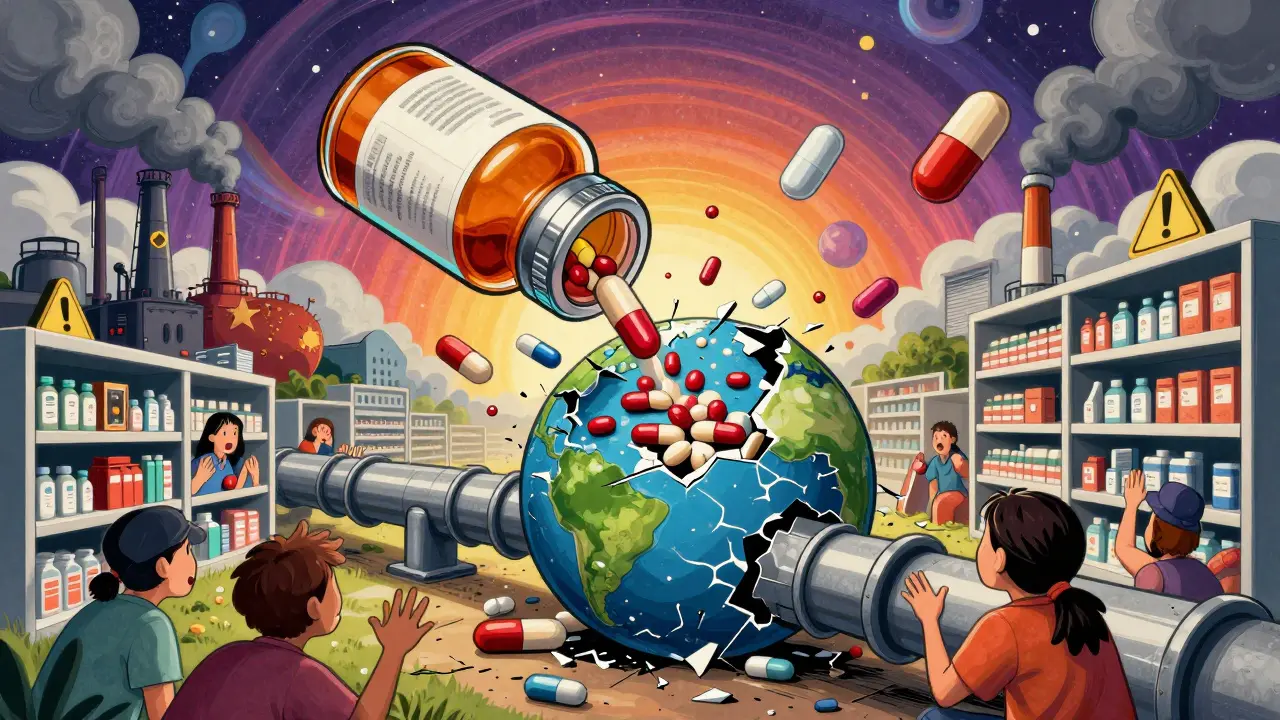
When the pandemic hit in early 2020, most people worried about masks, ventilators, and hospital beds. But behind the scenes, something quieter and just as dangerous was happening: drug shortages started appearing everywhere. Insulin. Blood pressure pills. Antibiotics. Even basic painkillers. Patients couldn’t get their prescriptions filled. Hospitals scrambled to find alternatives. And for people already struggling with addiction, things got even worse.
Why Did Medications Disappear From Shelves?
The problem wasn’t that drug makers stopped producing medicines. It was that the system keeping them flowing broke down. Most of the raw ingredients for pills - called active pharmaceutical ingredients - come from just two countries: China and India. When lockdowns hit those regions in early 2020, factories shut down. Shipping containers piled up at ports. Truck drivers got sick. Suddenly, the pipes that fed medicines into U.S. pharmacies started drying up. A study published in JAMA Network Open in October 2023 found that between February and April 2020, nearly one in three drug supply reports turned into actual shortages. That’s a fivefold jump from normal levels. Critical drugs used in intensive care units - like sedatives and muscle relaxants needed for ventilated COVID patients - were among the first to vanish. Hospitals had to ration. Some patients got half-doses. Others waited days for replacements. By May 2020, things started to improve. The FDA stepped in. They started calling manufacturers directly, fast-tracking inspections, and giving priority to drugs in short supply. Within months, most shortages returned to pre-pandemic levels. But the damage was done. People lost trust. Pharmacists saw more calls from panicked patients. And the system didn’t fix the root problem: it still relies on fragile, faraway supply chains.The Hidden Crisis: Illicit Drugs Got More Dangerous
While prescription drugs were hard to find, illegal drugs became more deadly. With international borders closed and smuggling routes disrupted, drug cartels had to adapt. They didn’t stop making drugs - they just made them stronger. Fentanyl, a synthetic opioid 50 to 100 times more potent than heroin, started showing up everywhere. In places like Kentucky, West Virginia, and Louisiana, overdose deaths jumped more than 50% between 2019 and 2021. People who used drugs didn’t know what they were taking anymore. A Reddit user from June 2020 described it this way: “The street supply got weird after lockdowns started. Doses that used to be fine knocked people out cold. Turns out, it was all laced with fentanyl.” The CDC reported nearly 98,000 drug overdose deaths in the 12 months from May 2020 to April 2021 - up from 77,000 the year before. That wasn’t because more people were using drugs. It was because the drugs themselves became more lethal. And with fewer harm reduction services open - needle exchanges shut down, supervised sites closed - people were using alone, with no one to help if they overdosed.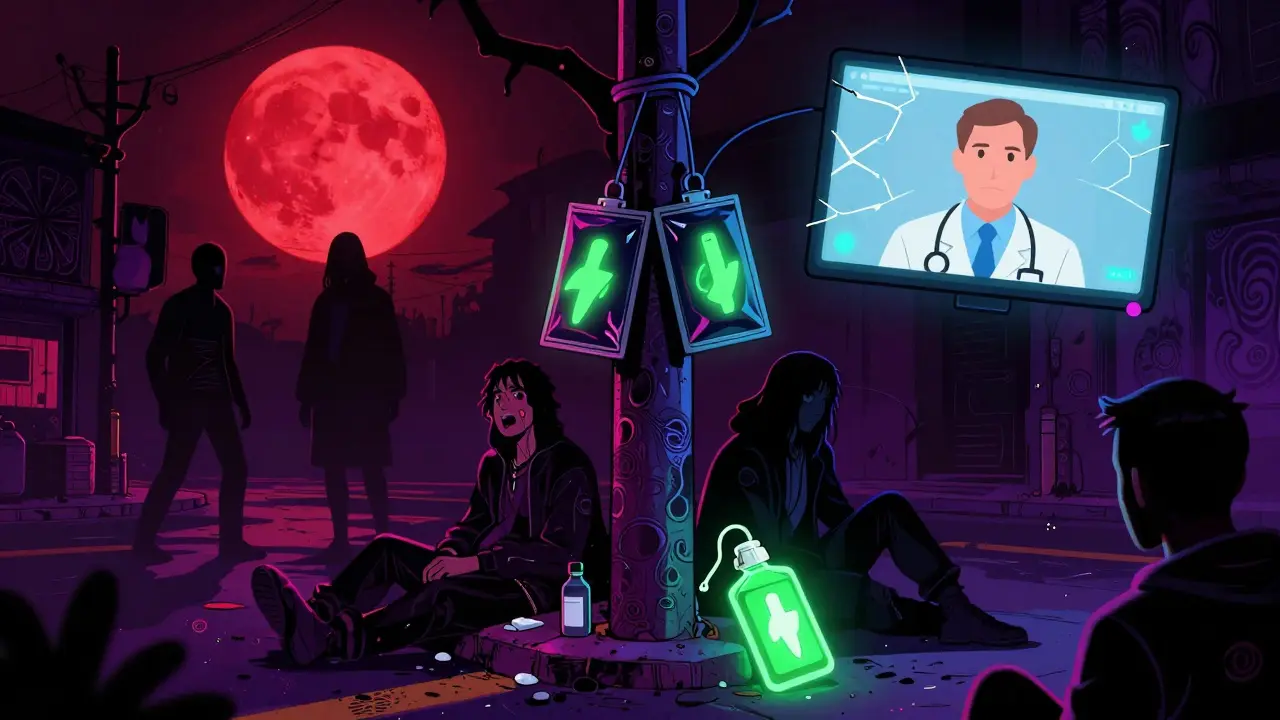
Telehealth Helped Some, Left Others Behind
For people with opioid use disorder, the pandemic forced a sudden shift. Before 2020, getting buprenorphine or methadone meant showing up in person, often daily. But when lockdowns hit, the government allowed doctors to prescribe these medications over video calls. Within two months, telehealth prescriptions for buprenorphine jumped from 13% to 95% of all prescriptions. That saved lives. A study cited by NIDA found that Medicare beneficiaries who got their medication through telehealth were less likely to die from an overdose. For people in rural areas, it meant no more driving two hours just to get a dose. But not everyone could benefit. Older adults struggled with Zoom. People without reliable internet couldn’t connect. Some couldn’t afford smartphones. And for those who relied on in-person counseling or peer support groups, losing those meetings was devastating. One study found behavioral healthcare visits dropped by 75% for privately insured patients in early 2020. Harm reduction workers adapted by handing out naloxone kits at drive-throughs. In Boston, naloxone distribution increased by 30% in 2020. But these were temporary fixes. The deeper issue - lack of consistent access to care - remained.Who Got Left Out?
The pandemic didn’t create new inequalities - it just made them worse. People of color, low-income communities, and those without stable housing were hit hardest. They were more likely to live in areas with fewer pharmacies. Less likely to have reliable internet for telehealth. More likely to be turned away from emergency care because of stigma around addiction. One study found that fear of legal consequences or judgment kept many people from calling 911 during an overdose. Others skipped COVID tests because they didn’t trust the system. The result? More deaths, more silence, and fewer data points to guide policy. Even the surveys meant to track drug use got messed up. The National Survey on Drug Use and Health changed its methods in 2020 because in-person interviews weren’t safe. That means we can’t be sure how much actual drug use changed - or if the rise in deaths was purely about potency.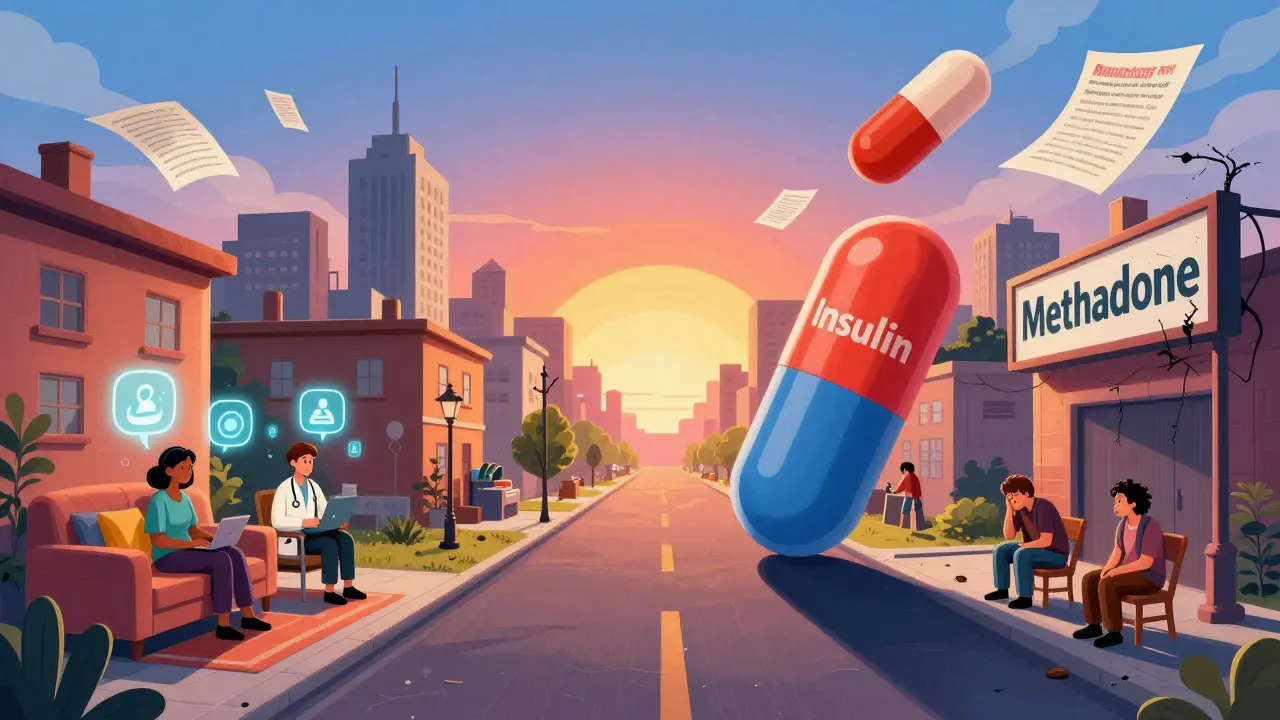
eric fert
January 27, 2026 AT 00:33Let’s be real - this whole drug shortage thing was predictable. We outsourced everything to China because it was cheaper, and now we’re shocked when the supply chain snaps? We’ve been living on borrowed time since the 90s. The FDA didn’t ‘save’ us - they just did damage control after we let corporate greed dictate public health. And don’t get me started on how we treat addiction like a crime instead of a disease. We’re not fixing anything. We’re just rearranging deck chairs on the Titanic while fentanyl keeps sinking us.
Meanwhile, the same people who cried about ‘supply chain resilience’ during the chip shortage are now silent because pills aren’t sexy enough to trend. It’s all performative outrage until it hits your grandma’s insulin prescription.
And yes, telehealth helped some - but only the ones who had Wi-Fi, a smartphone, and didn’t live in a trailer park with no cell service. The system was broken before COVID. It’s still broken. And no, a 2023 law won’t fix it unless we start paying manufacturers to actually make stuff here instead of just lobbying for tax breaks.
Also, fentanyl isn’t ‘more dangerous’ - it’s cheaper and easier to smuggle. Cartels didn’t become evil geniuses. They just responded to market incentives. We created this monster by criminalizing users instead of treating addiction like a medical condition. We’re not victims. We’re enablers.
And yes, I know this sounds like a rant. But it’s not. It’s a fucking textbook case of systemic failure. And we’re still not doing anything about it. Just like we didn’t after the opioid crisis. Just like we won’t after the next one. Because profits > people. Always.
And before someone says ‘just stockpile drugs’ - try telling a generic manufacturer they need to keep 6 months of inventory on a 2% margin. They’ll laugh, then shut down the plant and move to Vietnam. We’re not fixing capitalism. We’re just waiting for the next collapse.
And no, I’m not a conspiracy theorist. I just read the damn reports. And I’m tired of being told to ‘be positive’ while people die because we’d rather blame addicts than fix the system.
Allie Lehto
January 28, 2026 AT 19:01omg i just cried reading this 😭 we’re all just trying to survive and the system is literally designed to fail us 🥺 i had to wait 3 weeks for my blood pressure med last year and my grandma almost died because they gave her the wrong substitute 💔 people need to wake up and stop blaming addicts they’re just trying to feel okay in a world that doesn’t care 💔
telehealth was a lifeline for me but my mom couldn’t use zoom and now she’s gone 😢 why does it take a pandemic to see that healthcare is a human right?? 🙏
Dan Nichols
January 30, 2026 AT 13:46Let’s not romanticize telehealth. It worked for the middle class. For the homeless, the undocumented, the elderly with dementia - it was a joke. The data shows a 75% drop in behavioral care visits. That’s not innovation. That’s abandonment. And yes, fentanyl is the killer but it’s not magic. It’s capitalism. Cheap product. High demand. No regulation. We didn’t lose control of the supply chain. We gave it away for pennies on the dollar and now we’re surprised when the price goes up and the quality goes to hell.
Also, the FDA didn’t ‘step in’ - they were forced to. Congress sat on their hands for months. That’s not leadership. That’s negligence dressed up as crisis response.
And before someone says ‘build more factories’ - tell that to the investor who makes 3% profit on a 100-pill bottle of lisinopril. They’ll invest in crypto before they invest in insulin.
This isn’t a health crisis. It’s a moral one. And we’re failing.
Renia Pyles
February 1, 2026 AT 05:09So let me get this straight - we let a few corporations control the entire supply of life-saving drugs and now we’re surprised when people die? And you want to talk about telehealth like it’s some miracle? What about the people who don’t have a phone? Who don’t have a quiet room? Who are too scared to turn on the camera because they’re high and don’t want to get reported? You think the system cares? It doesn’t. It never has.
And don’t give me that ‘it’s not the government’s fault’ crap. The government wrote the laws. The government approved the mergers. The government let 80% of our pharmaceuticals come from two countries with zero oversight. This wasn’t an accident. It was policy.
I’ve seen people OD alone in motel rooms because the needle exchange shut down. I’ve seen pharmacists cry because they had to tell a diabetic they couldn’t get insulin. And now you want to pat yourselves on the back for a 2023 law that does nothing? I’m not mad. I’m just done.
Rakesh Kakkad
February 1, 2026 AT 05:20Dear fellow citizens, I am writing to express my profound concern regarding the structural vulnerabilities exposed during the pandemic. As a resident of India, I can confirm that our API manufacturing facilities operated under extreme duress due to lockdowns, yet we maintained over 85% output through coordinated labor shifts and government intervention. The U.S. system, by contrast, exhibits a dangerous over-reliance on just-in-time logistics and profit-driven procurement models. This is not merely a supply chain issue - it is a governance failure. I recommend immediate adoption of India’s centralized drug inventory monitoring system, which has reduced shortages by 40% since 2018. Also, please consider using emojis to convey emotional gravity - 🙏💊🩺
Nicholas Miter
February 2, 2026 AT 09:41Man, this hit different. I work at a rural pharmacy. We had people show up with empty bottles, crying because they couldn’t get their heart meds. One guy drove 90 miles because his local store was out - and we were out too. We started handing out half-doses just to keep people alive until the next shipment. No one talked about it. No one made a video. Just silent suffering.
Telehealth helped some folks, sure. But the ones who needed it most? The ones without phones, without transport, without someone to sit with them while they waited? They got left behind. And now? Nothing’s changed. We’re just pretending we learned something.
And yeah, fentanyl’s a nightmare. But it’s not the drug that’s the problem. It’s the lack of help. People aren’t using because they want to die. They’re using because they’re in pain and no one gave them another option.
We need to stop treating this like a puzzle to solve and start treating it like a human crisis. That’s all.
Suresh Kumar Govindan
February 4, 2026 AT 01:57China is the root cause. The U.S. surrendered its pharmaceutical sovereignty. No nation should depend on a hostile regime for life-saving medicine. The FDA’s response was reactive, not strategic. The solution: nationalize API production. Establish state-owned facilities under military oversight. This is not paranoia. It is survival. The West is collapsing under softness. We must harden. Now.
Geoff Miskinis
February 6, 2026 AT 00:59Interesting how everyone blames capitalism while ignoring the fact that generics have 3% margins. You can’t expect companies to invest in buffer stock when they’re being squeezed by Medicare reimbursement rates and PBM middlemen. The real villain here isn’t China - it’s the U.S. healthcare oligopoly. The same system that lets CVS charge $400 for insulin while paying $2 to manufacture it. Fix the pricing structure first. Then worry about supply chains. Otherwise you’re just rearranging deck chairs on the Titanic while the real profit engine keeps sinking the ship.
Also, telehealth wasn’t a ‘lifeline’ - it was a stopgap. And now we’re pretending it’s a permanent solution. We’re not innovating. We’re just automating neglect.
Ryan W
February 6, 2026 AT 05:55Bottom line: We let China own our medicine because we were lazy. Now we’re surprised when they shut down? Wake up. We need domestic manufacturing. Now. Not ‘incentives.’ Not ‘studies.’ Actual factories. With American workers. Paid a living wage. No more outsourcing. No more ‘global supply chains.’ This isn’t a healthcare issue - it’s a national security crisis. And if you’re still arguing about telehealth while people die from fentanyl, you’re part of the problem. Build the damn pills here. Or get out of the way.