

Many women take herbal supplements to support energy, mood, or hormone balance-without realizing they might be making their birth control less effective. It’s not a myth. It’s not rare. And it’s not always obvious. If you’re on the pill, patch, or ring, and you’re also taking something labeled "natural" or "herbal," you could be at risk for unintended pregnancy. The most dangerous part? Most people have no idea.
St. John’s Wort Is the Biggest Red Flag
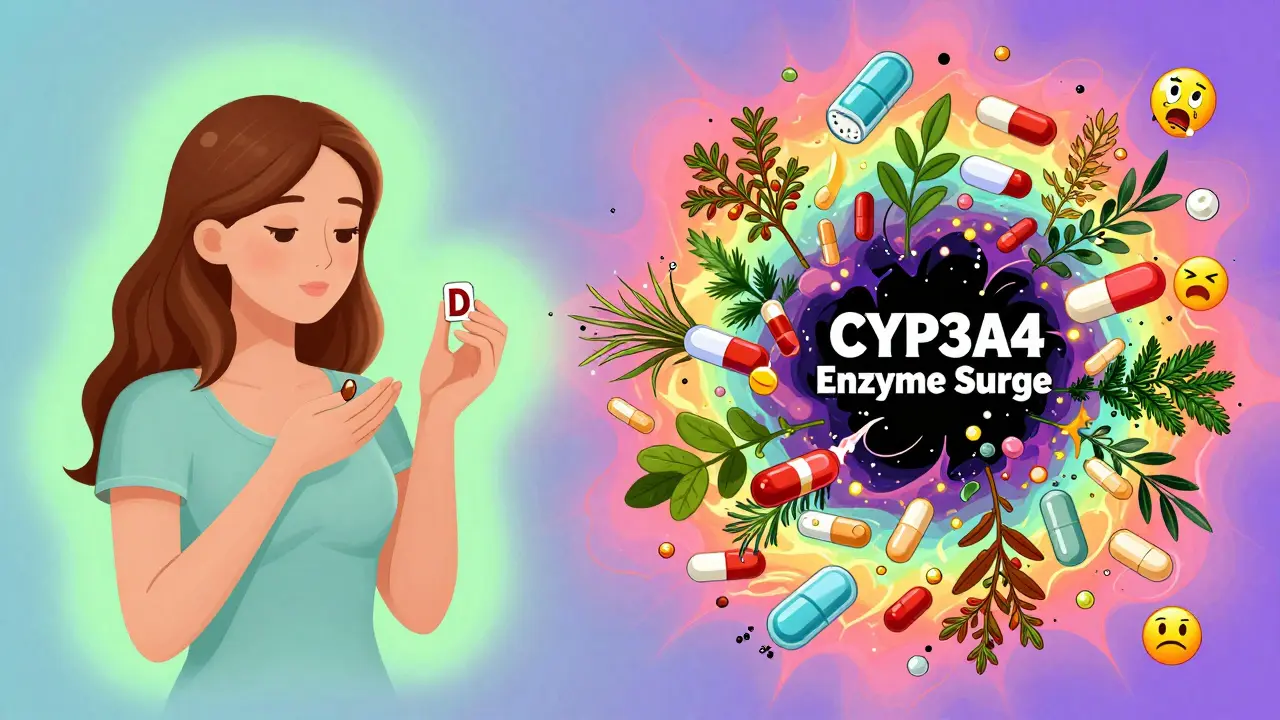
Of all the herbal supplements out there, St. John’s wort is the one with the clearest, most dangerous link to birth control failure. It’s sold as a remedy for mild depression, stress, and sleep issues. But here’s what most labels don’t say: it turns off your birth control’s effectiveness.St. John’s wort contains a compound called hyperforin. That compound triggers your liver to produce more of an enzyme called CYP3A4. This enzyme breaks down hormones like ethinyl estradiol and levonorgestrel-the very ingredients that keep you from ovulating. When this enzyme ramps up, your body flushes out those hormones faster than normal. Studies show women taking St. John’s wort along with birth control pills had up to 23% more breakthrough bleeding, a clear sign the hormones weren’t staying at effective levels.
In one study, women using a standard birth control pill (30 mcg ethinyl estradiol + 150 mcg levonorgestrel) with 900 mg of St. John’s wort daily saw hormone levels drop by nearly 50%. That’s not a small tweak. That’s enough to trigger ovulation. There are documented cases of pregnancy in women who thought they were protected.
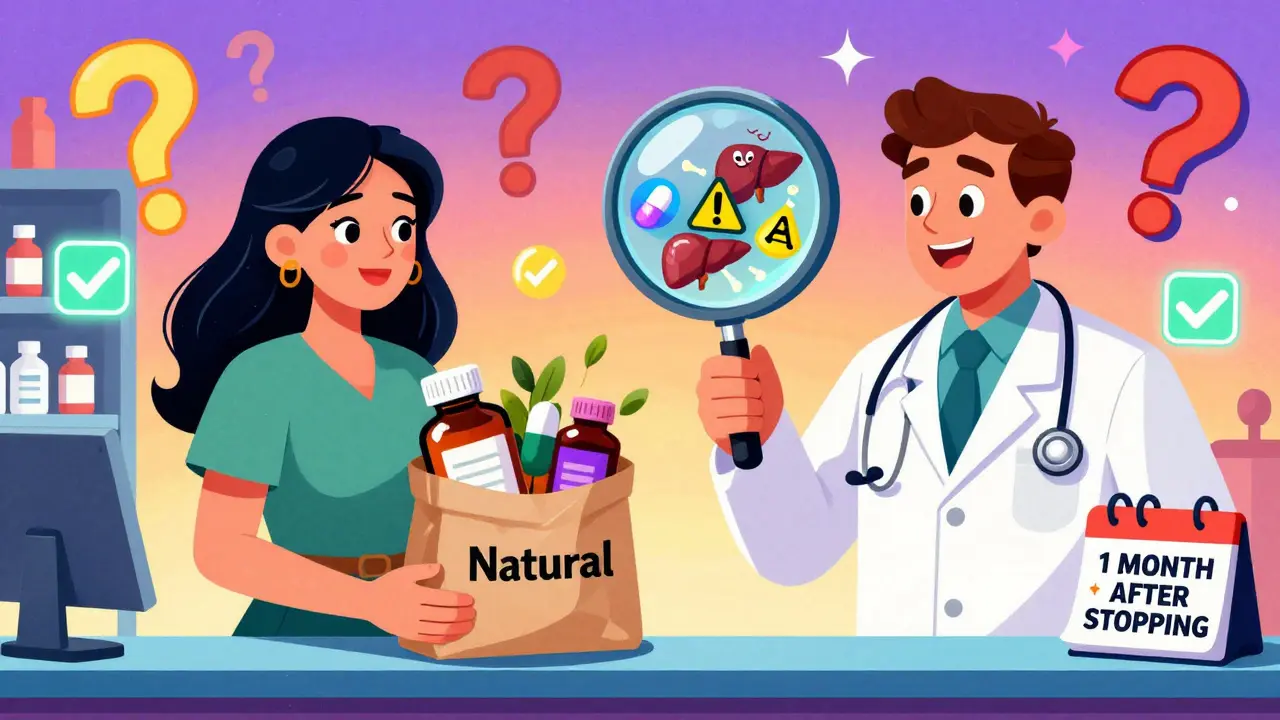
And it’s not just while you’re taking it. The enzyme surge lingers. Medical guidelines recommend using a backup method like condoms for at least one full month after you stop St. John’s wort. Waiting a few days isn’t enough.
Other Supplements That Could Interfere
St. John’s wort is the most proven, but it’s not the only one. Several other herbs and plant-based products carry risk-even if the science isn’t as strong.- Activated charcoal is marketed for detox or bloating. But if you take it within 4 hours of your birth control pill, it can literally bind to the hormones and pull them out of your gut before they’re absorbed. One dose can cut hormone levels enough to matter.
- Grapefruit juice is often praised for heart health. But it can interfere with how your body processes birth control. The effect isn’t consistent across all pills, but it’s unpredictable enough to be risky. If you drink grapefruit juice daily, talk to your doctor.
- Soy isoflavones (found in soy protein powders, tofu, and supplements) mimic estrogen in your body. Instead of boosting hormones, they compete with birth control for receptor sites. This can confuse your system and reduce contraceptive effect, especially if you’re on low-dose pills.
- Garlic pills and flaxseed have weaker evidence, but they affect liver enzymes too. While not as dramatic as St. John’s wort, they’re not risk-free if you’re taking them daily in high doses.
- Alfalfa contains phytoestrogens. Like soy, it might interfere with how your body responds to synthetic hormones.
None of these are guaranteed to cause failure-but none are guaranteed to be safe either. And when it comes to birth control, there’s no room for "probably."
What’s Actually Safe?
Not all supplements are dangerous. Many are fine to use with birth control. But you can’t assume safety just because something is "natural."- Ashwagandha: A 2015 study found no impact on the enzymes that break down birth control hormones. It’s likely safe for most people, especially at typical doses (300-500 mg daily). But long-term safety data is limited, and high doses can cause stomach upset or liver stress-which might indirectly affect absorption.
- Probiotics: No evidence of interaction. They work in your gut, not your liver. You can take them without worry.
- Melatonin: Doesn’t interfere with hormone levels. But birth control can slow how fast your body clears melatonin, which might make you feel groggy in the morning. That’s a side effect, not a failure.
- Vitamin D, B-complex, magnesium: These are essential nutrients. They don’t affect hormone metabolism. No risk.
- Vitex (chasteberry): Often used for PMS or cycle regulation. Some doctors say it’s safe with birth control, and may even help balance hormones. But because it affects prolactin and estrogen, it’s best to check with your provider first.
Even "safe" supplements need context. If you’re taking ashwagandha at 1,200 mg daily for adrenal fatigue, that’s a different story than 300 mg for stress. Dose matters. Duration matters. Your health history matters.
DIM and Other Hormone-Modulating Supplements
Diindolylmethane (DIM), derived from cruciferous vegetables like broccoli, is popular among women trying to balance estrogen. It helps the body metabolize estrogen into safer forms. Sounds good, right?But here’s the catch: if you’re on birth control, your body already has controlled estrogen levels. DIM can push those levels lower than intended. At doses above 50-100 mg, it might reduce estrogen enough to cause breakthrough bleeding or reduce contraceptive protection. At doses over 600 mg, the risk increases. No study has proven pregnancy from DIM alone-but there’s enough biological plausibility that experts say: proceed with caution. Talk to your doctor before taking more than 100 mg daily.
Why This Problem Keeps Growing
The herbal supplement industry is booming. In 2012, over 23% of U.S. adults used herbal products. Today, it’s likely higher. Most people assume these products are harmless because they’re sold over the counter. They’re not regulated like prescription drugs. There’s no requirement to test for interactions with birth control. Labels don’t warn you. Batch to batch, the active ingredients can vary wildly.Compare that to a prescription antibiotic like rifampin, which is known to reduce birth control effectiveness. That warning is printed on the bottle, taught in medical school, and tracked in databases. Herbal supplements? Not even close.
Doctors don’t always ask about supplements. Patients don’t always think to mention them. A woman might say, "I take vitamins," and leave out the turmeric, the ashwagandha, or the St. John’s wort. That gap in communication is where the risk hides.
What You Should Do
You don’t need to stop all supplements. But you do need to be smart.- Make a list of every supplement, herb, and vitamin you take-daily or occasionally. Include doses and why you take them.
- Bring it to your doctor or pharmacist. Don’t assume they’ll ask. Say: "I’m on birth control. Are any of these unsafe?" Show them the bottles or a screenshot of the label.
- Avoid St. John’s wort entirely if you’re using hormonal birth control. No exceptions.
- Use backup contraception if you start a new supplement you’re unsure about-especially if it’s for mood, hormones, or detox.
- Watch for signs like breakthrough bleeding, spotting between periods, or missed periods. These could mean your birth control isn’t working as it should.
- Don’t trust internet blogs. If a site says "St. John’s wort is safe with birth control," it’s wrong. Trust peer-reviewed studies and medical organizations like ACOG.
The bottom line: your birth control is a medication. Not a suggestion. Not a backup plan. And herbal supplements aren’t harmless snacks. They’re active compounds that can change how your body handles hormones. If you’re not sure, assume it’s risky until proven otherwise.
When to Get Help
If you’ve been taking St. John’s wort or another risky supplement with birth control and you’ve had unprotected sex, consider emergency contraception. If you’ve had breakthrough bleeding for more than two cycles, schedule a check-up. Your provider can test hormone levels and adjust your birth control if needed.There’s no shame in asking. Millions of women are in the same boat. The only mistake is not speaking up.
Can St. John’s wort really make birth control fail?
Yes. St. John’s wort activates liver enzymes that break down the hormones in birth control pills, patches, and rings. Studies show it can reduce hormone levels by up to 50%, leading to breakthrough bleeding and increased risk of pregnancy. Medical guidelines say to avoid it entirely if you’re using hormonal contraception.
Is ashwagandha safe with birth control?
Current evidence suggests ashwagandha doesn’t interfere with the enzymes that metabolize birth control hormones. At standard doses (300-500 mg daily), it’s generally considered safe. But high doses may cause digestive upset or liver stress, which could indirectly affect absorption. Always check with your provider, especially if you’re taking it long-term.
What about grapefruit juice?
Grapefruit juice can interfere with how your body processes some birth control pills, though the effect isn’t consistent across all types. It’s unpredictable, so if you drink grapefruit juice regularly, talk to your doctor. To be safe, avoid large amounts-especially if you’re on a low-dose pill.
Do probiotics affect birth control?
No. Probiotics work in your gut to support digestion and microbiome health. They don’t interact with the liver enzymes or hormone pathways involved in birth control. You can safely take probiotics with any form of hormonal contraception.
Should I stop all supplements while on birth control?
No. Many supplements-like vitamin D, magnesium, and B-complex-are safe and even beneficial. The issue is with specific herbs like St. John’s wort, activated charcoal, soy isoflavones, and high-dose DIM. Don’t avoid all supplements. Just know which ones carry risk and talk to your provider before starting anything new.
How long after stopping St. John’s wort is birth control safe again?
The enzyme-inducing effects of St. John’s wort can last for weeks after you stop taking it. Medical guidelines recommend using a backup method like condoms for at least one full month after discontinuing St. John’s wort before relying solely on hormonal birth control again.
Next Steps
If you’re currently taking herbal supplements and birth control, don’t panic. But do act. Write down everything you’re taking. Schedule a quick call with your doctor or pharmacist. Ask: "Which of these could interfere with my birth control?" Bring the bottles. Be specific. You’re not overreacting-you’re protecting your health.Birth control works when used correctly. But "correctly" includes knowing what else is in your system. Your body doesn’t distinguish between pills from a pharmacy and capsules from a health store. It just reacts. Make sure it’s reacting the way you intend.