
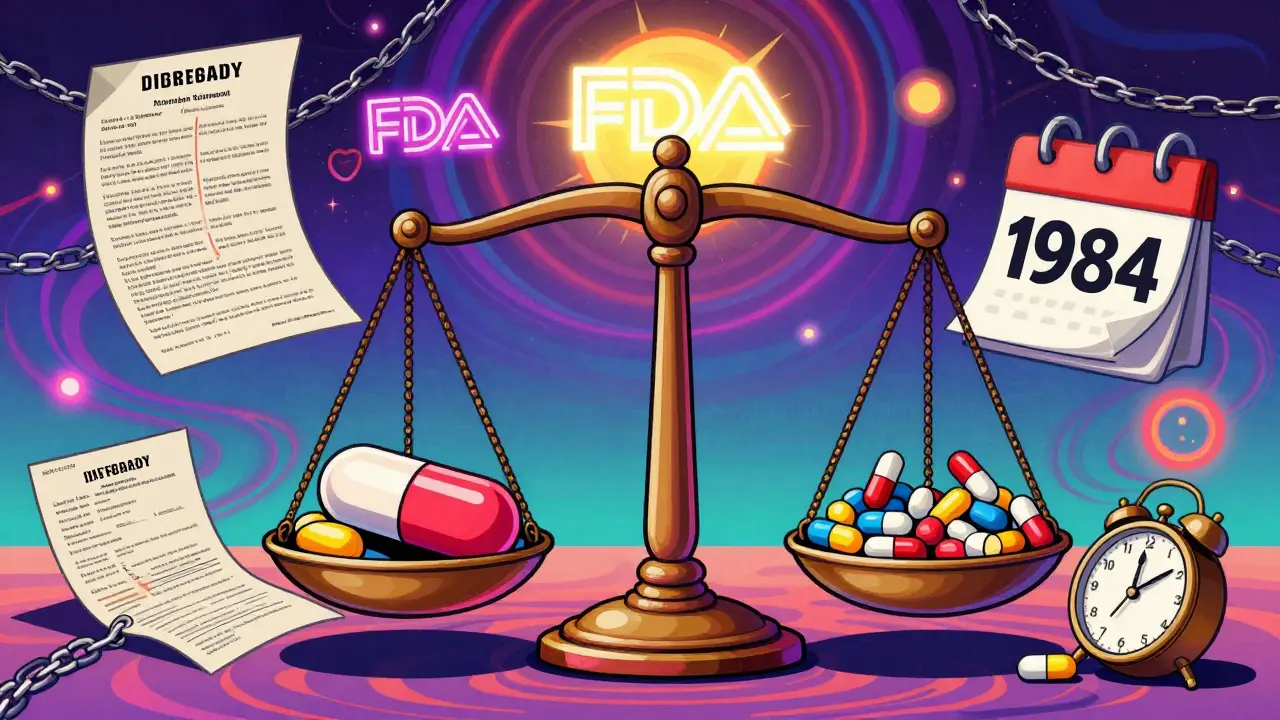
The Hatch-Waxman Act didn’t just change how drugs get approved in the U.S.-it rewrote the rules of the entire pharmaceutical market. Before 1984, generic drugs were rare. Fewer than 10 got FDA approval each year. Today, 9 out of 10 prescriptions filled are for generics. That shift didn’t happen by accident. It was built on a single law: the Drug Price Competition and Patent Term Restoration Act of 1984, better known as the Hatch-Waxman Act.
Why the Hatch-Waxman Act Was Needed
In the early 1980s, generic drug makers faced a legal wall. If a brand-name drug was still under patent, even testing it to prove a generic version worked the same way was considered patent infringement. That was the ruling in the 1984 Supreme Court case Roche v. Bolar. The result? Generic companies couldn’t start preparing until the patent expired-sometimes years after the drug hit the market. Patients paid more. Innovation stalled because there was no clear path to competition. At the same time, brand-name drug makers were losing valuable patent time. The FDA approval process could take 7-10 years. That meant a drug with a 20-year patent might only have 10-13 years of actual market exclusivity. Companies argued they weren’t getting a fair return on their R&D investments. The Hatch-Waxman Act solved both problems at once. It created a compromise: give innovators more patent time, and give generics a faster, cheaper way to enter the market. It wasn’t perfect-but it worked.How the ANDA Pathway Changed Everything
The heart of the Hatch-Waxman Act is the Abbreviated New Drug Application, or ANDA. Before this, every new drug-whether brand or generic-had to go through full clinical trials to prove safety and effectiveness. That cost hundreds of millions and took over a decade. The ANDA changed that. Generic companies no longer had to repeat those trials. Instead, they only needed to prove their version was bioequivalent-meaning it delivered the same amount of active ingredient into the bloodstream at the same rate as the brand-name drug. The FDA estimates this cut development costs by about 75%. This was revolutionary. Suddenly, companies could focus on manufacturing and testing, not running new clinical studies. The result? Generic approvals jumped from single digits per year to over 770 in 2019. By 2022, 15,678 generic drugs had been approved under this system.The Patent Safe Harbor: Letting Generics Prepare Early
One of the most clever parts of Hatch-Waxman is the legal safe harbor in 35 U.S.C. §271(e)(1). This clause says: if you’re making or testing a patented drug solely to gather data for FDA approval, you’re not infringing the patent. Before this, generic companies had to wait until the patent expired before even starting development. Now, they can begin testing up to five years before the patent ends. That means when the patent expires, the generic is already approved and ready to hit shelves. This provision turned the game around. It gave generics a head start. It also forced brand-name companies to think differently. They couldn’t just rely on patents to block competition-they had to stay ahead.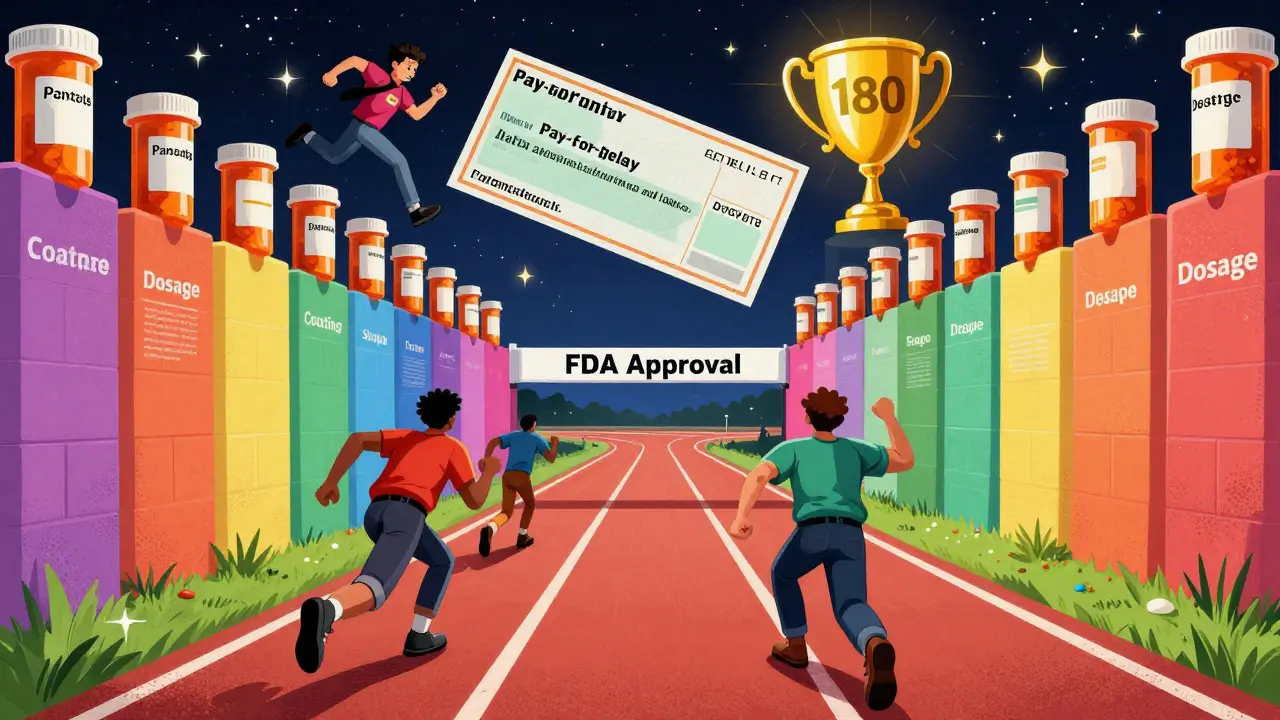
Patent Term Restoration: Giving Innovators a Second Wind
To balance the scales, Hatch-Waxman gave brand-name drug makers a way to get back some of the patent time lost during FDA review. The law allows up to 14 years of extension, but in practice, the average is just 2.6 years per drug. This wasn’t just a perk-it was a lifeline. Without it, many companies wouldn’t have invested in new drugs. The FDA approval process is long, expensive, and risky. If a drug spent 8 years in review, that ate up 40% of its patent life. The restoration provision made R&D financially viable. Between 1984 and 2018, this mechanism helped keep the U.S. pipeline of new drugs strong. According to former FDA official Michael Taylor, without it, the U.S. would have seen 30-40% fewer new molecular entities approved.Paragraph IV Certifications and the 180-Day Exclusivity Prize
Here’s where things got spicy. Hatch-Waxman gave generic companies a way to challenge patents head-on: the Paragraph IV certification. When a generic applicant files an ANDA, they can say: “This patent is invalid, or we won’t infringe it.” That triggers a 45-day window for the brand-name company to sue. If they do, the FDA is legally required to delay approval for 30 months-unless a court rules faster. But there’s a reward: the first generic company to file a successful Paragraph IV certification gets 180 days of market exclusivity. No other generic can enter during that time. This created a gold rush. Companies would camp outside FDA offices to be first in line. In 2003, the FDA changed the rules to allow shared exclusivity if multiple companies filed on the same day-but the stakes stayed high. A single 180-day window on a blockbuster drug could mean hundreds of millions in revenue.The Dark Side: Patent Thickets, Pay-for-Delay, and Product Hopping
The system worked well-for a while. But over time, both sides found ways to game it. Brand-name companies started filing dozens of patents on minor changes: a new coating, a different pill shape, a slightly altered dosage schedule. These are called “secondary patents.” In 1984, the average drug had 3.5 patents. By 2016, it was 2.7 per drug-wait, no, that’s not right. It was 2.7 times more. By 2022, some drugs had 14 patents listed in the FDA’s Orange Book. That’s a “patent thicket”-a wall of patents designed to block generics. Then came “product hopping.” A company would slightly tweak a drug-say, switch from a pill to a tablet-and then immediately file a new patent. The original drug’s patent expired, but the new version was still protected. Generics couldn’t enter because the new version was the only one on the market. And then there’s “pay-for-delay.” Sometimes, a brand-name company would pay a generic company to hold off on launching its version. Between 2005 and 2012, 10% of all generic challenges ended this way. The FTC called it anticompetitive. Courts eventually cracked down, but it still happens. These tactics extended effective market exclusivity by an average of 1.2 to 2.7 years. In some cases, patients waited years longer than they should have for affordable generics.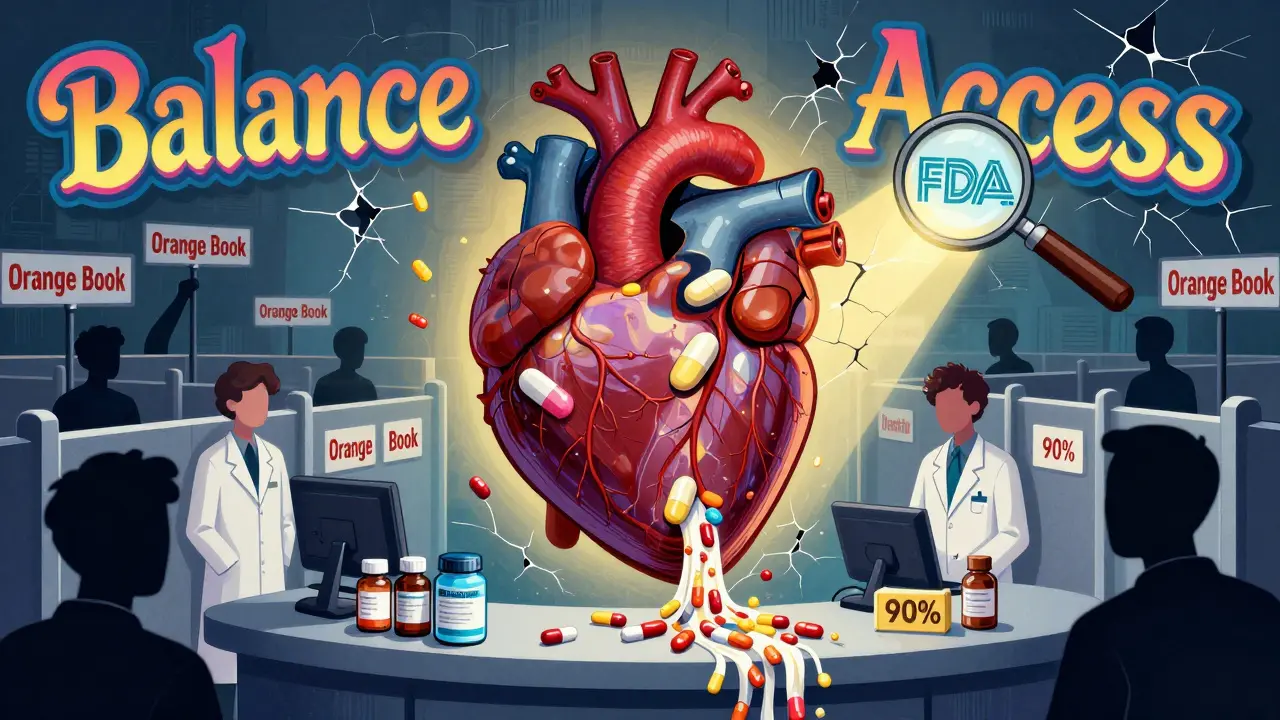
The Numbers Don’t Lie: Savings, Costs, and Market Shifts
Despite the abuse, Hatch-Waxman saved the U.S. healthcare system trillions. By 2022, generic drugs made up 90% of prescriptions but only 18% of total drug spending. That’s a $313 billion annual savings, according to the Association for Accessible Medicines. Between 1991 and 2011, the Congressional Budget Office estimated Hatch-Waxman saved $1.18 trillion. But the cost of abuse is rising. A 2020 study found patent abuse tactics added $149 billion to drug spending each year. The FTC identified 262 drug monopolies maintained beyond patent expiration between 2010 and 2022-mostly in oncology, immunology, and neurology. The market also became more concentrated. In 2000, the top 10 generic manufacturers controlled 38% of the market. By 2022, they controlled 62%. Smaller players couldn’t afford the $15-30 million legal bills or the 24-36 months it now takes to prepare an ANDA.What’s Changing Now?
The system is under pressure. Reforms are coming. The 2022 CREATES Act stopped brand companies from refusing to sell samples to generic makers-a tactic used to delay testing. The 2023 Preserve Access to Affordable Generics and Biosimilars Act, passed by the House, would ban pay-for-delay deals outright. The FDA is also tightening the rules. Its 2022 draft guidance says patents can’t be listed in the Orange Book unless they directly cover the drug’s approved use. That’s aimed at shutting down “use code” loopholes that let companies list patents for methods of treatment, not the drug itself. Under GDUFA IV, the FDA aims to cut ANDA review times from 10 months to 8 months by 2025. That could speed up generic entry by 1.4 years on average-and save another $45 billion annually by 2030, according to Evaluate Pharma. But there’s a risk. Too much reform could hurt innovation. Japan’s 2018 version of Hatch-Waxman led to a 34% drop in new small-molecule drugs. The Biotechnology Innovation Organization warns similar cuts in the U.S. could reduce new drug approvals by 12-15% over a decade.Is the Hatch-Waxman Act Still Working?
Yes-but not as intended. The core idea-balance innovation with access-still holds. Without it, generics wouldn’t exist at the scale they do. Patients wouldn’t have access to affordable versions of life-saving drugs like insulin, statins, or blood pressure medications. But the system has been warped. What was meant to be a fair race turned into a legal maze. Generics now face more patents, longer delays, and higher costs. Brand companies use the law to extend monopolies, not to protect true innovation. The answer isn’t to scrap Hatch-Waxman. It’s to fix its loopholes. Clearer patent rules. Faster FDA reviews. Stronger penalties for pay-for-delay. Better access to samples. The framework is solid. The players just need to play fair.For patients, that means cheaper drugs. For innovators, it means fair rewards. For the system, it means sustainability. The Hatch-Waxman Act built the foundation. Now, it’s time to upgrade the structure.
Chris Buchanan
December 23, 2025 AT 12:02So let me get this straight - we built a system where generics can undercut prices by 90%, but big pharma just keeps slapping on new patents like they’re collecting Pokémon cards? And we call this innovation? 🤦♂️
Raja P
December 25, 2025 AT 04:12Wow, this is actually super clear. In India, we see generic drugs every day - they’re lifesavers. But hearing how the U.S. system works behind the scenes? Eye-opening. Thanks for breaking it down.
Delilah Rose
December 25, 2025 AT 16:18It’s wild to think that before 1984, if you wanted to make a generic version of a drug, you literally couldn’t even test it until the patent expired - which meant patients were stuck paying inflated prices for years while companies sat on their patents like hoarders. And now, after nearly 40 years, we’re dealing with patent thickets so dense you need a law degree and a GPS just to find the actual active ingredient. The irony is that Hatch-Waxman was supposed to be the bridge between access and innovation - now it’s more like a maze with landmines labeled ‘profit’.
And don’t even get me started on product hopping. Switching from a pill to a tablet isn’t innovation - it’s legal gymnastics. It’s like upgrading your car from four doors to five just so you can charge 20% more and claim it’s ‘new’.
The 180-day exclusivity window? That’s not competition - that’s a monopoly lottery. And the fact that the same handful of companies dominate the generic market now? That’s not free market - that’s oligarchy with a pharmacy label.
But honestly, I’m glad someone’s finally talking about this. Most people think generics are just ‘cheap drugs’ without realizing how much legal warfare went into making them even possible.
The FDA’s new guidance on Orange Book listings? Long overdue. Use-code loopholes were always a joke - patents shouldn’t cover how you take a drug, they should cover the damn thing itself.
And GDUFA IV’s goal of cutting review times? If they pull that off, we could see insulin prices drop another 30% in three years. That’s not policy - that’s moral progress.
But yeah, the real question is: if we fix all this, will big pharma just invent a new loophole? Because they’ve got a whole team of lawyers whose job is to turn laws into lockboxes.
Abby Polhill
December 27, 2025 AT 03:21Patent thickets are the ultimate corporate shell game - layer after layer of IP nonsense to delay the inevitable. The ANDA pathway was genius, but the system’s been gamed into a bureaucratic quagmire. You’ve got ‘secondary patents’ on coating thickness and pill shape - that’s not innovation, that’s litigation theater.
And pay-for-delay? That’s not a business model, that’s a cartel. The FTC’s been yelling about this since 2005, but the courts move slower than a Medicare claim. Meanwhile, patients are rationing insulin because the ‘generic’ version is still $300 a vial thanks to legal sandbags.
Big pharma’s playing 4D chess while the FDA’s stuck playing checkers with one hand tied behind its back.
Rachel Cericola
December 28, 2025 AT 20:46Let me say this loud and clear: the Hatch-Waxman Act saved millions of lives. Without it, insulin, metformin, and statins would still be luxury items. The fact that 90% of prescriptions are generics isn’t an accident - it’s the result of deliberate policy that prioritized public health over corporate greed.
Yes, there are abuses. Patent thickets? Product hopping? Pay-for-delay? Those are crimes against patients, not features of the system. And we’re not powerless - the CREATES Act and the Preserve Access Act are proof that reform is possible.
The FDA’s new guidance on Orange Book listings? Finally. Patents should only cover the drug itself, not how you swallow it. That’s basic. If a company wants to extend exclusivity, they should have to prove real innovation - not just change the color of the pill.
And GDUFA IV’s timeline reduction? If they cut review times to 8 months, we’re talking about thousands of patients getting affordable meds a year sooner. That’s not a bureaucratic win - that’s a moral one.
Smaller generic manufacturers are getting crushed by legal costs, and that’s a tragedy. We need public funding for ANDA filings, or at least a fast-track for small players. This shouldn’t be a game only billion-dollar firms can afford.
But here’s the truth: the framework works. It’s the players who broke it. Fix the loopholes, not the law. The foundation is solid. We just need to stop letting lawyers run the pharmacy.
Christine Détraz
December 30, 2025 AT 19:52Interesting how the system was designed to be a compromise, but now it feels like both sides are cheating. Generics get the head start, but then the brand companies just keep adding patents like wallpaper. And the 180-day exclusivity? More like a winner-takes-all monopoly disguised as incentive.
I just wish more people realized that ‘cheap drug’ doesn’t mean ‘low quality’ - it means the system finally worked the way it was supposed to.
CHETAN MANDLECHA
December 31, 2025 AT 08:55Very well explained. In India, we call this the ‘reverse patent evergreening’ problem - but here, it’s baked into the law. The real tragedy is that patients pay the price while lawyers get rich.
Paula Villete
December 31, 2025 AT 14:40So let me get this straight - the law that was meant to lower drug prices is now the main reason they’re so high? And we’re still surprised when people can’t afford insulin? 🙃
Georgia Brach
December 31, 2025 AT 22:26The entire premise is flawed. The Hatch-Waxman Act institutionalized rent-seeking behavior under the guise of public benefit. The ANDA pathway didn’t reduce costs - it shifted them from R&D to litigation. The 180-day exclusivity clause created perverse incentives that incentivized strategic litigation over genuine innovation. The patent term restoration provision was never meant to be a subsidy for failed business models - yet it became one. The data on reduced new drug approvals in jurisdictions with similar reforms is ignored because it contradicts the narrative. This is not a success story - it’s a cautionary tale of regulatory capture masquerading as policy innovation.