

Glaucoma doesn’t always cause symptoms until vision loss is already happening. That’s why managing eye pressure with medication is so critical. Two of the most common first-line treatments are prostaglandins and beta blockers. Both lower intraocular pressure (IOP), but they work in very different ways-and their side effects can change your life in ways you might not expect.
How Prostaglandins Lower Eye Pressure
Prostaglandin analogs like latanoprost, bimatoprost, and travoprost don’t reduce how much fluid your eye makes. Instead, they open a new exit route. These drugs activate FP receptors in the eye, helping aqueous humor drain through the uveoscleral pathway. It’s like adding a second drain to a sink that’s always full.
Latanoprost, the first of its kind approved in 1996, typically lowers IOP by 24-33%. Bimatoprost can drop it even further-by 1-2 mmHg more than latanoprost at certain times of day. But here’s the catch: that extra pressure drop doesn’t always mean better vision protection. A seven-year study in the Journal of Clinical & Experimental Ophthalmology found no significant difference in visual field outcomes between these drugs. What matters more is whether you can stick with the treatment.
That’s where prostaglandins win. About 39% of people are still using their first prostaglandin after a year. For beta blockers? Only 25%. Why? One daily drop. No need to remember a second dose. No systemic side effects. Just a simple routine.
How Beta Blockers Work-and Their Hidden Risks
Beta blockers like timolol and betaxolol work by slowing down the production of fluid inside the eye. They block beta-adrenergic receptors in the ciliary body. Timolol 0.5% reduces IOP by about 20-25%. It’s effective. But it doesn’t stop there.
Beta blockers get absorbed into your bloodstream. That means they don’t just affect your eye. They can slow your heart rate, lower your blood pressure, and trigger breathing problems. If you have asthma, COPD, or a heart condition, timolol can be dangerous. The FDA requires a black box warning for this reason. Even if you’ve never had breathing issues, a beta blocker could bring on bronchospasm.
Patients report fatigue in 15-20% of cases. Some feel dizzy or depressed. These aren’t rare side effects-they’re common enough that many people stop taking the drops without telling their doctor. And because beta blockers usually require two doses a day, missing one can cause pressure to spike.
Side Effects: Cosmetic Changes vs Systemic Dangers
Prostaglandins and beta blockers trade off side effects in a way that makes choosing one harder than it looks.
With prostaglandins, you might notice:
- Red eyes (ocular hyperemia) in 30-50% of users
- Longer, darker eyelashes (25-35% of users)
- Permanent darkening of the iris (5-10% after years of use)
- Burning or stinging (15-30%, worst with bimatoprost)
These changes are real. And they’re permanent. Once your iris darkens, it won’t go back. Some people love the eyelash growth. Others hate the redness. But none of these are life-threatening.
Beta blockers? Their side effects are quieter-but more serious. A slow heartbeat. Low blood pressure. Trouble breathing. Fatigue that makes you skip work. These aren’t just annoying. They can be dangerous, especially for older adults or those with existing heart or lung conditions.

Preservatives: A Silent Problem
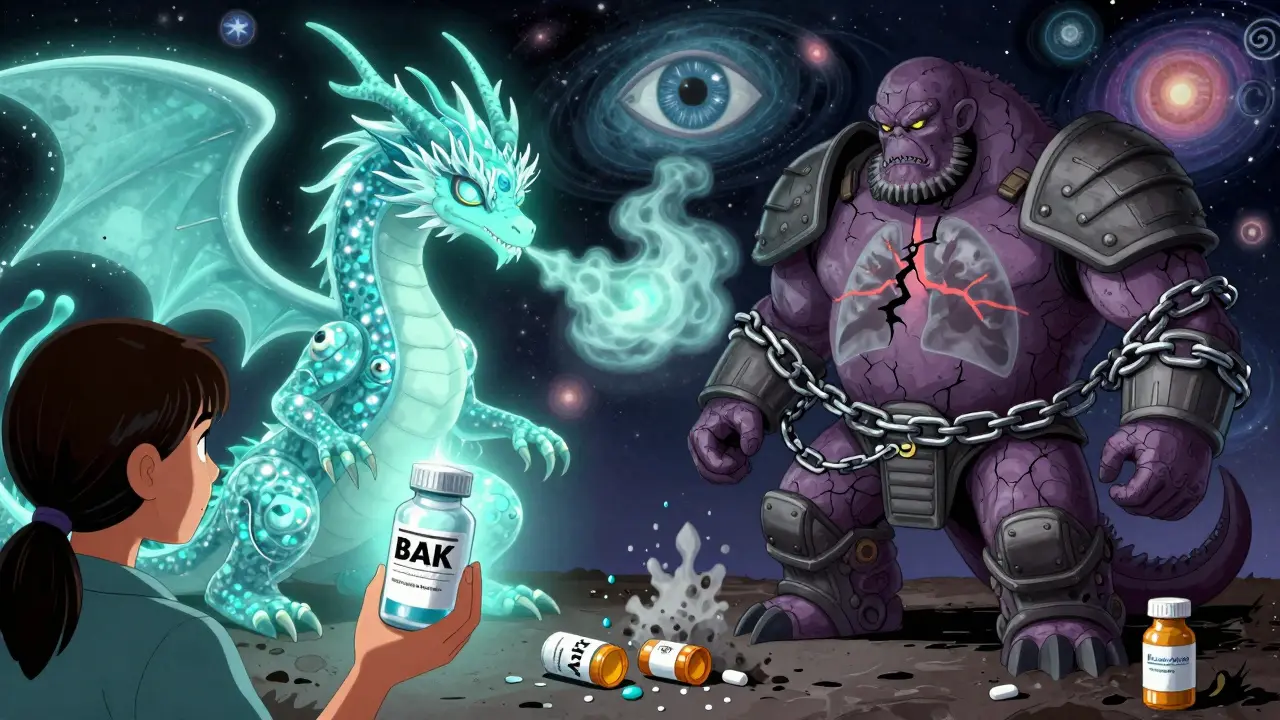
Most eye drops contain benzalkonium chloride (BAK), a preservative that kills bacteria but also damages the surface of your eye over time. Long-term users often develop dry eye, redness, and irritation that looks like the medication isn’t working-but it’s the preservative doing the damage.
A 2021 meta-analysis in Acta Ophthalmologica looked at seven studies comparing preserved vs preservative-free drops. The results? Preservative-free versions improved tear break-up time and Schirmer’s test scores (measures of eye moisture) by a statistically significant amount. But the drop in eye pressure? Almost identical. Just 0.29 mmHg difference.
That means: if you’re on glaucoma meds long-term, switching to a preservative-free version won’t make your pressure lower-but it might make your eyes feel a lot better. The problem? They cost 20-25% more. Many insurers won’t cover them unless you’ve already tried and failed with preserved drops.
Combining Medications: When More Isn’t Better
Doctors often combine prostaglandins with beta blockers. It’s a smart move. Together, they can lower IOP by 13-25% more than either alone. Fixed combinations like latanoprost/timolol are convenient-one drop, once a day.
But here’s what you shouldn’t do: combine two prostaglandins. Using both bimatoprost and latanoprost together can actually raise eye pressure in some patients. Animal studies show additivity, but human trials show the opposite. No reputable eye doctor recommends this. It’s a dangerous myth.
Also, don’t assume combination drops are always better. A 2005 review in Glaucoma Today found no consistent evidence that fixed combinations outperform using two separate drops. The benefit is convenience, not efficacy.
Who Gets Which Medication-and Why
There’s no one-size-fits-all. But here’s how most doctors decide:
- Choose prostaglandins if you’re young, healthy, and want once-daily dosing. They’re the top pick for 60-70% of new glaucoma patients in the U.S. and Australia.
- Choose beta blockers only if prostaglandins aren’t affordable, or if you have contraindications like dark irises (where pigment changes would be more noticeable) or a history of severe dry eye.
- Avoid beta blockers if you have asthma, COPD, bradycardia, heart block, or depression.
- Avoid bimatoprost if you’re sensitive to irritation. Latanoprost causes less burning and has better long-term adherence.
Patients who start with latanoprost are 15-20% more likely to stick with it than those on bimatoprost. Why? Less stinging. Less redness. Fewer complaints.
What You Can Do Right Now
If you’re on glaucoma meds:
- Check your bottle. Does it say “preservative-free”? If not, ask your doctor if you qualify for a switch.
- Write down every side effect-even if it seems small. Red eyes? Dryness? Fatigue? Tell your doctor. These aren’t normal “just live with it” issues.
- Don’t skip doses. Glaucoma damage is silent and irreversible. One missed day won’t cause harm-but missed days over months? That’s how vision fades.
- If you have asthma or heart disease, ask if your beta blocker is necessary. There may be safer alternatives.
- Take a photo of your eyes every six months. If your iris is getting darker, your eyelashes are growing out, or your whites are redder, you’re not imagining it. Bring it up.
Glaucoma treatment isn’t about finding the “best” drug. It’s about finding the one you can live with-for years, maybe decades. The best medicine is the one you actually use.
What’s Next for Glaucoma Treatment?
Researchers are working on sustained-release implants and gene therapies. But for now, prostaglandins and beta blockers remain the backbone of treatment. Newer prostaglandins with fewer side effects are in development. Preservative-free formulations are becoming more common, especially in clinics that treat long-term patients.
One thing’s clear: the future of glaucoma care isn’t just about lowering pressure. It’s about preserving quality of life. That means choosing medications that don’t just work-but that you can actually take.
Can prostaglandins change the color of my eyes permanently?
Yes. Prostaglandin analogs like latanoprost, bimatoprost, and travoprost can cause permanent darkening of the iris, especially in people with hazel, green, or light brown eyes. This happens in about 5-10% of long-term users. The change is gradual and usually noticeable after 6-12 months. Once it happens, it doesn’t reverse-even after stopping the drops.
Are beta blockers safe if I have asthma?
No. Beta blockers like timolol can trigger severe bronchospasm in people with asthma or COPD. Even eye drops can be absorbed into the bloodstream and affect your lungs. If you have any breathing condition, your doctor should avoid prescribing beta blocker eye drops. Safer alternatives include prostaglandins or carbonic anhydrase inhibitors.
Why is latanoprost preferred over bimatoprost?
Latanoprost is preferred because it has fewer side effects. While bimatoprost may lower eye pressure slightly more, it causes significantly more burning, stinging, and eyelash growth. Studies show 25-30% of bimatoprost users report discomfort, compared to 15-20% for latanoprost. More importantly, patients are 25% more likely to stop using bimatoprost due to irritation, reducing long-term effectiveness.
Can I use preservative-free eye drops instead?
Yes-if your doctor approves. Preservative-free drops reduce eye surface damage from long-term use of preservatives like BAK. They improve tear film stability and reduce redness and dryness. However, they don’t lower eye pressure more than preserved drops. The benefit is comfort and eye health, not pressure control. They cost more, so insurance may require you to try preserved versions first.
Is it safe to take two prostaglandins together?
No. Combining two prostaglandins-like latanoprost and bimatoprost-can raise eye pressure in some people, despite what animal studies suggest. This is not recommended by any major eye health organization. Stick to one prostaglandin at a time. If you need more pressure control, combine it with a beta blocker, alpha agonist, or carbonic anhydrase inhibitor instead.
How long does it take for glaucoma meds to start working?
Prostaglandins usually start working within 2-4 hours, with peak effect around 12-24 hours. Beta blockers take longer-peak effect is about 2 hours after the first dose, but full pressure-lowering takes 1-2 weeks. Most patients notice a difference in eye pressure within a week. But the real goal is long-term control: these drops protect your vision over years, not days.
Do I need to keep using these drops forever?
For most people with open-angle glaucoma, yes. Glaucoma is a chronic condition. Stopping medication-even if your vision feels fine-can lead to irreversible nerve damage. Your eye pressure may be normal now because of the drops. If you stop, pressure will rise again. Always talk to your doctor before stopping or changing your regimen.
Final Thoughts
Glaucoma meds aren’t just pills or drops. They’re tools that protect your sight for decades. Prostaglandins offer better adherence, fewer systemic risks, and once-daily dosing. Beta blockers are effective but carry real dangers for people with heart or lung conditions. Neither is perfect-but the best choice isn’t the one with the strongest pressure drop. It’s the one you’ll still be using five years from now.
Cassie Widders
January 12, 2026 AT 03:21Been on latanoprost for 4 years. My lashes are crazy long now - like, I don’t even need mascara. But my eyes are always red. My optometrist says it’s normal. I just accept it because I don’t want to lose my vision.
Windie Wilson
January 13, 2026 AT 17:21Prostaglandins gave me eyelashes so dramatic I got asked if I got extensions at a salon. Then I told them it was a prescription. The look? Iconic. The side effects? Also iconic. 😂👁️
Darryl Perry
January 13, 2026 AT 21:16Stop pretending beta blockers are safe for everyone. The FDA black box warning is there for a reason. If your doctor prescribes timolol without asking about your heart or lungs they’re not doing their job
Lelia Battle
January 14, 2026 AT 14:56It’s interesting how we treat glaucoma as a purely physiological problem when it’s so deeply tied to quality of life. The drugs aren’t just lowering pressure - they’re altering our appearance, our energy, our routines. We don’t talk enough about how that reshapes identity over time.
Someone might lose their vision if they skip doses, but they might also lose their sense of self if they’re constantly self-conscious about red eyes or darkened irises. The medical model focuses on survival. But what about living?
And then there’s the economic layer - preservative-free drops are better for your eyes, but insurance won’t cover them unless you’ve already suffered. That’s not healthcare. That’s punishment for being sick.
I wonder if we’d design these drugs differently if the patients were the ones funding the research instead of the manufacturers.
Maybe the real breakthrough isn’t a new molecule - it’s a new conversation.
jordan shiyangeni
January 16, 2026 AT 11:44Let me be crystal clear - combining two prostaglandins is not just ineffective, it is medically irresponsible. The fact that this myth persists among patients suggests a catastrophic failure of patient education. The literature is unequivocal: no additive benefit, potential for paradoxical IOP elevation, and zero endorsement from any professional body. If you are doing this, stop immediately. Your optic nerve does not forgive ignorance.
Furthermore, the casual dismissal of iris pigmentation as a 'cosmetic' issue is dangerously reductive. This is not a tattoo you can laser off. It is a permanent alteration of your ocular biology, induced by pharmacological manipulation. Patients deserve full transparency - not euphemisms.
And let’s not pretend preservative-free drops are a luxury. Benzalkonium chloride is a cytotoxic agent. Long-term exposure leads to conjunctival goblet cell loss, epithelial disruption, and dry eye disease that mimics treatment failure. This is not anecdotal - it is histopathologically documented. If your doctor won’t switch you, find a new one.
Glaucoma management is not a game of chance. It is a lifelong commitment to precision, adherence, and informed advocacy. Your vision is not negotiable.
Monica Puglia
January 16, 2026 AT 12:05Just switched to preservative-free latanoprost last month and my eyes haven’t felt this good in years 😭 No more burning, no more redness like I’ve been crying for hours. Yeah it costs more but my eyes are happier and that’s worth it. Ask your doc - you might qualify!
Rinky Tandon
January 17, 2026 AT 18:37Prostaglandins are a scam disguised as science. The eyelash growth? A marketing gimmick. The iris darkening? A silent betrayal of your genetic identity. And yet, doctors push them because they’re profitable and convenient. Beta blockers? Dangerous? Please. The real danger is allowing pharmaceutical companies to dictate what’s 'acceptable' side effects. Your eye pressure isn’t the only thing being manipulated. Your body is being commodified.
And don’t get me started on preservative-free drops. They exist. They work. But insurance won’t pay unless you’re already blind. That’s not healthcare. That’s exploitation wrapped in a white coat.
They call this medicine. I call it corporate manipulation with a side of myopia.
Ben Kono
January 18, 2026 AT 01:21Used bimatoprost for 6 months. Lashes went wild. Eyes felt like sandpaper. Stopped cold. Now on latanoprost. No drama. Just works. Why make it harder than it needs to be
Faith Wright
January 19, 2026 AT 02:05Ben’s comment made me laugh because I did exactly that - switched from bimatoprost to latanoprost after my eyes started looking like I’d been crying for a week. And yeah, the difference was night and day. Turns out ‘more effective’ doesn’t always mean ‘better for you’.
Also - if you’re on beta blockers and you feel tired all the time? It’s not just aging. It’s the med. Ask for a switch. Your energy matters too.
Rebekah Cobbson
January 19, 2026 AT 15:46For anyone reading this and feeling overwhelmed - you’re not alone. Glaucoma meds are a daily grind. But small changes make a huge difference. Ask for preservative-free. Track your side effects in a notes app. Bring photos of your eyes to appointments. You’re not just a patient - you’re the CEO of your own eye health.
And if your doctor rolls their eyes when you ask about alternatives? Find a new one. Your vision deserves better than apathy.
Konika Choudhury
January 19, 2026 AT 15:50Why are we even talking about American drugs when India has cheaper and better alternatives. Why do we let Big Pharma control our health. We need local solutions not western prescriptions
Abner San Diego
January 20, 2026 AT 07:51My mom was on timolol for years. She developed bradycardia and almost passed out walking to the mailbox. Turns out she had undiagnosed heart issues. The eye doctor never asked. The cardiologist said ‘why was she on this?’ We switched to travoprost. She’s fine now. Don’t assume your doctor knows everything. Ask questions. Push back. Your eyes aren’t the only thing at stake.