
Skipping a pill here and there might seem harmless-maybe you forgot, maybe it’s expensive, or maybe you just didn’t feel like taking it today. But when it becomes a pattern, it’s not just a slip-up. It’s a serious health risk. Not taking your medications as prescribed doesn’t just waste money or annoy your doctor-it can land you in the hospital, speed up disease progression, or even kill you.
What Happens When You Skip Doses?
Your body doesn’t understand "I’ll take it tomorrow." Medications are timed and dosed for a reason. Antibiotics need to stay at a constant level in your blood to kill bacteria. Blood pressure pills need to work 24/7 to keep your arteries from getting damaged. Insulin? It doesn’t care if you’re feeling fine today-you still need it to keep your sugar from spiking. When you miss doses, your treatment loses its power. Studies show that for most chronic conditions, you need to take at least 80% of your prescribed doses to get real benefit. Below that? You’re not just under-treating-you’re setting yourself up for failure. In heart disease, skipping beta-blockers or statins can trigger a heart attack. In diabetes, missed insulin or metformin can lead to nerve damage, kidney failure, or blindness. And for people on immunosuppressants after an organ transplant, even one missed dose can cause the body to reject the new organ.The Deadly Cost of Nonadherence
It’s not just about feeling worse. It’s about dying sooner. In the United States, an estimated 125,000 deaths each year are directly linked to people not taking their medications as directed. That’s more than deaths from car accidents or gun violence. For people over 50, the risk is even higher-nonadherence is about 30 times more likely to kill you than homicide. The World Health Organization says medication adherence has a bigger impact on survival than the actual drug you’re taking. That’s right. Two people on the same exact medicine can have wildly different outcomes, depending only on whether one takes it consistently. In mental health, nearly 6 out of 10 people with depression, bipolar disorder, or schizophrenia skip doses or stop entirely. That leads to more ER visits, more hospital stays, and more suicide attempts.Why Do People Skip Their Medications?
It’s rarely about being lazy. Most people want to get better. But real barriers get in the way. Cost is the biggest one. In 2021, 8.2% of working-age adults in the U.S. admitted they didn’t take their meds because they couldn’t afford them. For seniors on fixed incomes, that number is even higher. A single prescription can cost $100, $200, or more a month. When you’re choosing between medicine and groceries, the medicine often loses. Then there’s complexity. If you’re on five or six different pills, taken at different times of day-with different food rules, side effects, and refill schedules-it’s easy to get overwhelmed. One study found that people on more than four daily medications are 30% more likely to miss doses. Fear plays a role too. Some people stop taking statins because they’re scared of muscle pain. Others quit antidepressants because they think the side effects are worse than the depression. But stopping suddenly can cause rebound symptoms-panic attacks, dangerous spikes in blood pressure, or even seizures. And let’s not forget trust. Many people, especially in Black, Latino, and Indigenous communities, have deep reasons to distrust the medical system. Historical mistreatment, language barriers, and rushed doctor visits make it hard to feel heard. If you don’t believe your doctor understands your life, you’re less likely to follow their advice.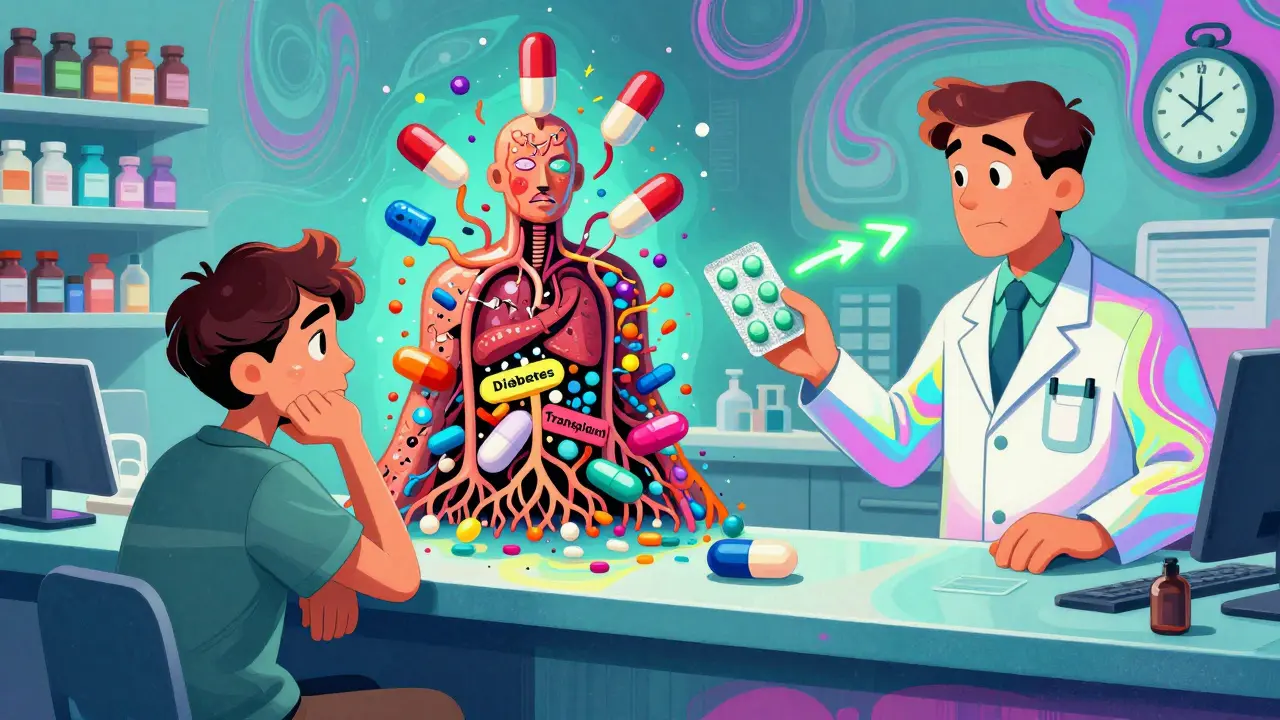
What It Costs the System-and You
Nonadherence doesn’t just hurt individuals. It breaks the healthcare system. In 2016, the total cost of missed doses in the U.S. hit $529 billion. That includes hospital stays, emergency visits, extra doctor appointments, and lost productivity. About 20% of Medicare readmissions within 30 days are due to people not taking their meds. Half of those readmissions could have been avoided. And it’s not just hospitals. Every time you skip a dose, you’re increasing your chance of long-term disability. A person with uncontrolled high blood pressure might end up needing dialysis. Someone with asthma who skips inhalers might end up on oxygen full-time. These aren’t just medical problems-they’re life-altering. The financial burden hits hardest in low-income communities. People who can’t afford co-pays end up in the ER. ER visits cost 10 times more than a doctor’s visit. And that cost? It gets passed on to everyone through higher insurance premiums.What Works to Fix This
The good news? There are real, proven ways to help people take their meds. Pharmacists are one of the most underused tools. When a pharmacist sits down with you, reviews your entire list of medications, and simplifies your schedule-maybe switching from four pills a day to two-adherence jumps by 15 to 20%. Many pharmacies now offer blister packs with days of the week labeled, or apps that send you a text reminder when it’s time to take your pills. These simple fixes work. Technology helps too. Text message reminders have been shown to improve adherence by 12-18% in clinical trials. Some health systems now use AI to predict who’s at risk of missing doses-and then reach out before it’s too late. Cost relief is critical. Medication therapy management programs, where pharmacists work with your doctor to find cheaper alternatives or apply for patient assistance programs, have returned $3 to $10 for every dollar spent by reducing hospitalizations. But here’s the catch: most of these services aren’t covered by insurance. Pharmacist consultations? Not reimbursed. Adherence packaging? Usually out-of-pocket. That means the people who need help the most often can’t get it.
What You Can Do Right Now
If you’re struggling to take your meds:- Ask your pharmacist to simplify your regimen. Can you switch to once-daily pills? Are there generics available?
- Use a pill organizer. Set phone alarms. Link taking your meds to something you do every day-like brushing your teeth.
- Call your doctor if you’re skipping doses because of side effects. Don’t quit cold turkey. There might be another option.
- If cost is the issue, ask about patient assistance programs. Many drugmakers offer free or low-cost meds to people who qualify.
- Bring a friend or family member to your appointments. Sometimes hearing it from someone else makes it stick.
It’s Not About Willpower
This isn’t about being irresponsible. It’s about systems that don’t work for real people. A single pill can cost more than a week’s worth of bus fare. A doctor might not have time to explain why your blood thinner matters. A pharmacy might be 20 miles away. The solution isn’t to shame people. It’s to fix the system. Better access. Lower prices. Simpler regimens. More support. But until those changes happen, you have power. You can ask for help. You can speak up about cost. You can tell your pharmacist you’re struggling. You can say, "I need this to work-and I need you to help me make it work."What Happens If You Keep Skipping?
The truth? The longer you wait, the harder it gets. High blood pressure doesn’t scream. Diabetes doesn’t shout. Depression doesn’t warn you. By the time you feel sick, the damage is already done. Taking your meds isn’t just about following orders. It’s about protecting your future. Your ability to walk, think, work, and live. Every pill you take is a step away from the hospital, the emergency room, the coffin. Don’t wait for a crisis to realize how much you’re worth.What happens if I skip one dose of my medication?
Skipping one dose occasionally won’t cause immediate harm for most medications, but it can reduce the effectiveness of your treatment. For some drugs-like antibiotics, blood thinners, or seizure meds-even one missed dose can trigger a dangerous rebound effect. Always check with your doctor or pharmacist about what to do if you miss a dose. Never double up unless instructed.
Why do so many people stop taking their prescriptions?
Cost is the top reason-nearly 1 in 10 adults in the U.S. skip doses because they can’t afford them. Other big reasons include fear of side effects, confusion over complex regimens, lack of symptoms (so they feel fine and think they don’t need it), and distrust in the healthcare system. Many people also don’t fully understand why the medication matters.
Can nonadherence lead to drug resistance?
Yes, especially with antibiotics and antiviral drugs. When you don’t take the full course, the strongest bacteria or viruses survive and multiply. This leads to drug-resistant strains that are harder-and sometimes impossible-to treat. This isn’t just your problem-it affects public health by spreading resistant infections.
Are there free or low-cost options if I can’t afford my meds?
Yes. Many pharmaceutical companies offer patient assistance programs that provide free or discounted medications to people with low income. You can also ask your pharmacist about generic versions, 90-day supplies (which often cost less), or state-funded programs. Nonprofits like NeedyMeds and Partnership for Prescription Assistance can help you find options.
How can I remember to take my pills every day?
Use a pill organizer with days of the week. Set alarms on your phone. Link pill-taking to a daily habit like brushing your teeth or eating breakfast. Some pharmacies offer blister packs or automated text reminders. Apps like Medisafe or MyTherapy can track your doses and send alerts. If you’re still struggling, ask your pharmacist for help-they can simplify your regimen.
Is it safe to stop taking a medication if I feel better?
No, not without talking to your doctor. Feeling better doesn’t mean the condition is gone. For example, high blood pressure or cholesterol often have no symptoms, but stopping treatment lets them return. Antibiotics must be taken fully to kill all bacteria. Mental health meds need time to stabilize brain chemistry. Stopping suddenly can cause withdrawal, relapse, or dangerous spikes in symptoms.
What should I do if I’m afraid of side effects?
Don’t stop taking the medication on your own. Call your doctor or pharmacist. Many side effects are temporary and fade after a few days. There may be a lower dose, a different brand, or an alternative drug with fewer side effects. Your provider can help you weigh the risks and benefits. The risk of not taking the medication often far outweighs the side effects.
jeremy carroll
December 15, 2025 AT 19:51man i used to skip my bp meds all the time cause they made me dizzy. thought i was fine til i passed out at the grocery store. now i use a pill box and set 3 alarms. dont be me.
Thomas Anderson
December 17, 2025 AT 11:16if you cant afford your meds, talk to your pharmacist. they know all the free programs and generics. i work at a pharmacy and see people save hundreds a month just by asking. no shame in it.
Dwayne hiers
December 18, 2025 AT 08:42nonadherence is a pharmacokinetic nightmare. subtherapeutic drug concentrations lead to fluctuating receptor occupancy, which in turn promotes disease progression and increases the risk of therapeutic failure. for antimicrobials, this is a direct driver of selective pressure and antimicrobial resistance. the data is unequivocal: adherence is the most potent modifiable variable in chronic disease management.
Jonny Moran
December 18, 2025 AT 08:43my abuela took 12 pills a day and never missed one. she’d say, "mi salud es mi riqueza." she didn’t have insurance, but she’d walk 3 miles to the clinic for her free meds. if she could do it, we can too. small steps, big impact.
Tim Bartik
December 19, 2025 AT 09:12they want us to take pills like robots but the system is rigged. doctors get paid to prescribe, not to care. big pharma’s laughing all the way to the bank while you’re choosing between insulin and rent. stop blaming people-burn the whole damn system down.
Alexis Wright
December 20, 2025 AT 00:12let’s be real-this isn’t about medicine. it’s about control. the medical-industrial complex needs you dependent. if you were healthy, they’d lose billions. they’ll sell you a pill for $500 and then charge you $20k to fix the damage you didn’t cause. wake up. your compliance is their profit model.
Daniel Wevik
December 21, 2025 AT 04:31you’re not failing because you’re lazy-you’re failing because the system doesn’t support you. but here’s the power move: reach out. call your pharmacist. ask for help. use an app. link it to brushing your teeth. one pill at a time. you’re worth the effort.
Rich Robertson
December 22, 2025 AT 08:41in my community, people skip meds because they don’t trust the docs who don’t speak their language or look like them. we need more bilingual providers, more community health workers, more time in the clinic. trust isn’t built in 5 minutes. it’s built over years-with consistency, respect, and real listening.
Daniel Thompson
December 22, 2025 AT 09:36you all are missing the point. the real issue is that people don’t understand the biological mechanisms behind their disease. they think if they feel fine, they’re cured. that’s not medicine-it’s superstition. Education isn’t optional. It’s the foundation of adherence.