
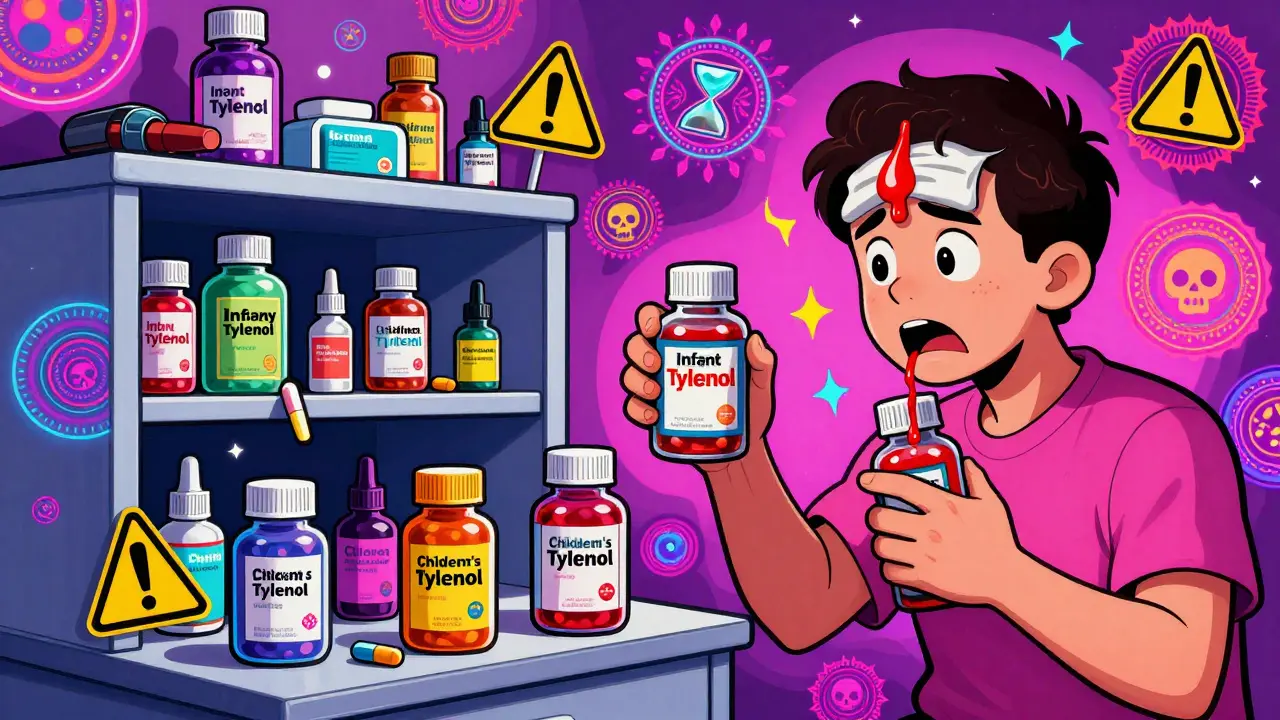
Medication mistakes at home are more common than you think
Every day, people take pills, liquids, and patches to feel better. But too often, they’re taking them wrong. A parent gives their child the wrong dose of fever medicine because they confused the infant and children’s formulas. An elderly person skips a dose because they forgot what time it was supposed to be. Someone takes an extra pill because they’re not sure if the last one worked. These aren’t rare accidents-they’re everyday mistakes that happen in homes across the country.
According to the Agency for Healthcare Research and Quality, between 2% and 33% of medications given at home are administered incorrectly. That means for every 10 doses, one to three might be wrong. In homes with children under six, a medication error happens every 8 minutes. For seniors taking five or more medications, the risk of a mistake jumps by 30%. These aren’t just numbers-they’re real risks that can land someone in the hospital or worse.
What are the most common medication mistakes?
The biggest errors aren’t usually about complex science. They’re simple, avoidable slips that happen because of confusion, stress, or lack of clear information.
- Wrong dose: Giving too much or too little. This is the #1 error. Parents often use kitchen spoons instead of measuring cups. Seniors might cut pills in half without knowing the tablet isn’t designed for splitting.
- Wrong medication: Taking something that wasn’t prescribed. Mixing up brand names and generics-like confusing Advil with Naproxen-is common. So is grabbing the wrong bottle from a cluttered medicine cabinet.
- Missing doses: Skipping pills because you’re busy, forgetful, or afraid of side effects. One study found that 92% of parents stopped antibiotics early, even when the doctor said to finish the full course.
- Wrong timing: Taking meds at the wrong time of day. Some drugs need to be taken with food. Others must be taken on an empty stomach. Getting this wrong changes how well the medicine works.
- Extra doses: Taking another pill because you think the first one didn’t work. This is especially dangerous with painkillers like acetaminophen (Tylenol), where even a small overdose can damage your liver.
- Keeping expired or discontinued meds: Old prescriptions sitting in the drawer. A person might grab an old antibiotic from last year’s infection, not realizing it’s no longer needed-or even harmful.
Why do these mistakes keep happening?
It’s not because people are careless. It’s because the system is set up to make mistakes easy.
Doctors rush through instructions. Patients forget 40% to 80% of what they’re told during a visit. Medication labels are tiny, cluttered, and hard to read. Pills look alike. Bottle caps are confusing. And when you’re tired, stressed, or sick, your brain doesn’t process details well.
For parents, the biggest trap is mixing up children’s and infant formulas. Infant Tylenol is twice as concentrated as children’s Tylenol. If you use the dropper from the infant bottle on the children’s medicine, you’re giving double the dose. That’s not a typo-it’s a real, documented danger.
Another big issue: alternating acetaminophen and ibuprofen for fever. It sounds smart-rotate them to keep the fever down. But it increases the chance of giving the wrong dose by 47%. Most parents don’t know the timing rules, and they end up overdosing.
For older adults, the problem is complexity. Five, six, even ten different pills a day. No clear list. No one to double-check. And if you’re on Medicare or private insurance, you might skip doses because the cost is too high.
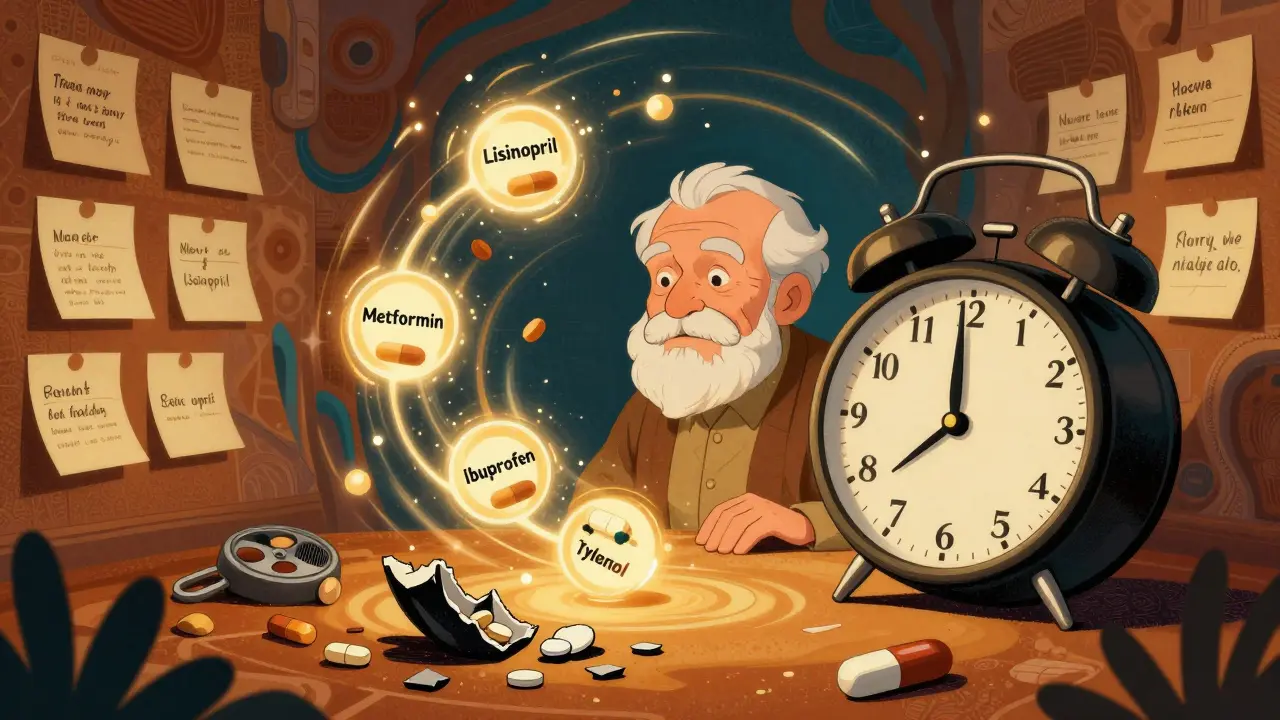
How to prevent medication errors at home
Preventing these mistakes doesn’t require a PhD. It just takes a few practical steps you can start today.
1. Keep a live medication list
Write down every pill, liquid, patch, or supplement you or your loved one takes. Include:
- The name (brand and generic if different)
- The dose (e.g., 500 mg)
- How often (e.g., once daily, every 6 hours)
- Why you’re taking it (e.g., “for high blood pressure”)
Keep this list in your wallet, phone notes, and give a copy to your doctor and pharmacist. Update it every time something changes-even if it’s just a new over-the-counter painkiller.
2. Use a pill organizer with alarms
Simple plastic boxes with compartments for morning, afternoon, evening, and night help a lot. But don’t just fill them once a week. Check them daily. If you’re taking a new med, set a phone alarm. Don’t rely on memory.
3. Always read the label-twice
Before you take anything, read the label. Then read it again. Look for:
- Active ingredient (e.g., “acetaminophen”)
- Dose instructions
- Expiration date
- Warnings (e.g., “avoid alcohol”)
Many cold medicines already contain acetaminophen. Taking Tylenol on top of that can lead to liver damage. Always check the fine print.
4. Use the right measuring tool
Never use a kitchen spoon. They vary too much. Use the dosing cup, syringe, or dropper that came with the medicine. If it’s missing, ask your pharmacist for one-they’ll give it to you free.
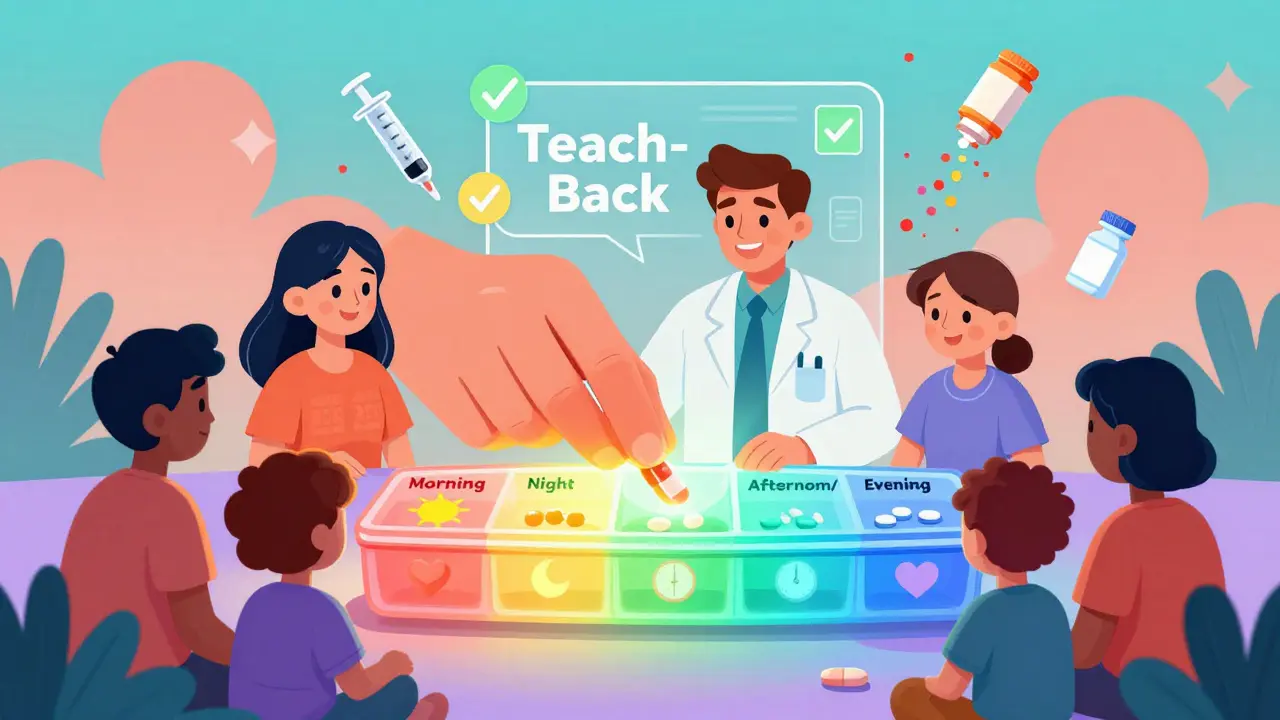
5. Ask the “teach-back” question
When your doctor or pharmacist gives you instructions, say: “Can you help me explain this back to you so I’m sure I got it right?” Then repeat the instructions in your own words. This simple trick cuts errors by nearly half.
6. Never mix fever reducers unless told to
Don’t alternate Tylenol and Advil unless your doctor specifically says to. And if you do, write down the times you give each one. Keep a chart on the fridge.
7. Clear out your medicine cabinet every 6 months
Throw out anything expired, discolored, or no longer needed. Don’t save old antibiotics “just in case.” They won’t work the same way next time-and they might make you sick.
Special rules for children and seniors
For children
- Always check the label for weight-based dosing, not age. A 20-pound toddler needs less than a 30-pound child-even if they’re the same age.
- Use only the measuring tool that came with the bottle. Never guess.
- Never give adult medicine to a child, even if you cut it in half.
- Keep all meds out of reach-even if they’re in a “child-resistant” bottle.
For seniors
- Ask your pharmacist to review all your meds every 6 months. They can spot interactions you might miss.
- Use a pill dispenser with a built-in alarm. Some even call a family member if a dose is missed.
- If you’re taking more than five medications, ask your doctor if any can be safely stopped.
- Bring your full list of meds to every appointment-even if you think it’s “just a checkup.”
What to do if you think you made a mistake
If you gave the wrong dose, missed a dose, or took something you shouldn’t have:
- Don’t panic. Most small mistakes don’t cause harm.
- Call your pharmacist. They’re trained to handle these questions and can tell you what to do next.
- If you’re unsure or the person feels unwell, call Poison Control at 1-800-222-1222 (U.S.) or your local emergency number.
- Write down what happened: what was taken, when, and how much. This helps professionals help you faster.
Final thought: You’re not alone
Medication errors aren’t a sign of being careless or stupid. They’re a sign that the system is too complicated. But you can take control. Start with one step: write down your meds. Then add one more: use a pill organizer. Small changes add up. And they save lives.
Frequently Asked Questions
What’s the most dangerous medication mistake at home?
The most dangerous mistake is accidentally taking too much acetaminophen (Tylenol). Many cold and flu medicines already contain it, so people double up without realizing it. A single overdose can cause permanent liver damage. Always check the active ingredients on every bottle before taking anything.
Can I split pills to save money?
Only if the pill has a score line and your doctor or pharmacist says it’s safe. Some pills are designed to release medicine slowly-splitting them can make them work too fast or cause side effects. Never split capsules or pills without checking first.
Why do I keep forgetting to take my meds?
Forgetting is normal. Your brain gets overloaded. Use phone alarms, pill organizers, or apps that send reminders. Ask a family member to check in. You don’t have to remember everything on your own.
Is it okay to take medicine past its expiration date?
For most pills, expiration dates mean the drug may lose strength-not become toxic. But for antibiotics, insulin, or liquid medicines, expired doses can be unsafe or ineffective. When in doubt, throw it out. Your pharmacist can help you decide.
How do I know if my medication is interacting with something else?
Always tell your pharmacist everything you take-including vitamins, herbal supplements, and over-the-counter drugs. They can check for dangerous interactions. For example, mixing blood thinners with certain herbal supplements like ginkgo or garlic can cause dangerous bleeding.
Dan Padgett
December 15, 2025 AT 09:22Billy Poling
December 15, 2025 AT 15:07Randolph Rickman
December 17, 2025 AT 15:05sue spark
December 19, 2025 AT 02:21Tiffany Machelski
December 19, 2025 AT 22:30SHAMSHEER SHAIKH
December 21, 2025 AT 03:20James Rayner
December 22, 2025 AT 08:36Souhardya Paul
December 22, 2025 AT 15:26Josias Ariel Mahlangu
December 24, 2025 AT 00:56anthony epps
December 24, 2025 AT 13:34Andrew Sychev
December 25, 2025 AT 20:41Hadi Santoso
December 27, 2025 AT 13:33