
Imagine waking up with a mild fever and a strange rash, only to find out a few days later that your kidneys are struggling to filter your blood. This is the reality for many people facing Acute Interstitial Nephritis is a kidney disorder characterized by acute inflammation of the renal tubulo-interstitium, typically triggered by an allergic-like reaction to certain medications. While it sounds daunting, the key to getting your health back is identifying the culprit drug and acting fast. If you've noticed a sudden drop in urine output or unexpected swelling, you're not alone-this condition accounts for up to 15% of acute renal failure cases.
The Culprits: Which Medications Cause AIN?
Not all drug reactions are created equal. In about 60-70% of cases, the cause is a medication you're taking. Some drugs hit the system fast, while others sneak up on you over months. Understanding which class of drug caused the issue is vital because it often dictates how well your kidneys will recover.
Proton Pump Inhibitors (PPIs), used for acid reflux, have surged as a primary trigger. Unlike some antibiotics, PPIs can cause a "silent" reaction that develops over a long period, making them harder to spot early on. Then there are NSAIDs (like ibuprofen or naproxen), which are particularly risky for people over 50 or those with existing kidney issues. These often lead to more significant protein in the urine and a slower recovery process.
Antibiotics remain a classic cause. Penicillins and cephalosporins often trigger a more "textbook" reaction-think fever and rash-and usually happen shortly after you start the medication. We're also seeing more cases linked to immune checkpoint inhibitors used in cancer treatment, which work differently by activating the immune system against tumors but can sometimes accidentally target the kidneys.
| Drug Class | Typical Onset | Key Symptoms | Recovery Likelihood |
|---|---|---|---|
| Antibiotics | Fast (Median 10 days) | Fever, rash, eosinophilia | High (70-80%) |
| PPIs | Slow/Subacute | Mild or non-specific | Moderate (50-60%) |
| NSAIDs | Long (Median 12 months) | Proteinuria, edema | Lower (Higher CKD risk) |
Spotting the Signs: The "Classic Triad" Myth
If you search for AIN, you'll often read about the "hypersensitivity triad": fever, rash, and eosinophilia (a high count of a specific white blood cell). Here is the truth: this triad appears in less than 10% of patients. Relying on it can lead to dangerous delays in diagnosis.
More often, you'll feel a general sense of "blah"-malaise, nausea, or joint pain. The most telling sign is usually a sudden change in kidney function. This might look like:
- A noticeable decrease in how much you urinate.
- Swelling in your ankles or legs (edema).
- Fatigue and a metallic taste in the mouth.
Because these symptoms are so vague, many people are initially misdiagnosed with a urinary tract infection (UTI). If your "UTI" isn't responding to antibiotics or you're feeling worse, it's time to push for more specific kidney testing.
How Doctors Diagnose and Treat AIN
When a doctor suspects AIN, the gold standard is a Kidney Biopsy. This involves taking a tiny piece of kidney tissue to look for immune cells and swelling under a microscope. While blood tests and urine samples provide clues, the biopsy is the only way to be 100% sure and rule out other autoimmune diseases like Sjogren syndrome.
The first and most critical step in treatment is the immediate stop of the offending drug. Ideally, this happens within 24 to 48 hours of suspicion. In many cases, simply removing the trigger allows the kidneys to start healing on their own. However, if your kidney function (eGFR) is very low or isn't improving after a few days, doctors may introduce corticosteroids like Prednisone.
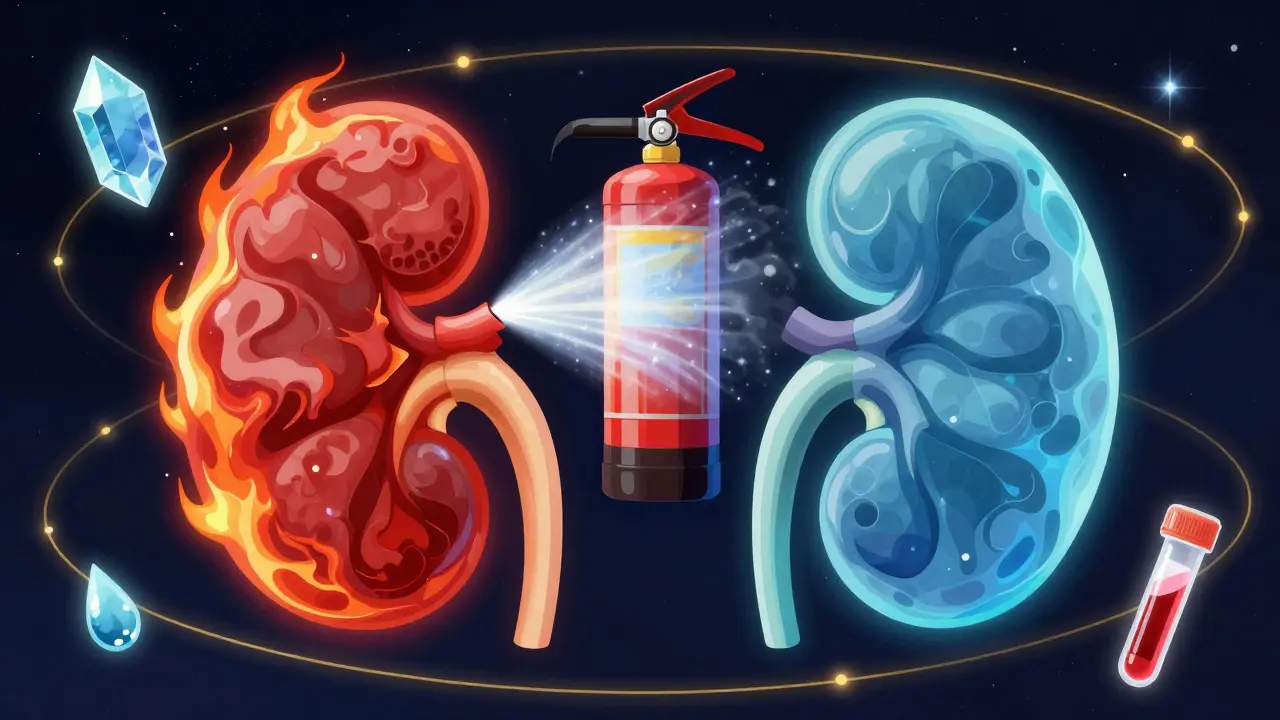
Steroids act as a fire extinguisher for the inflammation in your kidneys. While there's some debate in the medical community about exactly how much they help, experts generally agree that early use in severe cases can prevent permanent scarring. In the most critical situations, Dialysis may be needed for a few weeks to do the kidneys' job while the inflammation settles down.
The Road to Recovery: What to Expect
Recovery isn't a straight line, and it varies wildly depending on what caused the reaction. If you had an antibiotic reaction, you might see a return to normal function within two weeks. If PPIs or NSAIDs were the cause, it can take over a month, and the recovery may be partial.
About 70-80% of people see their kidney function improve significantly, but it's important to be realistic. Roughly 30% of patients may end up with some level of chronic kidney disease (CKD). This is especially true for NSAID users, where nearly 42% of patients see a permanent decline in function. This is why early detection-ideally within the first week of symptoms-is so vital; it can boost your chances of a full recovery by 35%.
During recovery, you'll need regular blood tests to monitor your creatinine levels and eGFR. You should also be extremely cautious about starting new medications, as your kidneys are in a fragile state and could react more strongly to other triggers.
Can I ever take the medication that caused AIN again?
Generally, no. Once you've had an AIN reaction to a specific drug, your immune system is "primed." Taking that drug-or even something in the same chemical family-again could trigger a much more severe and rapid kidney failure. Always keep a written list of these medications to show every doctor you visit.
How long does it take for the kidneys to heal after stopping the drug?
It depends on the drug. Antibiotic-induced cases often improve within 14 days. PPI-induced AIN is slower, often taking around 35 days. NSAID reactions can take 28 days or more. Some people feel a difference within 72 hours, while others take weeks to stabilize.
Is a kidney biopsy always necessary?
While some doctors may try to treat based on clinical suspicion (especially if the drug trigger is obvious), a biopsy is the only definitive way to confirm AIN and rule out other serious conditions. It also helps the doctor decide if steroids are necessary.
Do I need to worry about permanent kidney damage?
While many people make a full recovery, there is a risk of permanent scarring (interstitial fibrosis). About 30% of patients develop stage 3 chronic kidney disease or higher. Regular follow-ups with a nephrologist are essential to manage any long-term changes.
What are the non-drug causes of AIN?
Though drugs are the most common cause, AIN can also be triggered by autoimmune disorders like sarcoidosis or Sjogren syndrome, certain viral infections (like CMV or EBV), or severe electrolyte imbalances, such as very high calcium levels in the blood.
Next Steps for Recovery
If you are currently recovering from AIN, your primary goal is protection. Avoid any over-the-counter painkillers like ibuprofen unless cleared by your nephrologist. Stay hydrated, but follow your doctor's specific fluid intake guidelines, as too much water can sometimes be a burden on recovering kidneys.
Keep a detailed log of your blood pressure and urine output. If you notice a sudden return of swelling or a decrease in urination, contact your medical team immediately. Early intervention is the only way to stop a relapse or further damage from becoming permanent.